Friday, September 29, 2006

Program Announcement: Author Visit

On Wednesday, October 4, at 7PM in the library's program room, author M. John Lubetkin will present a talk on his book, Jay Cooke's Gamble: The Northern Pacific Railroad, the Sioux, and the Panic of 1873. (The book will be available for purchase at the program.)

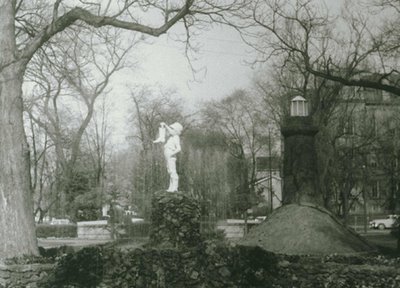
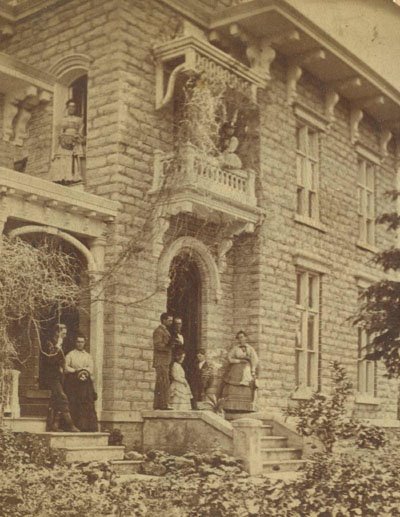
Jay Cooke was a native of Sandusky, born here in 1821, the son of Eleutheros Cooke, and one of the first children born in the new settlement. Although he left Sandusky at a young age, he returned to the area regularly throughout his adulthood. The image above shows Cooke and his family at their summer home ("Cooke Castle") on Gibraltar Island, near Put-in-Bay (now the site of the Stone Laboratory research station of the Ohio State University). He is perhaps best remembered as "the financier of the Civil War," when, as a banker in Philadelphia, he helped to secure loans from leading bankers to help pay for the war; through his influence, the goverment was able to raise millions of dollars from the sale of treasury notes. After the war, Cooke became an investor in the Northern Pacific Railway. Learn more about this period in Jay Cooke's life at John Lubetkin's book talk this Wednesday.

Update: Oops . . . this may not be Jay Cooke's house on Gibraltar Island. Although the original image in our collection is labelled the Cooke House, we have strong information from a researcher with extensive knowledge of the house on Gibraltar that the architecture in the image does not match that of the Gibraltar house. The image may be of the C.C. Keech house, on the site of the original Providence Hospital.

Wednesday, September 27, 2006

Welcome to the Sandusky History Weblog

Welcome to a blog about the history of Sandusky, Ohio and the surrounding area -- A service of the Sandusky Library Archives Research Center.


In this blog, we will present views of Sandusky and Erie County history, using sources from the local history archives of the library, and offer opportunities for discussion of historical events and artifacts. You will see samples from the library's local history collections, learn more about the collections and the history they represent, and have an opportunity to share your thoughts and knowledge about the history of the region. Although the primary focus will be on the history of Sandusky, we will also occasionally include discussions on historical topics relating to Erie County, the Lake Erie Islands, and the Sandusky Bay region.

One of the regular features of this blog will be the category of "History Mystery." Many of the items in the Sandusky Library Archives have an unknown story behind them -- sometimes the people or place are unidentified, or we don't know much about the event in the picture. We plan to post items like this, with the hope that some of you might have the answers to these mysteries -- or at least some thoughts about them.

Please note: This blog is not a replacement for the reference department at the library -- if you have a reference question about local history, please click here. For all other questions, contact Reference Services, or call 419-625-3834.

(This message is reposted occasionally to keep it on the main page.)

Monday, September 25, 2006

Program Announcement: Collision of the Morning Star and Cortland

On this Wednesday evening (September 27) at 7PM in the Sandusky Library program room, we will have the fourth in our series of fascinating presentations of Great Stories of the Inland Seas, presented by Georgann and Mike Wachter. Wednesday's program will be about the collision of the Morning Star and Cortland in the middle of Lake Erie in 1868. Of course, all are invited to attend this program.

Coincidently, just recently, divers from the Cleveland Underwater Explorers (CLUE), with support from the Great Lakes Historical Society, retrieved the bell from a ship believed to be the Cortland, in Lake Erie, near Lorain County. The story of this recovery was in the August 23, 2006 issues of the Lorain Morning Journal and the Cleveland Plain Dealer.

Join us this Wednesday to learn more about the Cortland and the Morning Star, and their last journey on the lake.

Wednesday, September 13, 2006

Kurt E. Boker, 1920-2006

One of this region's most honorable citizens passed away this week. Kurt Boker, of Kelleys Island, died Monday evening at his home. (An obituary is published in the September 13 issue of the Sandusky Register.)

Born in Germany, Mr. Boker came to the U.S. at the age of four, and lived nearly all his life on Kelleys Island. After service with the U.S. Army in World War II and his graduation from The Ohio State University, Mr. Boker taught at Kelleys Island school for 25 years. He also was a devoted member of his community, serving in several community organizations, and was dedicated to preserving the history of Kelleys Island.

Products of Kurt Boker's lifelong historical research and service, covering a variety of subjects -- including the geology of the island, businesses, churches, family histories, and the Kelleys Island School he served for many years -- are preserved in the Kurt Boker Collection of Kelleys Island History in the Archives Research Center at the Sandusky Library. Copied of these documents are also available for study at the Kelleys Island branch of the library.

We at the library and in the community continue to be grateful for Mr. Boker's service and support.

Friday, September 08, 2006

The Underground Railroad in Ohio -- Another Perspective

I should have mentioned this sooner (I was reminded about it in a message I received yesterday). . . .

The Ottawa Citizen newspaper in Canada sent a reporter to travel through Ohio this summer, following a route through cities and towns believed to have been part of the Underground Railroad. The reporter, Chris Lackner (along with photographer Malcolm Taylor), began his journey in northern Kentucky in June, and arrived in Sandusky on August 21. You can read more about this reporter's journey here; he also wrote a daily blog on the trip, which is here.

Tuesday, September 05, 2006

Do you know where this is? Part Two

Here is the latest in our series of "guess the location" photos. . . This is a road in Erie County that still exists, but looks quite different today.


The answer is posted in the comments section.

Monday, August 28, 2006

Labor Day

In honor of the working men and women throughout the history of our community, this post commemorates Labor Day. Labor Day was first celebrated in 1882 in New York. It was made a national holiday in 1894.


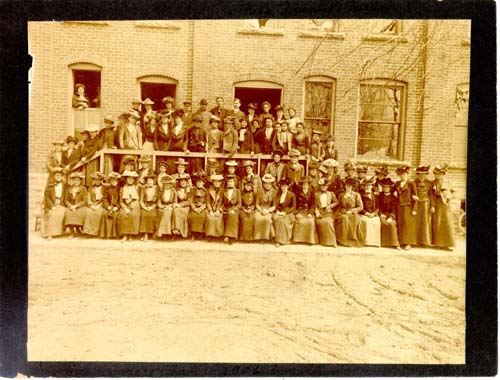
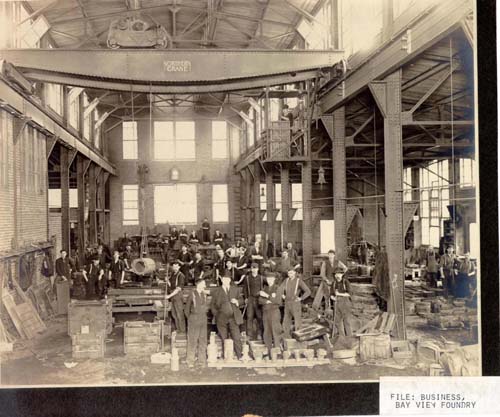
The men in the picture on the left (below) are workers at the Bay View Foundry (which operated from around the beginning of the 20th century to the 1930s), at Shelby and Water Streets, circa 1905; the photo on the right (above) shows the women workers (and their male supervisors) at the Jackson Underwear Factory, North Depot and McDonough Streets, circa 1906. The Jackson Factory operated from 1899 to around 1933.

If you have historical documents describing the activities of working people in Sandusky and Erie County -- documents such as: labor union records; photographs of people at work; personal letters and papers; business records; etc. -- please consider donating those documents to the Sandusky Library Archives Research Center. Contact the Archives Librarian via email or at 419-625-3834.

Wednesday, August 23, 2006

Clubs and Organizations in Erie County

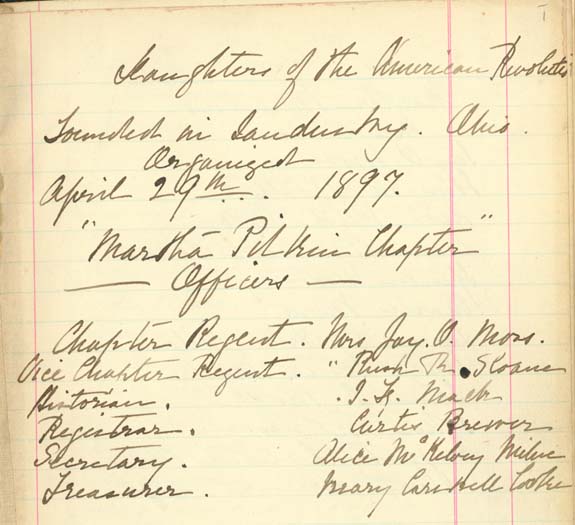
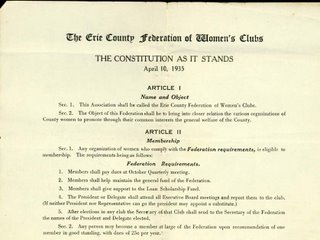
For better or worse, social clubs and community organizations are not as popular as they once were. With the advent of movies, television, the Internet, the automobile, and many other developments in technology and culture, clubs and organizations play a smaller role in the community than they did, say, in 1897, when the Daughters of the American Revolution, Martha Pitkin Chapter, was founded in Sandusky. (An excerpt from the D.A.R. secretary's book is shown above.) In the nineteenth century and well into the twentieth century, the role of clubs and organizations in the community was dominant. For an analysis of this development in society, you might want to read Robert Putnam's book Bowling Alone (in our library collection at 306.0973 PU) -- but don't take my world for it, since I haven't read the book yet.


It does seem clear, however, that studying the history of local clubs and organizations will help you understand the culture and society from which they come (or at least that portion of society represented by the members of that particular club). The Sandusky Library Archives Research Center holds records and documents from several local clubs and service organizations, including: the Daughters of the American Revolution, Martha Pitkin Chapter; the Erie County Federation of Women's Clubs, and the Sandusky Federation of Women's Clubs; the Art Study Club; the Men's Literary Club; the Sunyendeand Club; the Nineteenth Century Club; the Sandusky Concert Association; and others. Thanks to the help of our summer archives intern, we have new and updated finding aids describing many of these documents and collections, for those interested in researching this aspect of our history.

For those of you involved in a local organization or who owns the records of local clubs from the past, we encourage you to consider depositing those records with the Archives Research Center, to preserve these documents for future generations. We will be glad to explain how we will store and record your donation in the library as a record of our community. For more information, call (419-625-3834) or email the Archives Librarian.


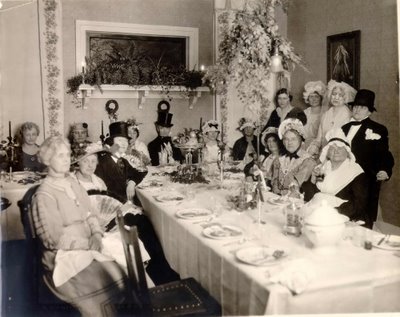
The photo above is of a costume party given by the Art Study Club (probably circa 1920), where guests came dressed as famous literary characters. (From the Library's historic photo collection -- CLUB-047.)

Tuesday, August 15, 2006

Do you know where this is?

It looks a lot different today, but it's an intersection in Erie County.

The answer is in the comments section.

Monday, August 14, 2006

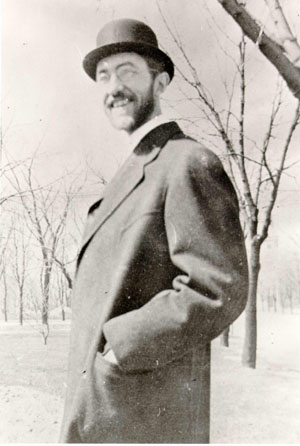
Edwin Lincoln Moseley -- Teacher, Scientist, Scholar


One of the most interesting characters to contribute to Sandusky's history is Edwin Lincoln Moseley, a science teacher at Sandusky High School, and later one of the original professors on the science faculty at what is now Bowling Green State University.

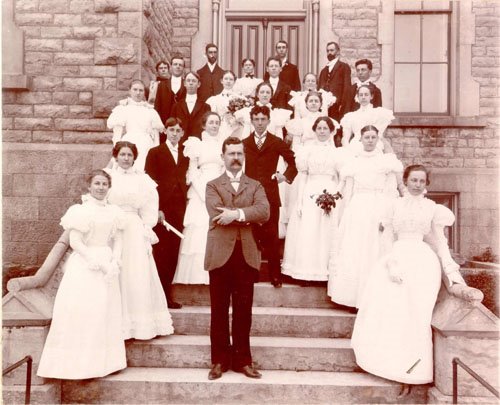
Edwin Moseley was born in Michigan in 1865 and graduated from the University of Michigan in 1885, the youngest in his class. He joined the faculty of Sandusky High School in 1889, after he returned from participating in a scientific expedition that took him across the Pacific to Hawaii, the Philippines, China, and Japan. (Here is SHS class of 1912, with faculty. E.L. Moseley is in the back row.)
While at Sandusky High School, Moseley was perhaps most admired for inspiring his students to learn through direct observation and to develop independent thinking.
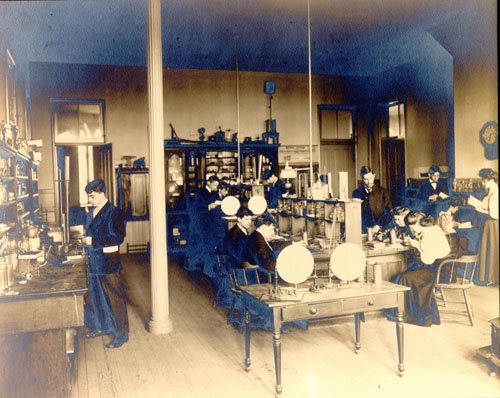
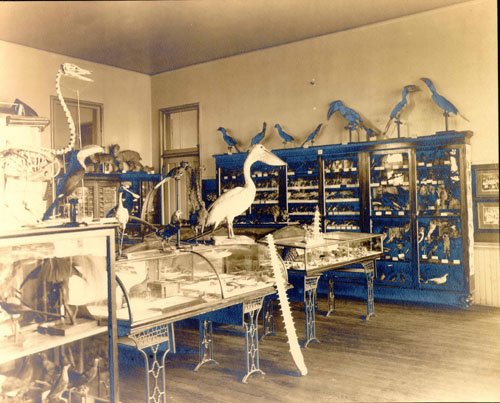
He used both the school laboratory (one of his SHS physics classes is shown here) and field trips to teach his students -- he frequently brought his students on scientific explorations of Sandusky Bay and the Lake Erie Islands, to study the geology and flora of the region. While a teacher at SHS, he operated a natural history museum in the school building, managing a collection of about 17,000 specimens (an exhibit area of the museum is pictured below).

While in Sandusky, his reputation as a scientist and a scholar became so great that, in 1914, he was invited to become the founding science faculty (yes, faculty -- he was the only science professor when he started there) at the new Bowling Green State Normal College (now Bowling Green State University). He continued his research and teaching in Bowling Green until his retirement in 1936. He died in 1948, leaving a legacy of strong scholarship and devoted students.

For more information about Professor Moseley: Relda E. Niederhofer and Ronald L. Stuckey have produced a book that may be the definitive biography of the professor, Edwin Lincoln Moseley: Naturalist, Scientist, Educator; the book is available in the Biography section of the Sandusky Library and as a reference book in the Genealogy department.
The Sandusky Library Archives Research Center has a small collection of papers and publications by and about Professor Moseley, including many of his scientific publications (such as: Sandusky Flora; Trees, Stars, and Birds; Lake Erie: Floods, Lake Levels, Northeast Storms; and others) and a small number of letters and documents he wrote. A finding aid to the collection is available; contact the library reference department (419-625-3834) or the Archives Librarian for more information. Additionally, The Center for Archival Collections at Bowling Green State University holds a collection of Edwin Lincoln Moseley papers, primarily covering his time in Bowling Green.