Showing posts with label Boston. Show all posts

Thursday, May 24, 2018

Day of Jubilee in Honor of the Fifteenth Amendment


According to the May 25, 1870 issue of the Sandusky Register, a Day of Jubilee was held in honor of the ratification of the fifteenth amendment to the U.S. Constitution, which prohibited federal and state governments from denying the right to vote based on that citizen’s “race, color or previous condition of servitude.”


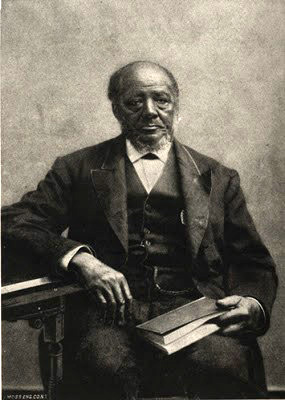
The Great Western Band led a procession to the Erie County Fairgrounds, then located south of Scott Street in the area now known as Cable Park. There were delegations here from several neighboring communities. The first feature of the activities was a glee club of five African American ladies who sang the song “America.” Rev. Thomas Holland Boston (below) offered up a prayer.

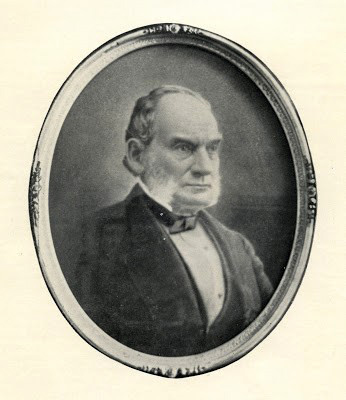
Mrs. Handy from Fremont read messages from President U.S. Grant and Secretary of State Hamilton Fish which proclaimed the ratification of the 15th constitutional amendment. The next speakers were Mr. Moore, and Mr. W. J. Scott, who had been an enslaved individual at one time. Well known attorney F.D. Parish also addressed the group. Mr. Parish had been an active participant of the Underground Railroad of the Firelands.


The final speech at the Jubilee was given by Oran Follett.

In the evening, a ball was held at Fisher’s Hall. Although African Americans did not actually receive full voting equality in some states for several years, in 1870 there was great celebration in honor of the 15th constitutional amendment.

Thursday, September 17, 2009

The Vanished Settlement of "Africa" in Erie County

The July 1878 issue of the Firelands Pioneer features an article written by A. W. Hendry about a vanished settlement of African Americans in Erie County in the 1830’s and 1840’s.


The settlers resided in an area southeast of the city of Sandusky, across Pipe Creek. The area was known as “Africa,” because the residents were men of color. Samuel Carr and Frederick Swears were the first settlers, arriving in Erie County in the mid 1830’s. Samuel Carr lived on the bank of Pipe Creek. He sold produce from his garden in Sandusky. Mr. Swears had a grain farm and also raised cattle and hogs.
Mr. Hendry wrote that the land beyond the creek was overgrown, so the settlers cleared away the brush and timber, and built log cabins and cultivated the land for crops. Isaac Brown and Thomas Butler first settled in Pipe Creek, but later purchased fifty acres of land from John Beatty in Perkins Township. (This land was later owned by James Hinde.)

Other settlers in the Pipe Creek area were Basil Brown, George Robinson, John Hamilton, Benjamin Hill, Moses Thompson, William Thomas, George Carr, John Stoaks, Ben Johnson, Peter Gregg, two men with the last name of Jones, Samuel Floyd, William Butler, Benjamin Bell, William Harris, James Jackson, Dick Lett, and a Mr. Glinton. Rev. Thomas H. Boston settled in Erie County in 1839. In about 1843, there were over one hundred African Americans residing in the settlement. The residents built a log school house, which was sometimes used as a church. A Mr. Robinson from Rhode Island was a school teacher there. General John Beatty, in an address to the Firelands Historical Society on October 3, 1900, stated that he once attended a revival meeting at the home of “old Sammy Carr.” He said that “It was the most animated religious gathering I ever witnessed.” General Beatty also mentions a debate between the white young men of Milan Road and the African American young men of the Huron Road (now Cleveland Road.) A Mr. Brown took the floor and he “was not only a master of good English, but had a touch of humor in him, and a whole arsenal of sarcasm and invective.” Mr. Brown won the debate, and General Beatty’s team lost.

Following some unpleasant land disputes, most of the residents from this early settlement moved to Canada. However, the families of Rev. Boston and Basil Brown remained in Erie County. Visit the Sandusky Library to read about the vanished settlement of Africa, and hundreds of other accounts of the pioneer settlers of Erie and Huron County in the Firelands Pioneer, a multi-volume set of journals shelved in the genealogical section of the library’s Reference Services area.

Sunday, February 01, 2009

The Reverend Thomas Holland Boston

Thomas Holland Boston was born to free black parents in Maryland in 1809. He moved to Sandusky in 1839, with his new bride Amelia Butler Boston. At first the couple lived with Amelia’s brothers William and Thomas Butler in Perkins Township. Rev. Boston was ordained by the Wesleyan Methodist Convocation at Troy, Ohio in 1843.

From 1873 to 1876, Rev. Thomas Holland Boston was the minister of the St. Stephen A.M.E. Church in Sandusky. Rush Sloane wrote in the July 1888 Firelands Pioneer that “Mr. Boston has always been a devoted friend of the slave and his kindly services were always at their disposal. His house was constantly open to them and when he had no more room he was certain to find for them a friend in need where they could be taken care of. Ever since his first coming to Ohio he has been known as a reliable friend of the fugitive and a history of his many undertakings in their behalf would prove most entertaining were the facts at hand.”

Following his first wife’s death in 1865, Rev. Boston married Susan Bobo. They had three children, two who survived to adulthood, Georgiana and Sarah. Rev. Boston’s salary as a pastor was very low, so he also worked in various jobs in the area. He was said to have been very industrious in his labor. Rev. Boston officiated at marriages and funerals, and often ministered to the sick. When the congregation could not afford to pay him, he preached without pay.

Rev. Thomas Holland Boston died in 1892. He is buried at Oakland Cemetery in block 13, with both his first and second wives and two of his daughters. Mr. Sloane concludes his article in the Firelands Pioneer with the statement that Rev. Boston was a kind-hearted man who had the respect of the entire community. Sloane continues “For him I have ever had a high regard, and with him had an acquaintance and friendship for many years.

To learn more about the history St. Stephen A.M.E. church, as well as several other area churches, consult the Church Collection of the Archives Research Center of the Sandusky Library. A Finding Aid will indicate specific items regarding each church in the collection.