Showing posts with label Hotel Breakers. Show all posts

Sunday, August 20, 2017

American Legion Convention at Cedar Point, 1934


The sixteenth annual convention of the American Legion, Department of Ohio, was held in Sandusky, Ohio from August 18 to August 20, 1934. The Hotel Breakers was the headquarters for the American Legion convention, and meetings were held at the Convention Hall at Cedar Point.


Other conventions were held in Sandusky at the same time. The American Legion Auxiliary, Department of Ohio, had their headquarters at the Hotel Cedars at Cedar Point, and meetings were held at Cedar Point’s Coliseum. Other groups which convened were the Grande Voiture D’Ohio, Le Societe Des Quarante Hommes et Huit Chevaux, La Boutique Des Huit Chapeaux et Quarante Femmes, and the National Organization of American Legion Nurses. Each of the separate organizations held meetings, had speeches, special music, and reports from various committees.

The headline of the August 19, 1934 issue of the Sandusky Register read, “American Legion ‘Takes’ Sandusky.” An article on the front page reported that twelve thousand Legionnaires were in Sandusky and Cedar Point. Several more thousand former U.S.  service men and their families were expected for the parade held on Monday afternoon. An article in the August 21, 1934 Register stated that 60,000 individuals witnessed the American Legion parade, led by Colonel Robert L. Denig of the U.S. Marine Corps.
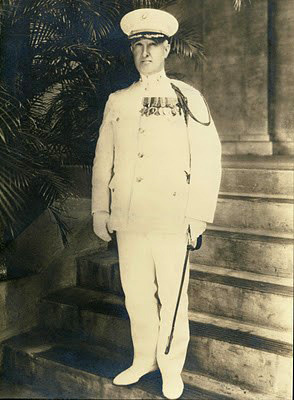


The parade passed through 34 city blocks of Sandusky. Both the parade and the American Legion Convention had been quite successful. The convention in 1934 was the first American Legion Convention held in Ohio since the Prohibition era, and record liquor sales in Sandusky were recorded. Local merchants also fared well with the influx of tourists to Sandusky. Many special events were held in the area from August 18 to August 20, 1934, including yacht races, a water carnival, a golf tournament, and reunions of veterans associations.


Visit the Sandusky Library to view the commemorative program from the 1934 American Legion held in Sandusky, or to read newspaper accounts of the 1934 convention featured in the Sandusky Register and Sandusky Star Journal, now on microfilm.

Wednesday, August 31, 2016

Ohio State Medical Association's Annual Meeting at Cedar Point, 1907


From August 28 to August 30, 1907, the Sixty-Second Annual Meeting of the Ohio State Medical Association convened at Cedar Point. Attendees had the choice of staying at the Breakers Hotel at Cedar Point, or at hotels in the city of Sandusky.

      
Physicians could travel to Sandusky by four different railroads, the Lake Shore Electric Railway, or by the Steamer Eastland, which traveled between Cleveland and Sandusky every day.

                
The Steamer Hazel connected visitors from Toledo, Port Clinton, Marblehead to Cedar Point and Sandusky every two hours. The House of Delegates was called to order at 10 a.m. General meetings were held at the Convention Hall at Cedar Point. Other meetings were held at the Opera House and the Breakers.


Several lectures were delivered,  election of officers and committee members were held, and section meetings were held throughout the several days of the Annual Meeting. Dr. George W. Crile of Cleveland, Ohio spoke on “The Surgery of the Stomach” at the Symposium on Diseases of the Stomach. Dr. Charles H. Mayo, of Rochester, Minnesota, gave a special address on “Goiter.” Several pages of The Ohio State Medical Journal of August 15, 1907 were devoted to the proceedings of this meeting. 

The August 31, 1907 issue of the Sandusky Register reported that “The meeting was without doubt the most successful in every way ever held.” Members of the Erie County Medical Association assisted in making preparations for the  Annual Meeting. Dr. Carrie Chase Davis was head of the committee in charge of Entertainment of Visiting Ladies. Besides the regular sessions at the Annual Meeting of the Ohio State Medical Association, there were opportunities for the members to go boating on the lake and attend the theater. On Friday evening, a ball was held at the Coliseum at Cedar Point.


Tuesday, July 26, 2016

Annual Convention of the National Association of Dyers and Cleaners at Cedar Point

During the summers of 1914 and 1915, members of the National Association of Dyers and Cleaners met at Cedar Point for several days for their annual convention. Members had committee meetings and banquets, and enjoyed free time at Cedar Point and the Lake Erie Islands.  In 1914 one of the exhibitors at the convention was from the “Re-Movo” company of Chicago, Illinois. Several different colors of Steiner’s slipper dye were available for viewing in the exhibition area. Former president of the Association, William Forger, went for an airship ride with aviator Tony Jannus during the convention of 1914.


An article in the Cleaning and Dyeing World journal told prospective attendees that each of the hundreds of rooms available at the  Hotel Breakers had windows that could be open to let in the fresh lake air, and were equipped with electric lights and running water in each room.


In 1915 one of the topics of discussion at the convention was the shortage of dye products, caused as a result of the war in Europe. About three hundred people attended the 1914 convention, and four to five hundred people attended the convention in 1915. Special entertainment was provided for the Association members during each night of the convention. The Ladies’ Auxiliary to the National Association of Dyers and Cleaners held their own meetings during the convention.  

There have businesses in Sandusky related to the care of garments for many decades. In the 1855 Sandusky City Directory, F.R. Comstock placed an ad as a dyer and clothing renovator.


Both the Pfanner and Beilstein Dry Cleaning businesses had begun as steam laundries in Sandusky in the late 1800s and early 1900s. Pictured below are some employees from the Sandusky Dyeing and Cleaning Works in Sandusky from the 1890s.


Wednesday, June 08, 2016

Vintage Postcards from Hotels at Cedar Point


According to the book Cedar Point: the Queen of American Watering Places, by David W. and Diane DeMali Francis, the White House hotel was the second hotel at the Cedar Point resort. The smaller Bay Shore hotel had been constructed in 1899, and was used as a boarding house after the White House hotel opened in 1901 with fifty-five rooms. By 1903, the White House hotel expanded to one hundred twenty-five rooms. At the same time, cottages were available for rent at Cedar Point. In 1915, the White House hotel was expanded again, and became known as the Cedars Hotel.

        
The Cedars Hotel had seven sections that were connected by walkways. Here is a postcard that features a “cozy corner” of the Cedars:

 
Today, part of the former Cedars Hotel serves as employee housing. 

The Hotel Breakers opened in 1905, and remains as an important part of Cedar Point today.

          
The original lobby of the Breakers featured chandeliers and stained glass windows created by Tiffany artists.  You can read about the renovations made to Hotel Breakers in 2015 in an article from the Sandusky Register from May 4, 2015. Visit the Sandusky Library Archives Research Center to learn more about the rich history of Cedar Point.

Wednesday, June 10, 2015

Annual Session of United Commercial Travelers, Grand Council of Ohio in 1906


The seventeenth annual session of the Grand Council of Ohio, United Commercial Travelers, was held in Sandusky, Ohio from June 7 to June 9, 1906. The United Commercial Travelers was organized in Columbus, Ohio in 1888 by a small group of traveling salesmen. The purpose of the group was to provide insurance and other benefits for its members. The Sandusky Council, No. 278 of the United Commercial Travelers was active for many years.  An article in the June 8, 1906 issue of the Sandusky Register reported that three thousand traveling men arrived in Sandusky and took the city “by storm.  Big bands accompanied the visitors, most of whom arrived by train. Many of the commercial travelers stayed at the Hotel Breakers at Cedar Point.

          
On June 7, a band contest was held at Cedar Point, followed by a boat ride on a steamer. The Cedar Point Band gave a concert for the commercial travelers in the evening. On June 8, the day opened with an invocation by Rev. A.P. Higley, welcome address by Sandusky Mayor John J. Molter, and an address by William Homer Reinhart, who was the chairman of the general executive committee of the Sandusky Council of the U.C.T.


Several more sessions of the United Commercial Travelers were held during the annual meeting. On Friday evening, June 8, a dance and a progressive dinner were held at the Coliseum at Cedar Point. On Saturday, Van Doren’s Band from Toledo gave a concert in Washington Park. A huge parade commenced at 1 p.m. in downtown Sandusky. At 3:30 p.m., the Columbus and Akron United Commercial Travelers played a baseball game, with $25 awarded to the winning team. 

The annual session of the United Commercial Travelers, Grand Council of Ohio concluded with a grand concert at Cedar Point.  The Sandusky Register of June 9, 1906 stated that the U.C.T. convention in Sandusky was “without doubt the largest in point of attendance and best in every way in history of organization.” Inside the back cover of the souvenir program from the U.C.T. convention is a list of the members of the Sandusky Council, No. 278 of the U.C.T.

Tuesday, October 01, 2013

Cedar Point Grew Along with the Middle Class in America


After the Civil War in the United States, there was a period of rapidly increasing industrialization. As machines replaced hand labor in industry, production increased and work hours for employees were shortened. Railroads helped boost economic development in the U.S. as they transported both raw materials and finished products throughout the country and abroad. Ohio was blessed with early railways, besides having access to Lake Erie for shipment of goods by water. Industrialization helped lead to the development of a rising middle class in the U.S. Individuals in the middle class were not necessarily wealthy, but they were comfortable. Improvements in labor conditions allowed workers to have more leisure time and more disposable income. While the wealthy may have been able to spend a whole summer at the seashore, middle class residents could take their families to a weekend at the lake, or perhaps even a week's vacation once a year. The warm summertime weather and access to water in the Sandusky Bay and Lake Erie Islands region made the area popular to vacationers. Visitors to the Lake Erie Island area enjoyed cool lake breezes, beaches, fishing, boating and camping. Cedar Point began as a popular site for fishermen in the late nineteenth century. As early as 1870 Louis Zistel ferried Sandusky residents to Cedar Point, where there was a bath house, sand boxes and swings for children, and dancing for adults. The fee for the boat ride was twenty five cents.
Louis Zistel, 1830-1889
Cedar Point's first roller coaster, the Switchback Railway, was built in 1892. In the 1890s, more and more people visited Cedar Point. They traveled to the amusement park by steamship, railway and electric railway.


In 1897, The Cedar Point Pleasure Resort Company purchased Cedar Point, with George A. Boeckling serving as General Manager.

George Boeckling, 1862-1931

Under Boeckling's leadership Cedar Point was transformed from a summer picnic and fishing area to a thriving amusement park with wide appeal. Always seeming to anticipate what would appeal to the public, Boeckling offered concerts, movies, and dancing, and encouraged military groups and businessmen to hold their annual conventions at Cedar Point. The Hotel Breakers, which opened to Cedar Point guests in 1905, offered visitors amenities such as brass beds, wicker furniture, and Tiffany stained glass windows in the lobby. Services available included a manicurist, physician, barbers, beautician, stenographer, and tailor.


Throughout the twentieth century more and more rides and attractions were featured at Cedar Point.  You can see the Sea Swing in the background of the picture below taken at the Cedar Point beach about 1930.


Land developers George Roose and Emile Legros purchased Cedar Point in 1956, and aimed to make Cedar Point the "Disneyland of the Midwest." Today, Cedar Point draws millions of visitors each year, and is especially known for its roller coasters. To read a more thorough history of Cedar Point, see the book Cedar Point: The Queen of American Watering Places, by David W. and Francis (Amusement Park Books, 1995), available at the Sandusky Library. An article by Mr. Francis entitled “Cedar Point and the Characteristics of American Summer Resorts During the Gilded Age,” which appeared in the Hayes Historical Journal, is available online.