Showing posts with label Marsh. Show all posts

Monday, December 18, 2023

A Photo of Family and Friends, and the Birth of Plum Brook Country Club.


In this photographic postcard Elizabeth Marsh and Florence Steinemann are gazing at Edward H. Marsh. Also looking at Mr. Marsh are George C. Steinemann and Lea Marsh. Edward H. Marsh worked with his father in the plaster business. He was a personal friend of William Howard Taft, with whom he attended school. Edward H. Marsh lost his wife Carrie at a young age, and he was left with two very young children to raise.

Lea Marsh was the son of Edward H. Marsh; he married Elizabeth D.G. Moss, the daughter of banker Charles H. Moss. Lea’s good friend was George C. Steinemann, a prominent Sandusky attorney. George was married to Florence Cable, who was the granddaughter of Sandusky businessman Frank Cable.

According to an article in the March 30, 2014 issue of the Sandusky Register, in 1913 Lea Marsh and George C. Steinemann, along with Watson H. Butler, sent out a letter, looking for people to invest in a golf course, to be located on Hayes Avenue and Strub Road, on property owned by August Pfaff. The “Sandusky Golf Club,” sometimes known as the “Auto County Club” was incorporated in 1914. By 1915, land was purchased off Galloway Road, and eventually became the golf course for the Plum Brook Country Club.

By 1930, Lea and Elizabeth Moss had moved to Old Lyme, Connecticut. When George C. Steinemann passed away in 1932, Mr. and Mrs. Lea Marsh traveled back to Ohio for his funeral, where Lea Marsh served as a pallbearer.

Monday, June 20, 2022

Edward H. Marsh, Friend of William Howard Taft


Edward H. Marsh was born in Cincinnati in 1851, and came to Sandusky with his father in 1872. Edward Lockwood Marsh, the father, was a pioneer in the gypsum business. Both Marsh men were involved with a plaster business in Sandusky, and later developed a larger gypsum business in Ottawa County. Edward H. Marsh eventually became the sole owner of the gypsum business.

In 1879, he married Caroline Mackey Lea, the daughter of James Davis Lea, a Sandusky businessman. She was known as “Carrie.” The couple was married by Rev. Josiah Strong at the Congregational Church. A reception was held at the home of Mr. and Mrs. Lea on Wayne Street, where the Great Western Orchestra provided musical entertainment. The couple left on the evening train for a trip touring the Southern United States. Upon their return, the newlyweds lived at a lovely home at the corner of Washington and Franklin Streets.

Sadly, on June 10. 1885, Carrie Lea Marsh died, leaving her husband a widower with two very young children, Edward Lea and Caroline Marsh. Mr. Marsh would never remarry. An article from the Grace Episcopal Church tells of Carrie Lea Marsh having been a Sunday School teacher at the St. Luke’s Chapel of Grace Episcopal Church for many years. The chapel did not have a bell, so after Mrs. Marsh’s death, a fund was designated for the purchase of a bell. This bell is now located just outside the side door of Grace Episcopal Church, in memory of Carrie Lea Marsh. The Marsh family also gave a processional cross and a window to Grace Episcopal Church.

After the death of Mrs. Marsh, Edward H. Marsh continued to live at 334 E. Washington Street. It was at this home that William Howard Taft visited Edward H. Marsh in 1908. The two were classmates in Cincinnati. Pictured below is William Howard Taft with Edward Lea Marsh in the front seat of an automobile. J. Warren Kiefer is sitting beside Edward H. Marsh in the back seat.


Edward H. Marsh died on December 17, 1921. On the day of his funeral, which was held at Grace Episcopal Church, the entire U.S. Gypsum Co. closed down, in respect of Mr. Marsh.

To read more about the Marsh and Lea families, see Helen Hansen’s book At Home in Early Sandusky at the Sandusky Library. This title is also available for purchase at the circulation desk at the library.

Saturday, April 30, 2022

Publicity Photos from The New Dominion


On April 30, 1903, an amateur production of the play The New Dominion was presented by the Joe Jefferson Club at the Neilsen Opera House in Sandusky. The play was written by Broadway playwright Clay Clement, Sr.  

A.J. Peters portrayed the Baron Franz Victor Von Hohenstauffen. Mr. Peters is pictured below with Adah Kunz, who played Miss Flora May Randolph in the play.


E.L. Marsh played the character of Mr. Marshall Boner. The part of Miss Martha Boland was played by Mrs. G.E. Wilder.

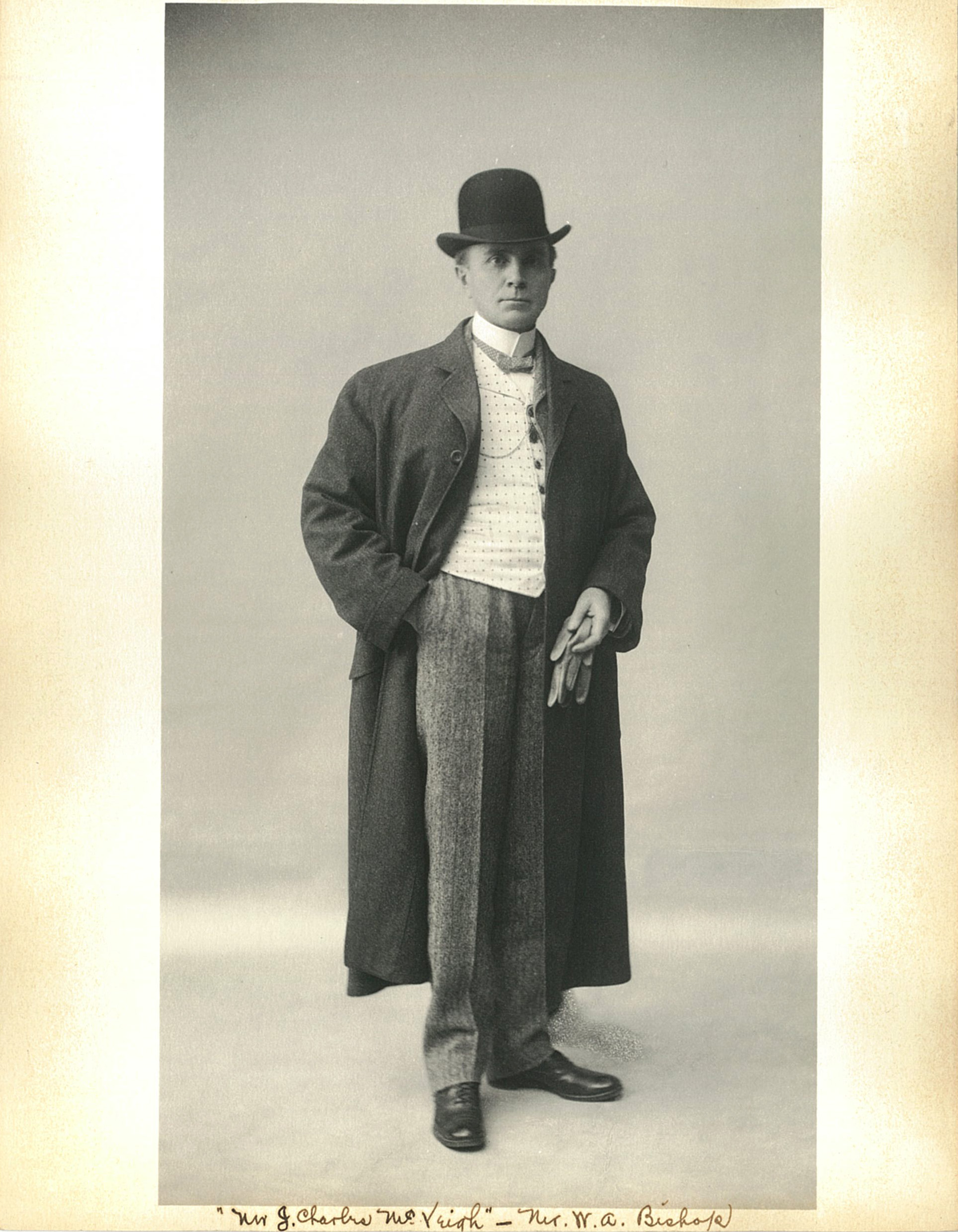
Local photographer W.A. Bishop played Mr. J. Charles McVeigh in the play.

The May 1, 1903 issue of the Sandusky Register reported that the performance was a “flawless production.” A.J. Peters gave a finished performance, and Mr. Bishop was humorous in his love scenes. The Register article stated that “The characters were well cast and showed to the best of their ability, the attention and interest they centered in their accredited parts.” Theodore Taubert’s ten piece orchestra played musical selections between acts. 

Visit the Sandusky Library Archives Research Center to view the complete collection of publicity photographs from “The New Dominion.”

Monday, February 28, 2022

William Ayres Simpson and Mary Denman Simpson


William Ayres Simpson was born in New Hampshire in 1812. After working in Boston and Detroit, he moved to Sandusky in 1834. In Sandusky, William Simpson was a partner of Horace Aplin in the grocery business. Later he was engaged in business ventures with Leonard Johnson and David Everett. Mr. Simpson was a stockholder and director in the Sandusky Gas Company, and served as  its president for many years. He was also a stockholder and director in the Second National Bank. 

Mr. Simpson was a member of Grace Episcopal Church for over forty years, serving on the church vestry for thirty-six years. Following his death on December 20, 1887, his former pastor, Rev. Dr. S. A. Bronson wrote in a letter, “Mr. Simpson was a man with as many virtues, and as few faults, as almost any one who can be found in this crooked world. As a vestry man in my church during the sixteen years I was rector of Grace Church, Sandusky, I can safely say I found no fault in him. As a business man, he was honest and honorable; as a Christian, and as an Officer of the church, he was faithful is the discharge of all his duties; benevolent, judicious and wise. If help was needed, he was always ready to do his part. He was always a pillar in Grace Church," and he adds, "a thousand more words in all departments of life may be said of him."  Rev. R. L. Howell, another former Grace rector, stated in the book History of Erie County, Ohio, that “William A. Simpson was one of those rare instances of the happy commingling of solid worth and simplicity of character which it is positively refreshing to behold.”  

On January 5, 1841, William A. Simpson married Mary A. Denman.


Mary’s parents, David and Mary Wright Denman died when she was only age two. She was adopted by Major John G. Camp, who was a friend of Mary’s father. Mr. and Mrs. Simpson did not have children of their own, but they raised two adopted daughters. One adopted daughter was Eliza D. Bartlett, who was the daughter of Mary Simpson’s sister; the other child was born Jane Eliza Marsh, to Cornelius and Rebecca Marsh. After her parents died in the cholera epidemic of 1849, Mr. and Mrs. Simpson raised her, calling her Jennie E. Simpson. 

Mary A. Simpson died on March 8, 1911. In her obituary, which appeared in the March 9, 1911 issue of the Sandusky Register, she was referred to as “a woman of generous impulses. Mrs. Simpson found great pleasure in giving for almost every good work.” Among the gifts that Mrs. Simpson presented to Grace Episcopal Church were the parish house, at the corner of Adams and Hancock Streets, and the east transept window of the church, which features “The Feast of the Epiphany.” Mrs. Simpson also left monetary gifts to Calvary Church, the Women’s Guild of Grace Episcopal Church, Kenyon College, Providence Hospital, and several others.

Mr. and Mrs. William A. Simpson were very generous to the community of Sandusky. To read more about this couple, there are several sources available, including History of the Western Reserve, At Home in Early Sandusky, and History of Erie County, Ohio. Mr. and Mrs. William A. Simpson are buried in the North Ridge section of Oakland Cemetery.

Thursday, December 30, 2021

Erie County Children’s Poultry Show


Not a picture of the actual event

The Erie County Children’s Poultry Show was held December 30, 1921 to January 1, 1922, in the garage of the E. Lea Marsh residence, at 609 Wayne Street in Sandusky, Ohio. The event was sponsored by the Erie County Poultry Association. Edward Lea Marsh, Jr. was the president of the club and Edward Riedmaier was secretary-treasurer. 


An article in the January 11, 1987 issue of the New York Times (subscription required) stated that 150 chickens were brought to the Marsh garage for the show. Edward Lea Marsh, Jr. was born in Sandusky, Ohio in 1911, to Edward Lea Marsh, Sr. and his wife, Elizabeth D.B. (Moss) Marsh. Edward Lea Marsh, Jr. moved to Connecticut to attend school, and later served as a representative to the Connecticut State Legislature for many years. Mr. Marsh was very interested in agriculture and the breeding of livestock. His pioneer farm in Old Lyme, Connecticut was home to several generations of Jersey cattle. Mr. Marsh, Jr. was the grandson of prominent Sandusky businessman Edward H. Marsh (below) and his wife, the former Caroline Lea.


Monday, October 11, 2021

Plaque Honoring Sandusky’s Pioneers


 You might have driven past this monument many times and not noticed it, but it deserves recognition. It is a tribute to the founders of Sandusky.

On June 25, 1937 members of the Martha Pitkin Chapter of the Daughters of the Revolution unveiled a plaque honoring several of Sandusky’s pioneer citizens at the triangular park located between Huron Avenue, Wayne, and East Adams Streets. The bronze plaque, created by A. J. Balconi, was placed on a three ton boulder at the park.

Names on the top portion of the plaque include the founders of Sandusky:  Zalmon Wildman, Isaac Mills, and George Hoadley. On the bottom portion are the names of the nine men who directed the incorporation of Sandusky as a city in 1824. They were: Dr. George Anderson, Aaron C. Corbet, Cyrus W. Marsh, Alexander Clemons, Eleutheros Cooke, John Wheeler, William Townsend, William Kelly, and Moors Farwell, who served as Sandusky’s first mayor. Several of these men were Masons; an article in a 1937 issue of the Sandusky Masonic Bulletin recognized them and the construction and dedication of the monument

Visit the Sandusky Library Archives Research Center to learn more about the pioneer residents of Sandusky, Ohio. And be sure to stop and visit the monument in the park sometime.

Saturday, May 29, 2021

Dramatic Entertainment, May 29, 1874

On May 29, 1874, a program of Dramatic Entertainment was given at the Sandusky High School, now known as Adams Junior High School in Sandusky. It was considered “A Very Serious Drama in Two Acts.” The first act was “Among the Breakers,” and the second act was “The Day After the Wedding.”

An article in the May 29, 1874 issue of the Sandusky Register reported that the dramatic entertainment was put on by the Sandusky Dramatic Association, and was a most enjoyable affair. Many familiar names were part of the cast. George P. Barker, cast in the leading role, was later a Major during the Spanish American War. Oran Follett Foster, who portrayed Larry Divine, was the grandson of Oran Follett, a well known publisher. Jessie and Allie Stem were the daughters of former Indian agent Jesse Stem, who was killed in Texas in 1854 when his wagon was ambushed. Miss Emma Marsh later married C. Webb Sadler, and they were the parents of C. Webb Sadler, Jr., once the City Manager of Sandusky, Ohio. Charles Livingston Hubbard married Jennie M. West, the daughter of early Sandusky businessman William T. West.

Major George P. Barker, during the war with Spain

Visit the Sandusky Library Archives Research Center to view this program, and many other primary sources from Sandusky and Erie County, Ohio.

Sunday, September 27, 2020

Caroline Sadler Donahue Remembers


When Caroline Sadler Donahue was in the hospital in 1953, she took time to write down some of her childhood memories, which was printed into a booklet. Caroline was born in 1878 to Mr. and Mrs. Charles Webb Sadler. She married J. Frank Donahue, and they lived in Sandusky for many years.

In the booklet, It is Fun Remembering, Caroline recalls that there was a horseshoe shop near her house, and that the Marsh family stables were located behind St. Peter and Paul church. She tells of workers harvesting ice on Sandusky Bay. In the evenings, her father read from Dickens novels to the children, and for Christmas one year, Grandpa E. H. Marsh gave bicycles to the grandchildren. Caroline’s sister Emily played violin after family dinners.

Judge E. B. Sadler was Caroline’s paternal grandfather. He was a personal friend of Jay Cooke, the Civil War financier, and they once took a western trip to sell war bonds. It took the men twenty days to cross the country.

You can find Caroline’s booklet of memories in the Archives Research Center at the Sandusky Library. Consider recording your own memories, so that your family and friends can learn more about your personal history. Your remembrances could be recorded on paper, on a personal computer, or by making an audio recording or video recording. If you have a family scrapbook or memory book, think about donating it to the Archives Research so that others can learn of the personal histories of everyday people in our area.

Thursday, April 02, 2020

William H. H. Herbert, Businessman and Civic official


William Henry Harrison Herbert was born on April 24, 1839 in Hagerstown, Maryland. As a young man, he moved to Paw Paw, Virginia where he made his home with his sister. When the Civil War broke out, he fought for the Confederacy, enlisting in the 12th Virginia Cavalry. He spent time in a northern prison camp at Camp Chase in Columbus, Ohio. 

After the war ended, Mr. Herbert left his southern home, and moved north to Sandusky.  He married Elizabeth Davis Lea on November 15, 1877, and by the 1880s was engaged in the lumber business with J. D. Lea. In 1893, he was appointed collector of customs at Sandusky. He also served as a city councilman and on the board of the Water Works at Sandusky. 

On March 28, 1906, William H. H. Herbert died at the residence of his brother-in-law, Edward H. Marsh, on East Washington Street.


An article in the April 16, 1906 issue of the Sandusky Register said about Mr. Herbert, “He left his southern home and came north to engage in business and from that time to the day of his death conducted himself as a high-minded and honorable man of business, taking at the same time an active part in politics and also showing himself ready at all times to bear his share of any public burden connected with any enterprise for the good of the community in which he lived.”

Funeral services were held at the Edward H. Marsh home, with Rev. A.N. Slayton of Grace Church officiating. Members of the Elks and the city council and city officials were in attendance. Burial was at Oakland Cemetery. The pallbearers, all associates of Mr. Herbert were: Judge Thomas M. Sloane, C.W. Sadler, Fred Pickering, T. Pitt Cooke, C.T. Wight, Dr. John T. Haynes, W.H. Gilcher, and Alex M. Wagner. 

Saturday, August 24, 2019

“Ye Oak Meadow” Farm and Gun Club


Between 1907 and 1919, Mr. and Mrs. Ira C. Krupp lived on South Hayes Avenue, on the property formerly owned by the Palmerton family. (Ira Krupp’s mother Ida Palmerton Krupp was the daughter of J. E. Palmerton.)  The Palmerton property in 1896 is pictured below:


Ira C. Krupp, son of local undertaker Charles J. Krupp, operated a dairy farm at this location in the 1910’s. 

In June of 1911 Ira Krupp was a founding member of  “Ye Oak Meadow Gun Club,” which was organized at the Sunyendeand Club. The officers were: August Kuebeler, President; Lea Marsh, Vice President; W.A. Magoon, Secretary; Dr. J. K. Douglass, Treasurer; Ira Krupp, Manager; and Dr. J. D. Parker, Captain. According to the June 6, 1911 Sandusky Register the membership was made up of the best trap shooters in Erie County. Roy Parker, also known as Leroy Parker, had the high score at the regular shoot at the Gun Club on August 26, 1911.  He was an Erie County Commissioner from 1920 through 1924. 


C. Webb Sadler was also a member of  the club.


He was the grandson of Judge E. B. Sadler, and was associated with many other area clubs, including the Blue Hole, Castalia Farms, and the Rockwell Trout Club. According to Helen Hansen’s At Home in Early Sandusky, C. Webb Sadler was the driving force behind the development of Battery Park. 

A large turkey shoot was held in November 1911. By this time the grounds included a club house and a firing range. Mrs. Ira Krupp, the former Emeline Moss, was hostess for a bridge party and luncheon in December 1911.Around 1919 news articles about Ye Oak Meadow Gun Club ceased, and in the 1920’s  Mr. and Mrs. Krupp moved to Connecticut. While they were in Erie County, however, they were very active in the social and agricultural circles of the area.

Monday, December 31, 2018

"Happy New Year to the Ladies of Sandusky"


In 1877 eight gentlemen from Sandusky wished the “Ladies of Sandusky” a Happy New Year. Possibly this was in conjunction with a party or dance that was held to celebrate the New Year. We do not know details about all the men, but some of the surnames included in the group come from families that were prominent in the early years of Sandusky’s history. In the 1870s  Fred M. Woolsey worked with his father, J.V. Woolsey in a factory that made wagon and carriage wheels. Charles L. Mills and Grayson Mills were both grandsons of Isaac Mills, who was one of the co-founders of the city of Sandusky. Fred Woolsey and C.L. Mills are two of the men in the picture below (at a "leap year party" the previous January); unfortunately we do not know which ones they were.


Edward H. Marsh was involved in the plaster business in this area.  He was a personal friend of President William Howard Taft. You can see Edward H. Marsh in a white jacket in the picture below, when future President Taft was campaigning in Sandusky in 1908.


Tuesday, December 06, 2016

The Former Home of W.W. Wetherell


Razed in 1997, the building that once stood at 507 Wayne Street had many different purposes throughout the many years of its existence. William W. Wetherell, the former proprietor of the Fulton Car Works built this red brick house about 1850. The Fulton Car Works was a business which manufactured wooden railroad cars for the Mad River and Lake Erie Railroad and other railroads. W.W. Wetherell was an early church leader and a strong opponent of slavery. He served as Mayor of Sandusky in the mid-1840s and was City Clerk in his later years; he died on March 4, 1884 at the age of 72, and was buried in Oakland Cemetery. 

The Samuel Butler family lived here from about 1859 to 1876. George A. Marsh lived here through the rest of the 1890s. After Mrs. Marsh died in 1905, the house became the home of the H.W. Parsons family. Mr. Parsons was with the American Banking and Trust Company, and the Vim Motor Company. 

From about 1910 through the mid-1930s, the property at 507 Wayne Street was the property of the Sunyendeand Club, a men’s social club made up of prominent Sandusky residents.


From 1939 and into the early 1940s, the International School of Art leased this property. In an article that appeared in the April 30, 1977 issue of the Sandusky Register, a former Sandusky resident recalled her memories of the School of Art. She said that Elma Pratt filled the rooms with wall hangings, ceramics and art objects from all over the world. At the same time Elmer Frank taught music classes to a number of students. In the early days of the Sandusky Choral Society, the group rehearsed in the ballroom upstairs. In 1944, Mr. and Mrs. Roy Sharpe operated a nursing home in the building. Through the years, several different nursing homes were in business here. The building at 507 Wayne Street was razed on April 30, 1977.

Monday, July 04, 2016

Independence Day Celebrations in the 1820s

Dr. George Anderson, pictured above, read the Declaration of Independence at the July 4th celebration held in Sandusky in 1822. The event began with a national salute, and a procession of ladies and gentlemen led by William Hull. Volunteer members of the local militia, led by Ensign Callenway, also took part in the procession. When the group got to a grove, a short distance from Sandusky, Eleutheros Cooke delivered an oration.


Cyrus W. Marsh prepared a dinner at which Lyman and Moors Farwell presided.  Twenty four toasts were given, including this one: “Sandusky Bay – Though slandered and aspersed, truth will prevail. Flow on, thou fair water!”

The Fourth of July 1822 was celebrated in Venice, Ohio, at the home of James Webber. Charles L. Boalt read the Declaration of Independence and an oration was given by Frederick Falley. Dr. Anderson presided at the dinner, assisted by Abram B. Youngs. You can read a brief account of these patriotic celebrations in the January 1886 issue of the Firelands Pioneer, available in the Reference Services area of the Sandusky Library.
           
 A tinted wood engraving of an early view of Sandusky from Sandusky Bay, originally created by the author Henry Howe.

Monday, May 30, 2016

Memorial Day 1911 with the Boy Scouts


This postcard from the 1911 Memorial Day parade in Sandusky was sent from Lea Marsh to R. Edward Goodwin shortly after the Memorial Day holiday. Sandusky area Boy Scouts are marching in a group near railway tracks.


The message on the post card reads:

Sandusky Boy Scouts, Memorial Day. About 85 boys in line. First time we have had them together for tramp. About 75% of them turned out. Lea


The Boy Scouts in Sandusky were busy that season. On June 17, 1911, the Boy Scouts, newspaper carriers, and Children of the Republic were in a Flag Day parade in Sandusky. Though the day of the parade took place during a downpour of rain, the public praised the participants of the parade.

Wednesday, November 11, 2015

Sandusky Chapter of the American Red Cross was very Active during the Great War

Prior to the entry of the United States into World War I, and throughout the war years, hundreds of volunteers in Sandusky and Erie County worked tirelessly for the local chapters of the American Red Cross. Here are some of the volunteers of the Sandusky Chapter:


In 1916 a sewing room on the third floor of the Parish House of Grace Episcopal Church was used by local volunteers to sew night shirts for the office of the American Fund for French Wounded. Later work done at this location was for the American Red Cross. During World War I, the Sandusky Chapter of the American Red Cross made 59,043 surgical dressings; 13,775 knitted articles; and over 20,000 other articles. The members participated in five parades and raised money for Red Cross Nurses. Red Cross members participated in collecting items for the Tin and Lead Foil Drive and provided financial support to the emergency hospital for victims of influenza in Erie County. Mrs. Elizabeth D.G. Moss Marsh served as chairman of the surgical dressing committee of the Red Cross during the Great War years.


This 1917 American Red Cross display helped to promote the services of the local chapters of the American Red Cross during the War. It depicts a Red Cross nurse giving medical aid to a wounded soldier.


The participation of members of Sandusky and other Erie County chapters of the American Red Cross have been chronicled in detail in the Honor Roll, Erie County Edition, from pages 179 to 213. Many pictures are included on these pages, as well as the names of key individuals and their length of service with the Red Cross. Inquire at the Reference Services Desk to view this valuable local history resource. Military records of servicemen, including family details and brief service records are provided for hundreds of local men who served their country during World War I. Also included are details about the hundreds of local residents who lent aid to the war effort on the home front.


Thursday, September 18, 2014

Judge William Howard Taft’s Visit to Sandusky in 1908

Early in September of 1908, William Howard Taft gave a speech in Sandusky in 1908 that was generally regarded as the first speech of his active campaign for the U.S. presidency as the Republican candidate in 1908.  On September 7, after arriving in Sandusky aboard the Lake Shore Electric Railway from Fremont, Judge William Howard Taft, General J. Warren Kiefer, General Henry Corbin, along with Mrs. Taft and young Charlie Taft, were driven from the Lake Shore Electric station to the residence of Edward H. Marsh, where the visitors would spend the night.  A representative from the Sandusky Register met Judge Taft at the station, where he was greeted with the well known “Taft smile.” The party had dinner at the Marsh home at 6 p.m. Sandusky photographer W.A. Bishop took this picture of William Howard Taft, General Kiefer, Edward Marsh and Edward Lea Marsh, during Taft’s visit to Sandusky.


On the morning of September 8, 1908, Judge Taft, General Kiefer, and General Corbin, went to the Ohio Soldiers’ and Sailors’ Home, where they gave addresses of a non-political nature.


Judge and Mrs. Taft visited several of the residents of the Home who were too frail to leave their rooms to hear Taft’s speech in person. At noon, Judge Taft addressed a large audience at the Opera House in Sandusky. The theater was filled, with only a few seats left vacant.  Judge Taft spoke for thirty minutes, having his speech interrupted with applause several times. According to a lengthy article in the September 9, 1908 issue of the Sandusky Register, Taft stated that if elected “he would spend his time suggesting to Congress means by which the Rooseveltian policies might be clinched” After his speech, Judge Taft shook hands with several ladies and gentlemen who gathered around him on stage at the Opera House. Judge Taft departed from the Big Four station on the 1:40 p.m. train, on his way to make more speeches in the Cincinnati area. Pictured below is William Howard Taft in his top hat, surrounded by several people as he got ready to leave Sandusky.


Of course, William Howard Taft did go on to win the election in November of 1908, defeating William Jennings Bryan. To read more details about William Howard Taft’s visit to Sandusky, see the September 8 and September 9, 1908 issues of the Sandusky Register, available on microfilm at the Sandusky Library Archives Research Center. The text of the speech presented by William Howard Taft in Sandusky was reprinted in the book Political Issues and Outlooks: Speeches Delivered Between August, 1908 and February, 1909, by William Howard Taft (Doubleday, Page and Co., 1909.)


Saturday, June 25, 2011

Letter from William Howard Taft to E. H. Marsh

On June 25, 1908, William Howard Taft, who was then serving as the U.S. Secretary of War, sent a letter to Edward H. Marsh of Sandusky, Ohio. (The typist incorrectly spelled Mr. Marsh’s surname as Marsha.) Mr. Taft was responding to the telegram that Edward H. Marsh had sent him on June 18, 1908, congratulating Taft for having been selected as the Republican candidate for President. President Theodore Roosevelt heartily endorsed William Howard Taft as the presidential candidate, though they would part ways in the years ahead. Taft easily defeated his opponent William Jennings Bryan in the 1908 Presidential election.


Helen Hansen wrote in At Home in Early Sandusky that William Howard Taft and Edward H. Marsh had been classmates in Cincinnati. During the 1908 campaign, Mr. Taft visited Sandusky to give a speech at the Ohio Soldiers’ and Sailors’ Home. While in Sandusky, Taft visited the Marsh residence at 334 East Washington Street. Mr. Marsh made a special trip to Cleveland to purchase a bed that would be large enough for his friend Mr. Taft, who is well known as having been the President with the heaviest weight.

Tuesday, May 04, 2010

Edward Lea Marsh and Elizabeth D.G. Moss

When Edward Lea Marsh married Elizabeth D. G. Moss, the society page of the Sandusky Daily Star reported that the bride and groom represented two of Sandusky’s largest and best known families.

Edward Lea Marsh was the son of Edward H. Marsh and Caroline Mackey Lea. Edward’s grandfather, Edward Lockwood Marsh, was a pioneer manufacturer of plaster of Paris in Ohio.

Edward Lea Marsh’s father, Edward H. Marsh, also in the plaster business, was a personal friend of President William Howard Taft. Elizabeth D. G. Moss was the daughter of banker Charles H. Moss and his wife, the former Elizabeth Griswold Lane. Elizabeth D. G. Moss’s grandfather William Griswold Lane and her great-grandfather Ebenezer Lane were both well respected judges in Erie County, Ohio.

The couple was married at the home of Mr. and Mrs. Charles H .Moss on Wayne Street in Sandusky. The Moss drawing room was decorated with palms and ferns. The two ministers who officiated at the wedding were Rev. Winfield Baer, rector of Grace Episcopal Church, and Rev. Dr. Gilbert of Southport, an uncle of the bride. The bridal party was made up of the best man, Vaughn McFall; ushers, Mr. Goodwin, Mr. Perkins, Mr. McKinley, and Mr. Hargrave; maid of honor, Miss Emeline Moss; and bridesmaids, Miss Ethel Mack, Miss Adah Kunz, Miss Knapp, and Miss Carrie Marsh.

While not all the individuals in the wedding party have been identified, the bridal party is pictured below, in a photograph taken by W.A. Bishop. Edward Lea Marsh is the young man seated in front. His bride, Elizabeth D. G. Moss Marsh, is the third person in the second row.

Emeline Moss (later Mrs. Ira Krupp) is the second person in the third row. Caroline Lea Marsh, sister of the groom, is the fourth person in the third row.
The wedding guests were served dinner in the Moss dining room, and each guest received a box of wedding cake, decorated with the monogram M M. After the wedding dinner, the couple left for their cottage at Plaster Bed in Ottawa County. Later they were to take a wedding trip to Black Hall, Connecticut. Pictured below are the newly married Mr. and Mrs. Edward Lea Marsh in Plaster Bed in Portage Township of Ottawa County.
When future President William Howard Taft visited Sandusky on September 8, 1908, Edward Lea Marsh was standing next to Mr. Taft in a photograph taken that day. (to Mr. Taft’s left.)
Edward Lea and Elizabeth Marsh had two daughters. One of them is pictured with her first grade class in Sandusky about 1910. Elizabeth Griswold Marsh is third individual from the right in the second row.
Helen Hanson wrote in At Home in Early Sandusky that Edward Lea and Elizabeth Marsh moved to Lyme, Connecticut in the 1920’s. Edward Lea Marsh died on November 21, 1937 in Old Lyme, Connecticut. An obituary for Mr. Marsh appeared in the November 22, 1937 issue of the Sandusky Daily News. He was survived by his wife , son, and two daughters, and a sister. Edward Lea Marsh had just been to Sandusky earlier that month, while on a business trip with the United States Gypsum Company. He had visited with many of his old friends at that time, and appeared to be in excellent health. Mrs. Marsh died in Connecticut in 1960. While many members of the Moss, Marsh, and Lane families are buried at Oakland Cemetery in Sandusky, Mr. and Mrs. Edward Lea Marsh were buried in Old Lyme, Connecticut.

Edward Lea Marsh, Jr., who died in 1996, was an attorney in Connecticut for sixty years, and was elected as State Representative from Old Lyme in 1937. He was Speaker of the House of the Connecticut General Assembly from 1945 to 1946. Edward Lea Marsh, Jr. lived on a pioneer farm in Old Lyme, and one of his cows was “Elsie the Borden Cow,” who was once exhibited at the New York World’s Fair.