Showing posts with label Merz. Show all posts

Sunday, March 28, 2021

Pearl of the Sea by Karl Merz


In 1878 Karl Merz wrote the sheet music for a waltz entitled Pearl of the Sea. It was published by S. Brainard & Sons in Cleveland, Ohio. The sheet music was sold in Sandusky in the late 1870s at Hammond’s Music Store on Columbus Avenue. 

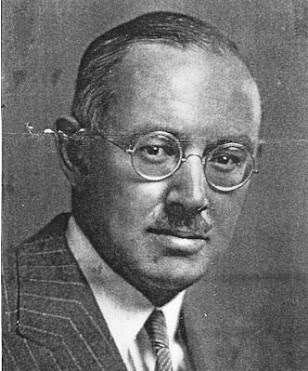
Karl Merz had been born in Germany in the 1830s. He learned how to play the organ and violin while quite young. In 1854, he emigrated to the United States, and by 1861 was was on the faculty of the Oxford Female College in Oxford, Ohio (later incorporated into Miami University). In 1882, he was asked to organize the music department at the College of Wooster. While at Wooster, he also wrote a column for Brainard’s Musical World. Eventually he became the editor of this publication. 

As a prolific composer, many of his musical pieces are preserved at the Library of Congress. During the summer of 1888, when Mrs. P.A. Follett operated a Summer Musical Institute, she arranged for  Merz to give a series of lectures at the Sandusky High School. Merz often visited Sandusky to pay a visit to his son, Dr. Charles Merz, and family. Dr. Merz was a leading Sandusky physician, and he was also an expert on Masonic history. 


Karl Merz's grandson, who was also named Charles Merz, was the editor of the New York Times from 1938 to 1961. 


Karl Merz died from pneumonia on January 30, 1890. The March 1890 issue of Brainard’s Musical World was dedicated to the memory of its former editor. An obituary honoring the memory of Karl Merz appeared in the February 1, 1890 issue of the Sandusky Register


Karl Merz was greatly missed by the musical community. A beautiful monument honoring the memory of Karl Merz was unveiled at the Wooster Cemetery on Memorial Day in 1894.

Thursday, February 20, 2020

D. C. Richmond’s Justice of the Peace Docket, Perkins Township

Former Sandusky Library Board member, Mrs. Sakie Merz, donated her grandfather’s Justice of the Peace Docket to the historical collections of the Sandusky Library. The entries were recorded in the 1840s in Perkins Township of Erie County.


The first entry, dated November 18, 1844 was an assault and battery case. Horace J. Bell took an oath and stated that Thomas McGee unlawfully assaulted him. At first Mr. McGee pleaded Not Guilty, but later he pleaded Guilty and was fined six dollars.


The docket contains several other assault and battery cases, as well as cases dealing with perjury, attempted rape, and cases involving goods and chattel. Many lists of witnesses and bail payments are also on record in the Docket.

Half of the Mr. Richmond’s ledger contains the Minutes of the Proceedings of the 4th Regiment, 2nd Brigade, 11th Division of the Ohio Militia, from 1838 through 1843.

Below is a page from the Militia Minutes which shows that William D. Lindsley was chosen to be the Colonel of the Militia, and H. J. Carpender selected as Lieutenant Colonel, on January 12, 1839.


David Chester Richmond was born in Connecticut on January 21, 1815. He moved to Erie County, Ohio in 1837, and married Sarah Burr in 1838. He died on February 17, 1888. Mr. Richmond was active in the Ohio State Board of Agriculture and the State Horticultural Society. He served in the Ohio General Assembly from 1872-1876. The Cyclopedia of American Horticulture concludes its biographical sketch about D. C. Richmond with this statement:  “Colonel Richmond was a conspicuous example of the influence which a man of ability and enthusiasm may exert in the uplifting of agricultural conditions in his neighborhood and in the states.”

Monday, June 17, 2019

June is a Popular Month for Weddings


An article appearing in the June 25, 1935 issue of the Sandusky Register reported that 41 marriage licenses had been issued in that month. The highest number of marriage licenses issued in Erie County in the month of June was in 1929, when a record of 55 marriage licenses had been issued. 

Several wedding related items are housed at the Follett House Museum and the Sandusky Library Archives Research Center.  Below is an undated picture which shows the interior of Saints Peter and Paul Catholic Church during a wedding ceremony.
   

This bride had her picture taken at the former Sandusky Business Women’s Club. Though we do not know the name of the bride, the photograph was taken by Torow Studio.
 
         
The wedding of Arthur Moosbrugger and Lucille Holtz also took place in 1938, at St. Mary’s Church.


Laura Elizabeth Cooke was the daughter of Pitt Cooke and Mary Townsend Cooke. Laura is pictured below in her wedding dress on December 8, 1886. Laura’s groom, Franklin S. Barker, was a photographer in business with Mr. W. A. Bishop at the time of his wedding.


In 1891, Sakie Prout married Charles Merz. Dr. Charles Merz was a physician in Sandusky, as well as an expert on Masonic history. Dr. Merz’s best man was George Prout, and Sakie’s maid of honor was Mary Bookwalter Prout.


Visit the Sandusky Library Archives Research Center to view these and many more historical photographs.

Thursday, April 12, 2018

Sandusky High School Track Teams from the 1910s


According to the June 1910 issue of the Fram, Sandusky High School’s 1910 track team was the best track team that ever represented SHS. Chemistry teacher Charles Fleming was the team’s coach. He is on the far right in the picture above. Members of the 1910 track team included: Captain Clifton Schropp, Herbert Gregg, Orwell Schoepfle, Leland Spore, Elmer Scott, Howard Neill, John Tanney, Charles Merz, and Olen Dunn. During the 1910 track season, seven different track and field records for Sandusky High School were broken. 

Below is a picture of some of the members of the 1915 Sandusky High School track team.


Only a few of the individuals in this 1915 photo have been identified. They are: Glen Schropp (left front),  Coach William Slygh in the center, Leon Weichel (to the left of the coach), J. Payne, (back left) and T. Dempsey (Back right.) 

Notes on the picture below indicate that these are members of the Sandusky High School track team of 1919.


The May 1919 issue of the Fram describes the track meet between Lorain and Sandusky; unfortunately Sandusky was defeated.


Visit the Sandusky Library Archives Research Center to view several decades of historical copies of yearbooks from local high schools. You may learn more about your own family history.

Saturday, May 13, 2017

216 Erie County Residents Owned Automobiles in 1911


An article which appeared in the May 13, 1911 issue of the Sandusky Star Journal listed the names of the 216 Erie County residents who owned automobiles. The Erie County Clerk’s office kept a listing of the names of the owners of automobiles, the registration number, the owner’s address, and the make of car. In 1911, G.A. Boeckling owned an Oldsmobile. L.J. Parker owned a Buick. Dr. Merz drove an Overland. George Schade owned three vehicles, a Brush, a Speedwell, and a Cadillac. Though we do not know what type of vehicle George J. Bing is driving in the picture below, in 1911 he owned a Zimmerman, and he was an agent for Paterson roadsters and touring cars at his business on Tiffin Avenue.


Elmore automobiles sold for $1750 in 1911. Below is an Elmore from 1912.

   
The Star Garage sold an E-M-F “30” for $1100, at the corner of Market and Decatur Streets. Model T Fords were also sold there.


Many of the types of automobiles sold in Sandusky in 1911 are unknown to us today. The auto industry was then in its infancy, and was changing rapidly. If you would like to read the entire article about Sandusky’s automobile drivers in 1911, visit the Sandusky Library Archives Research Center, where several decades of local newspapers are found on microfilm.

Saturday, February 25, 2017

Charles Merz, Editor of the New York Times, 1938-1961


Charles Merz was born in Erie County, Ohio on February 23, 1893, to Dr. Charles H. Merz and Sakie (Prout) Merz. While at Sandusky High School, Charles Merz worked on the school’s yearbook, the Fram. During the summers, he was a cub reporter for the Sandusky Register and the Star Journal. He graduated from Sandusky High School in 1911. The younger Charles Merz is pictured below with the Debating Team at Sandusky High School.


Charles Merz graduated from Yale in 1915 and moved to New York to work at Harper’s Weekly, eventually being named editor of the magazine. In 1916, he became the Washington correspondent for the New Republic, with a brief hiatus during World War I, when he worked in military intelligence. He and Walter Lippmann compiled a survey on the press coverage of the Russian Revolution, and were very critical of the coverage by the New York Times.  

In 1931 Charles Merz went to work for the New York Times, where he served as editor from 1938 to 1961.  During the McCarthy era, Merz was known for his opposition to Senator Joseph McCarthy in his editorials. He also wrote several books, including: The Great American Bandwagon, The Dry Decade, And Then Came Ford, and Centerville, U.S.A.  It is believed that Centerville, U.S.A. was based primarily on Merz’s upbringing in Sandusky, Ohio


Charles Merz passed away on August 31, 1977. He is still remembered for his long career in journalism and his devotion to the principles of American democracy.

Monday, June 10, 2013

Dr. Charles Hope Merz, Physician, Historian and Author


Dr. Charles Hope Merz was a leading physician in Sandusky, beginning his practice in Sandusky in 1899. He was the son of Karl Merz, well known music educator who taught at Oxford Female College and Wooster College. Charles Hope Merz was born in Oxford, Ohio on November 7, 1861. He graduated from the Western Reserve College of Medicine in 1885. An article in the November 26, 1900 issue of the Sandusky Daily Star reported that Dr. Merz had just placed an X-Ray machine in his office. At the time, it was the only apparatus of its kind in Sandusky. The machine was powered by six storage batteries. Sandusky residents were amazed that the doctor could see through one’s flesh to view their bones. The x-ray machine was expected to be helpful in surgical operations, and in locating foreign objects in patients.

In 1911, Dr. Merz was instrumental in arranging for Harry Atwood making a landing in his airplane in Erie County. Besides being an aviation enthusiast, he was very fond of driving his automobile. The September 16, 1936 issue of the Sandusky Register reported that Dr. Merz had purchased his first automobile on June 7, 1904, and he had been driving for 32 years. The Erie County Auto Club believed that Dr. Merz held the record for the number of years of automobile driving in Erie County, Ohio in 1936.

Dr. Merz also was an outstanding Masonic scholar who wrote several books on that and other subjects, and served as editor of the Masonic Bulletin in Sandusky for nearly 28 years. He was a charter member of the National Masonic Research Society of Iowa, and an honorary life member of the Cincinnati Masonic Library Association. In 1892 Dr. Merz wrote a book about the history, etiology, diagnosis and treatment of influenza.  He also was a member of the National Association of Railway Surgeons. Dr. Merz married Sakie Emeline Prout, a longtime member of the Board of Trustees of the Sandusky Library, in 1892. Dr. Charles H. Merz died on October 14, 1947. He was buried in Oakland Cemetery.


The son of Dr. and Mrs. Merz, also named Charles Merz, was editor of the New York Times from 1938 until 1961. His editorials against American neutrality in the years prior to World War II and in opposition to Senator Joseph McCarthy in the 1950s affected the way many Americans viewed current events of the time. Charles Merz also authored three books: Centerville, U.S.A., The Great American Bandwagon, and The Dry Decade.  Charles Merz, the author and editor, died in New York City on August 31, 1977.

Wednesday, June 15, 2011

Sandusky High School Class of 1911

The Sandusky High School graduating class of 1911 is pictured above on the steps of the Sandusky Library (Adams Street entrance.) Graduation was held on Thursday, June 15, 1911 at the Sandusky Theatre. At the commencement exercises, eight class members acted out a portion of scenes one and three of the fifth act of Shakespeare’s play Winter’s Tale. A major portion of the evening was the presentation of twelve essays, all dealing with the national conservation movement. Sandusky High School graduating senior Charles A. Merz spoke on the Conservation of American youth. He spoke of athletics, social settlement work, and organizations like the Newsboys and the Boy Scouts of America. He said, “Save a man and you save one person; save a boy and you save a whole multiplication table.” Charles A. Merz went on to become the editor of the New York Times from 1938 until 1961. In his editorials he took strong opposition to Adolph Hitler and to Senator Joseph McCarthy. Mr. Merz’s first book CENTERVILLE, U.S.A. was based primarily on his experiences growing up in Sandusky, Ohio.

A review of the Sandusky High School class of 1911 is found in the Senior Issue of the Fram, from June of 1911.

Tuesday, August 31, 2010

Sandusky’s Masonic Temple

In the picture above, hundreds of people have gathered for the laying of the cornerstone for the Masonic Temple, located at 302 Wayne Street, on June 24, 1889. Ellie Damm wrote in Treasure by the Bay that Sandusky’s Masonic building was made of buff sandstone and blue limestone, and built in the Second Romanesque-Revival style. H.C. Lindsay of Zanesville was the architect, and Adam Feick and Brothers were the builders.

The Science Lodge No. 50 F & AM was established in Sandusky in 1818. The first master of the lodge, Hector Kilbourne, platted the city of Sandusky in the pattern of the Masonic emblem. Former museum curator Helen Hansen holds a copy of the original plat map in this image.
In 1940, the Sandusky Chamber of Commerce had its offices in the street level of the Masonic Temple.
A fire damaged the roof and top floors of the Masonic Temple in January of 1943.
A view of the Sanduksy Masonic Temple in 1983 shows how the building was redesigned after the fire, with changes to the roof and removal of two towers:
Sandusky physician Dr. Charles Hope Merz was an outstanding Masonic scholar who wrote several Masonic books, and served as editor of the Masonic Bulletin in Sandusky for nearly twenty eight years. Guild Masonry in the Making, by Dr. Merz, is available full text at Google Books. Visit the Sandusky Library Archives Research Center to view several copies of The Sandusky Masonic Bulletin from the 1930’s and 1940’s.

Wednesday, September 05, 2007

Prout's Station

The town formerly known as Prout or Prout’s Station is located in the north central portion of Oxford Township of Erie County.

A. W. Prout settled in this location in 1833, purchasing land from George Hollister and Isaac Mills for four dollars an acre. A. W. Prout was an agent of an early railroad line that operated in Oxford Township, and also served as the Postmaster of Prout’s Station. A Post Office was first established as “Wheatsboro Post Office” in 1812, and later operated as Prout Post Office (among other names) until Nov. 14, 1905.

In 1885 a mission church from the St. Anthony’s Catholic Church in Milan was started at Prout’s Station. A school is found at Prout’s Station in the 1896 Erie County Atlas. In the 1920’s the Central Erie Supply and Elevator did a thriving business, handling an estimated six hundred thousand dollars in 1927.

James A. Ryan, in a 1928 Star Journal newspaper article called Frank J. Prout “one of Prout’s Station’s best known sons.” Frank J. Prout (shown below) was Superintendent of Sandusky City Schools from 1921 to 1939. Dr. Prout was appointed to the presidency of Bowling Green State University in 1939, and continued in that position until 1951. Prout Chapel on the BGSU campus is named for Dr. Frank Prout, while a women’s dormitory was named Alice Prout Hall, for his late wife.

Another Prout descendant, Charles Merz, son of Sakie Prout Merz, was the editor of the New York Times from 1938 until 1961. His editorials in opposition to Senator Joseph McCarthy in the 1950's were influential on American thinking.

You can read James A. Ryan’s history of Prout’s Station from the October 6, 1928 Star Journal at the Archives Research Center of the Sandusky Library, where the Star Journal, Sandusky Register, and other newspapers are available on microfilm.