Showing posts sorted by relevance for query cable park. Sort by date Show all posts

Tuesday, October 08, 2019

Dedication of Cable Park Historic District


On October 8, 1989, the Erie County Historical Society dedicated a marker in the Cable Park neighborhood of Sandusky to commemorate the historic district on Wayne Street between Scott and Cable Streets, as well as the former Erie County Fairgrounds, at this location between 1865 and 1899. In the picture above, Mayor Mike Kresser is speaking to the group gathered for the marker dedication. Laurence Cable and his sons Frank and Edward planned the residential district.


There were specific guidelines for the homes that were built at Cable Park, listed below in the August 9, 1914 issue of the Sandusky Register.


There were to be only residences, and no commercial properties in Cable Park. The house lines were to be no less than forty feet from Wayne Street. No two-family homes were allowed. The planned residential area was to have a park-like atmosphere, and it was close to public transportation routes.


Cable Park Historic District was named to the National Register of Historic Places in 1988. You can read more about Cable Park in the Sandusky Register of February 24, 1988.

Sunday, January 06, 2019

Frank Cable and Family


The Frank Cable family is pictured above in the late 1890s. Frank’s wife was the former Ida Schwind. Their daughters were Clara, Florence and Stella. Frank, along with his father Laurence Cable and his brother Edward, was active in real estate development in Sandusky in the early twentieth century. The Cable family developed Cable Park, a residential neighborhood on Sandusky’s Wayne Street, and they were key donors to the former Providence Hospital. Below we see Frank Cable standing outside the home in which he grew up, at the southwest corner of Central Avenue and Monroe Street.


Frank and Ida’s daughter Clara Cable married Leo Wagner, who operated a florist shop in Sandusky for many years on Columbus Avenue.

Clara Cable Wagner
 Florence Cable married attorney George C. Steinemann.

Florence Cable Steinemann

Youngest daughter Stella went on to marry Dr. M.A. Wagner. After the the doctor's death, Stella wed Roman Burnor, and they made their home in Toledo, Ohio.

Mrs. Ida Schwind Cable died at the young age of 40, in a hospital in San Antonio, Texas following a serious illness. The telegram announcing her death was delivered to the Cable family on the very day that the Providence Hospital dedication took place, in April 1904. The original Providence Hospital had once been the home of C.C. Keech on Hayes Avenue.
  

Frank Laurence Cable died at the Sawyer Sanitarium in Marion, Ohio on December 14, 1913. Sadly, his brother Edward Cable had died just a few weeks earlier. The Cable family left their mark on Sandusky, Ohio. If you would like to learn more about this family and their many contributions to our community, visit the Sandusky Library Archives Research Center, where you can view the Cable Family Collection.

Friday, October 30, 2015

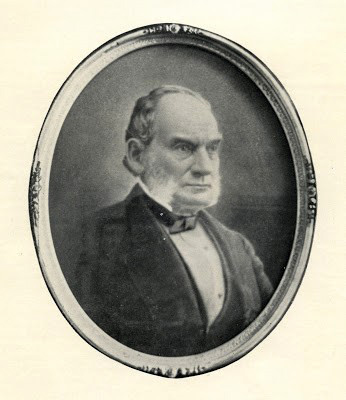
Lawrence Cable, Originally Known as Lorenz Kobul


Lawrence Cable, also known as Lorenz Kobul, was born in 1824 in Siegen, Alsace-Lorraine, which was then a part of France, but later was incorporated into the German Empire. Laurence emigrated to the United States in 1843, and he first settled in Indiana, where his brother was living. After attending college classes at the University of Notre Dame in Indiana, he moved to Sandusky. 

In the spring of 1848, he married Miss Josephine Zuercher. She died of cholera in 1849, leaving behind a young daughter named Josephine. That year he began working for the Mad River Railroad. For a time in the 1850s he worked with Ben Icsman, to furnish timber for the railroad bridge across Sandusky Bay. He worked in the shoe business from about 1856 to 1867. In 1872, Mr. Cable was named president of the newly formed Third National Bank, and he stayed in this position until his death in 1904. Ernst Von Schulenburg wrote in Sandusky Then and Now, that Cable and the bank’s treasurer, F.P. Zollinger, protected the Third National Bank “with the eyes of an Argus.” In 1904 he purchased the site of the old fairgrounds at the end of Wayne Street with the intent of building an upper middle class neighborhood. After he died, his sons Edward and Frank Cable continued the development of Cable Park, located at 1103-1234 Wayne Street.

Mr. Cable had married Victoria Stoll in 1852, and they had five children. Mrs. Victoria Cable died in 1874. Laurence married for a third time in 1880, to Miss Mena Walter. In 1880 he built a two story home at 910 West Monroe Street, which still stands today. After his death, his wife stayed at this home until she died in 1930.

       
Lawrence Cable was known for his generosity. He, along with two other parishioners, donated three bells to the St. Mary’s Catholic Church, when the current church building was in its early days. In 1902 Mr. Cable donated money to buy the former residence of C.C. Keech on Hayes Avenue for use as a hospital under the direction of the Sisters of Charity of St. Augustine. This home eventually became Providence Hospital, which later became a part of Firelands Regional Medical Center.


Lawrence Cable died on October 16, 1904; he was buried at St. Mary’s Cemetery in Sandusky. In a long life, beginning in Europe and ending in Sandusky, he became one of the community’s most respected residents. You can read much more about him in the book, History of the Western Reserve.  The Cable Family Collection is housed in the Sandusky Library Archives Research Center.  This collection documents some of the business activities of Cable and his sons Edward and Frank in the late 1800s and early 1900s.

Monday, December 10, 2007

New Finding Aids for Old Collections

I know this is coming a little late (the work was finished in August), but I would like to recognize and publicize some new resources produced by our summer intern this year. He created several new finding aids for materials that had been "buried" in the archives, because they had not been fully described as distinct collections. We're hopeful that these new information sources will bring increased attention to some interesting historical items, and provide more information of value to researchers. Although none of these collections is very big, there will certainly be some bits of information useful to genealogists, local historians, and others with an interest in history and culture.

Many of these new finding aids describe collections of papers and artifacts produced and gathered by local families and individuals. The Stubig Family Collection (1852-1926) contains materials relating to the life and times of Christian Stubig, a German immigrant to Sandusky, and his son Carl Stubig, a newspaper reporter and local political figure. Among the items in this collection are letters written in German between family members and Stubig's Weekly, a political newspaper published by Carl Stubig, 1915-1918.

The Wilbor & Wilcox Family Collections (bulk 1848-1873) provide insight into business and personal activities in 19th-century Sandusky. The collection contains records of dry goods business transactions and personal correspondence among family members.

The Cable Family Collection (bulk 1895-1916) offers a description of the business activities of Laurence Cable and his sons Edward and Frank, including legal documents and correspondence, some relating to the Cable Park residential development in Sandusky.

The John F. McCrystal, Sr. Papers (bulk 1893-1925) include approximately 175 items relating to Mr. McCrystal's participation in legal and civic issues, particularly during his time as chairman of Sandusky's Legal Advisory Board in the World War I period.

The Frohman Family Collection (1891-1990) is a small collection of memorabilia relating to the Sandusky family, beginning with brothers David and Henry, who arrived in the 1850s, to Charles Frohman, the businessman and local historian who died in 1976.

The Chapman and Pendleton Family Correspondence consists of 120 letters sent between family members between 1843 and 1870. They offer a rich description of life of that time, including reports of travel and migration, diseases, death and other hardships, as well as other personal matters that help to describe the era.

Also, the library holds several small collections relating to local businesses. Although none of these collections represent the complete records of a company (or even a significant portion), they offer perpectives of various local industries. Included are: the Hinde and Dauch Company Collection (1894-1995), consisting primarily of advertisements and other business ephemera; the American Crayon - Prang Collection (1878-1980), containing advertising, some correspondence, catalogs, and secondary articles relating to the company's activities; and the M. Hommel Winery Collection (bulk 1897-1915), including records of the company relating to competitions at international expositions and fairs, some business records, and advertising materials.

For more information about these collections, or any other collections in the Archives Research Center, please contact the Sandusky Library, via phone (419-625-3834) or email, or come in and visit the library.

Sunday, October 20, 2019

Buffalo Bill’s Wild West Show Visited Sandusky


The September 15, 1885 Sandusky Daily Register carried an advertisement for Buffalo Bill’s Wild West Show, to be held at the Sandusky Fair Grounds (in the area now known as Cable Park) for “positively only one performance,”  on Thursday, September 17 at 2:30 p.m. Admission was fifty cents for adults, and twenty five cents for children. Streetcars ran directly to the fair grounds, and railroads brought excursion groups to the show.


A grand parade was held at 10 a.m. on the day of the performance. The show advertised the appearance of Sitting Bull, White Eagle, and fifty-two braves, along with Miss Annie Oakley, Frisking Elk, and the phenomenal boy-shot Johnny Baker. The show claimed to have the largest herd of buffalo ever exhibited. 

Buffalo Bill was to shoot at clay pigeons while on foot, but he would shoot at glass balls while riding horseback at full speed. The ad continued to state that the ten cowboys who rode bucking horses were wilder than the horses themselves.  Equestrian acts, lassoing, and steer riders rounded out the program. Proprietors Cody and Salisbury promised to “fulfill every promise.”

Charles E. Frohman, in his Sandusky Potpourri, recounted Sandusky’s only buffalo chase.  After Buffalo Bill’s September 17th show closed, a buffalo escaped near the railroad depot at North Depot and Mcdonough Streets. The buffalo ran out Hayes Avenue, as a dozen Native Americans pursued it on horseback. It ran through the yard of C. C. Keech’s residence, and kept going through neighboring fields, destroying corn stalks along the way. After an hour’s pursuit, the buffalo was caught and taken back to the depot.


(About twenty years later, the C. C. Keech home later became part of Sandusky’s Providence Hospital, now the South Campus of Firelands Regional Medical Center.)
  
While the chase was in progress, two cows belonging to Patrick Gagen were frightened, and ran away. Dairy farmer Louis Benckart and his sons found the two cows, and refused to give them back, stating that the cows damaged their fields. Mr. Gagen took legal action to recover the cows.

Thursday, May 24, 2018

Day of Jubilee in Honor of the Fifteenth Amendment


According to the May 25, 1870 issue of the Sandusky Register, a Day of Jubilee was held in honor of the ratification of the fifteenth amendment to the U.S. Constitution, which prohibited federal and state governments from denying the right to vote based on that citizen’s “race, color or previous condition of servitude.”


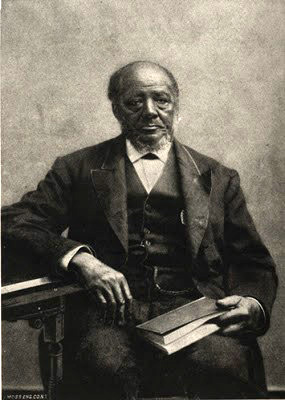
The Great Western Band led a procession to the Erie County Fairgrounds, then located south of Scott Street in the area now known as Cable Park. There were delegations here from several neighboring communities. The first feature of the activities was a glee club of five African American ladies who sang the song “America.” Rev. Thomas Holland Boston (below) offered up a prayer.


Mrs. Handy from Fremont read messages from President U.S. Grant and Secretary of State Hamilton Fish which proclaimed the ratification of the 15th constitutional amendment. The next speakers were Mr. Moore, and Mr. W. J. Scott, who had been an enslaved individual at one time. Well known attorney F.D. Parish also addressed the group. Mr. Parish had been an active participant of the Underground Railroad of the Firelands.


The final speech at the Jubilee was given by Oran Follett.


In the evening, a ball was held at Fisher’s Hall. Although African Americans did not actually receive full voting equality in some states for several years, in 1870 there was great celebration in honor of the 15th constitutional amendment.

Thursday, September 27, 2007

Horse Races in Sandusky


Although we have not had horse races in Sandusky for quite a while, the trotters were popular in town for many years, beginning about 150 years ago.

When the Ohio State Fair was held in Sandusky in 1858 the new fairgrounds (off Wayne Street, where Cable Park is today) included a state-of the-art race track. The Sandusky Register previewed the racecourse in its August 7, 1858 edition, declaring that it "will be one of the finest courses in the state." It was a mile-long oval, fifty feet wide, "with a 'home-stretch' of 100 rods" (2.5 furlongs, or 550 yards). Its inaugural races were held on September 2, 1858, with races all during the state fair in September. Entrants in those early races appear to have been mostly residents of nearby communities who wanted to show off the quality of their horses and their racing carts. Winners at the fair's races received purses of $50.


By 1874, the Sandusky Trotting Association was established to manage the races. The first meet sponsored by the Trotting Association began at 10:30 AM on Wednesday, August 1, with eight horse races, and human foot races in between. (Foot races were frequently held on the track.) The highly popular Great Western Band performed throughout the day. (You can see the band marching in an 1876 parade on the track in the image above.) Each race was run as a best-three-of-five, or two-of-three, series of heats. One of the races was a match race between Gottlieb Epple's double team and Clark Center and his horse, Silversmith Maid -- a race the Register said was run as a "side bet." After losing the first heat, Silversmith Maid won the next two races to take the prize. (Sadly, there was no indication as to how much was bet.)

Additional newspaper articles show that the races were still popular into the 1920s, with a track record $5000 purse (worth about $50,000 today) offered on July 30, 1924.

Tuesday, February 12, 2008

Winter Races on Central Avenue


An earlier blog entry reported on horse racing at the original Erie County Fairgrounds, located at what is now Cable Park in Sandusky. But there also has been horse racing on the other side of town, but of a different sort. For a few winters around 1900, Central Avenue, between Monroe and North Depot Streets, became known as the "speedway," where local stables brought their best horses and drivers for races on the snowy pavement. (Central Avenue had only recently been paved.)

An article in the Register newspaper on December 18, 1901 described plans for a season of racing on the Avenue, described as "without a doubt one of the best in this section of the country. It is about a half mile long and is plenty wide enough for four horses to come down abreast." (You can see from the photo above that this was an accurate claim.) It described the leading stables in the area, and the prospects for racing that season.

Do you think today would be a good day for a sleigh race?