Showing posts with label Daughters of the American Revolution. Show all posts

Friday, June 10, 2022

Helen Gallup Pyle


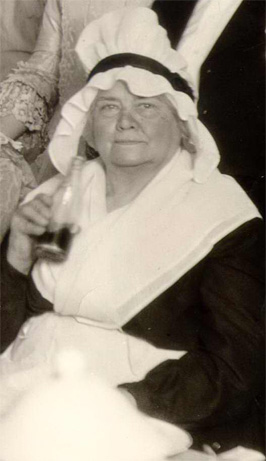
Helen Gallup was the daughter of Frank Gallup and the former Fannie Walker, born in Sandusky, Ohio in 1892. Both Helen’s father Frank and her paternal grandfather Mozart Gallup were associated with the Sandusky Tool Company. Above is a close-up from her third grade class picture at Monroe School about 1900. During her later years of high school, Helen attended Rogers Hall School for Girls in Lowell, Massachusetts, graduating in 1911.

In 1917, Helen Gallup married Joseph Gilpin Pyle, Jr., an attorney. The marriage took place at Grace Church in Sandusky.

A copy of the wedding invitation is in a collection of historic invitations from Sandusky area events in the Sandusky Library Archives Research Center.

Mrs. Helen Gallup Pyle was very active in the Martha Pitkin Chapter of the Daughters of the American Revolution. An article from the February 8, 1922 issue of the Sandusky Star Journal reported that both Mr. and Mrs. Pyle took part in a group of period dances at the D.A.R. Ball held at the Odd Fellows Hall in Sandusky. Helen served as both a teacher and a dancer for the special event. 

By 1927 Mr. and Mrs. Joseph G. Pyle, Jr. had moved to Pasadena, California with their two children, Joseph G. Pyle, III and Hermoine. Both of the Pyle children would later serve in the U.S. Military during World War II. Corporal Joseph G. Pyle, III was in an Infantry unit in the South Pacific in 1944, and Hermoine Pyle was with the Women’s Army Corps branch of the U.S. Army. 

A brief article in Sandusky Register of July 14, 1934 stated that Mr. and Mrs. Joseph G. Pyle, Jr. had divorced. Mr. Pyle passed away in 1940. Mrs. Helen Gallup Pyle died in York, Pennsylvania in 1965, and her remains were returned to Sandusky for burial in the Gallup family lot at Oakland Cemetery.

Monday, October 11, 2021

Plaque Honoring Sandusky’s Pioneers


 You might have driven past this monument many times and not noticed it, but it deserves recognition. It is a tribute to the founders of Sandusky.

On June 25, 1937 members of the Martha Pitkin Chapter of the Daughters of the Revolution unveiled a plaque honoring several of Sandusky’s pioneer citizens at the triangular park located between Huron Avenue, Wayne, and East Adams Streets. The bronze plaque, created by A. J. Balconi, was placed on a three ton boulder at the park.

Names on the top portion of the plaque include the founders of Sandusky:  Zalmon Wildman, Isaac Mills, and George Hoadley. On the bottom portion are the names of the nine men who directed the incorporation of Sandusky as a city in 1824. They were: Dr. George Anderson, Aaron C. Corbet, Cyrus W. Marsh, Alexander Clemons, Eleutheros Cooke, John Wheeler, William Townsend, William Kelly, and Moors Farwell, who served as Sandusky’s first mayor. Several of these men were Masons; an article in a 1937 issue of the Sandusky Masonic Bulletin recognized them and the construction and dedication of the monument

Visit the Sandusky Library Archives Research Center to learn more about the pioneer residents of Sandusky, Ohio. And be sure to stop and visit the monument in the park sometime.

Saturday, April 13, 2019

Mary Cooke


Mary A. Cooke, the wife of Sandusky businessman Charles E. Cooke, was an early member of the Board of Trustees of the Sandusky Library Association. She was on the Board in 1870 when the Library Association of Sandusky was founded, and when it was incorporated on November 5, 1895. 

Mrs. Cooke was born Mary Augusta Turney. She married Charles E. Cooke on May 31, 1860. Besides serving on the Library Board, Mrs. Cooke was also very active in the Martha Pitkin Chapter of the Daughters of the American Revolution. She traced her roots back to Noah Hoyt, an ancestor who served as a private with the Connecticut militia during the time of the American Revolution. 

On December 16, 1900, the local D.A.R. celebrated the anniversary of the Boston Tea Party at Mrs. Cooke's home, at the southeast corner of Wayne and Jefferson Streets. Between the parlors of the Cooke home, was displayed the log cabin silk banner which was created by Sandusky women, to welcome William Henry Harrison to Sandusky in 1840. This banner is now in the historical collections of the Follett House Museum.

  
The people at the celebration wore colonial costumes. Colonial era refreshments were served, and a quartet led by Mrs. J.W. Andrews sang patriotic songs, to the accompaniment of Mrs. Frank Sloane on the piano. A summary of the celebration of the Boston Tea Party in Sandusky was featured in volume 18 of the Daughters of the American Revolution magazine. 

Mary Augusta Turney Cooke died at her Wayne Street home in Sandusky on May 4, 1917, after a lengthy illness. Rev. E.G. Mapes officiated at the funeral services, and burial was at Oakland Cemetery. Mrs. Cooke was survived by her daughter, two sisters and grandchildren.

Monday, November 09, 2015

Jessica Follett Foster


Jessica Follett Foster was born in 1869 in Sandusky, Ohio to Frank E. Foster and his wife, the former Eliza Ward Follett. Jessica’s father and her maternal grandfather, Oran Follett, were the publishers of the Lincoln-Douglas Debates. While living in DeKalb, Illinois, Jessica taught at the Northern Illinois State Teachers College for seventeen years. She was a member of the Martha Pitkin Chapter of the Daughters of the American Revolution, tracing her ancestry back to Revolutionary soldier Frederick Follett. Jessica’s lineage is found in volume 35 of the Daughters of the American Revolution Lineage Book.


From about 1923 to 1934, Miss Foster resided on Wayne Street in Sandusky, and during that time worked as an agent for the New York Life Insurance Company. This advertisement appeared in the January 19, 1924 issue of the Sandusky Star Journal.


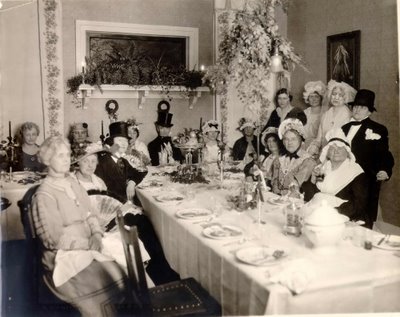
In Sandusky, Jessica was a member of the Art Study Club, pictured below at an event in which all the members dressed in historic costume.


In the Centennial issue of the Sandusky Register, on December 22, 1922, she shared excerpts from her grandfather Oran Follett’s meeting with President Abraham Lincoln in October of 1862 (available on microfilm at the Sandusky Archives Research Center).  

In the 1930s, Jessica Follett Foster moved to Los Angeles. She resided there until her death on April 30, 1960. Miss Foster was buried in the family lot at Sandusky’s Oakland Cemetery. 

In the collections of the Follett House Museum is a chair which once belonged to her grandparents, Oran and Eliza Follett, and was a favorite of her mother when she was a child.


Tuesday, February 26, 2013

Martha Pitkin and the Sandusky Chapter, D.A.R.

Mrs. E. Lea Marsh, nee Elizabeth Diodate Griswold Marsh, is pictured below. She is one of the many descendants of Martha Pitkin, whose name is associated with the Sandusky chapter of the Daughters of the American Revolution.

The founder, organizer, and first regent of the Martha Pitkin Chapter of the D.A.R. was Mrs. Jay Osborne Moss, who was born Frances Griswold Boalt. The local chapter was organized on April 27, 1897, with fourteen charter members. Mrs. Moss was a direct descendant of Martha Pitkin. Judges Ebenezer Lane and William G. Lane were also directly descended from Martha Pitkin and her husband Simon Wolcott.

A history of the Martha Pitkin chapter of the D.A.R. was reported in the May 1, 1927 Sandusky Register, on the thirtieth anniversary of the organization’s founding. Mrs. Curtis Schaufelberger, historian, wrote about Martha Pitkin: “Martha, a young woman of religious character, was possessed of a natural brilliancy of intellect, which was later on developed by an education in London. In addition to these attributes she was endowed with great beauty.” Charles Knowles Bolton wrote a “versified narrative” which describes the courtship of Martha Pitkin and Simon Wolcott. The title is On the Wooing of Martha Pitkin. Martha Pitkin was born in England. She came to the United States in 1661. Her first husband was Simon Wolcott. Among their descendants were five Connecticut governors. Martha’s grandson Governor Oliver Wolcott was a member of the Continental Congress and a signer of the Declaration of Independence. After the death of Simon Wolcott, Martha married Daniel Clark. Martha Pitkin Wolcott Clark died in 1719, and is buried in East Windsor, Connecticut.

The records of the Martha Pitkin Chapter of the Daughters of the American Revolution are located in the Archives Research Center of the Sandusky Library. Included in the collection are financial records, historian’s records, and several scrapbooks.

Reminder: Those interested in learning more about genealogy and the D.A.R. are invited to the Genealogy workshop sponsored by the Martha Pitkin Chapter, at the Sandusky Library, beginning at 10:30AM Saturday, March 2.

Monday, May 31, 2010

Francis McQuown, Revolutionary War Soldier

On Memorial Day in 1939, the Martha Pitkin Chapter of the Daughters of the American Revolution placed a marble tombstone at Oakland Cemetery, to honor the memory of Francis McQuown. According to clippings in a D.A.R. notebook housed at the Archives Research Center of the Sandusky Library, Francis McQuown first enlisted as a private in the Company of Edward Grimes, 7th Battalion, at Cumberland County, Maryland. Mr. McQuown was with the Maryland Militia in 1778, and advanced to the rank of Captain in the Sixth Class, Third Company, Fifth Battalion, Cumberland County, Militia.

In 1849, Francis McQuown came with his family to Sandusky, Ohio. He first married Jane Gregg, with whom he had eight children, and then married Agnes Smythe, and they had three more children. Francis McQuown died in 1855, at the age of 99. His grave is located near the Schade Mausoleum at Oakland Cemetery.

The surname McQuown became to be spelled McEwen in Sandusky. One of the sons of Francis McQuown, Thomas C. McEwen, was the postmaster in Sandusky in the 1860’s. He was initially appointed to be Deputy Postmaster by Abraham Lincoln, according to the Journal of the Proceedings of the United States Senate.
Another descendant of Francis McQuown was Miss Sarah Elizabeth McEwen. Sarah McEwen was associated with the Sandusky Library for over forty years. Miss McEwen passed away at the age of 91 in March of 1933.

To learn more about the family history of the McQuown/McEwen family, see the book Our McEwen Heritage: The James McEwen Faamily in America Since 1736, available full text at the Family History Archives of Brigham Young University.

Wednesday, August 23, 2006

Clubs and Organizations in Erie County

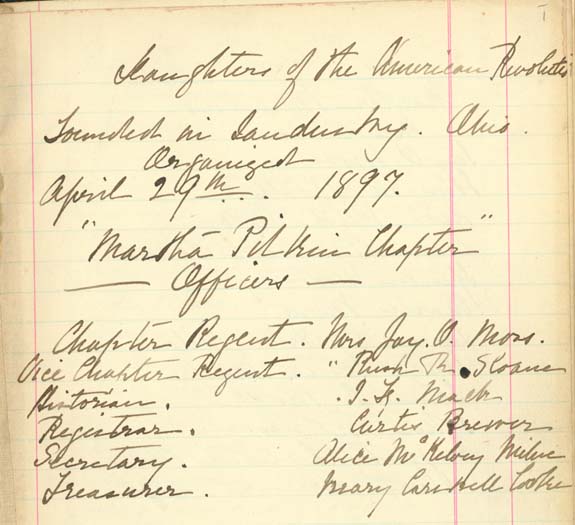
For better or worse, social clubs and community organizations are not as popular as they once were. With the advent of movies, television, the Internet, the automobile, and many other developments in technology and culture, clubs and organizations play a smaller role in the community than they did, say, in 1897, when the Daughters of the American Revolution, Martha Pitkin Chapter, was founded in Sandusky. (An excerpt from the D.A.R. secretary's book is shown above.) In the nineteenth century and well into the twentieth century, the role of clubs and organizations in the community was dominant. For an analysis of this development in society, you might want to read Robert Putnam's book Bowling Alone (in our library collection at 306.0973 PU) -- but don't take my world for it, since I haven't read the book yet.


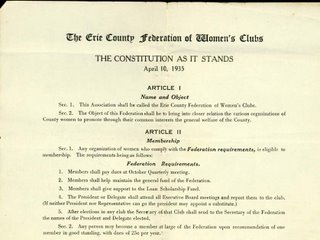
It does seem clear, however, that studying the history of local clubs and organizations will help you understand the culture and society from which they come (or at least that portion of society represented by the members of that particular club). The Sandusky Library Archives Research Center holds records and documents from several local clubs and service organizations, including: the Daughters of the American Revolution, Martha Pitkin Chapter; the Erie County Federation of Women's Clubs, and the Sandusky Federation of Women's Clubs; the Art Study Club; the Men's Literary Club; the Sunyendeand Club; the Nineteenth Century Club; the Sandusky Concert Association; and others. Thanks to the help of our summer archives intern, we have new and updated finding aids describing many of these documents and collections, for those interested in researching this aspect of our history.

For those of you involved in a local organization or who owns the records of local clubs from the past, we encourage you to consider depositing those records with the Archives Research Center, to preserve these documents for future generations. We will be glad to explain how we will store and record your donation in the library as a record of our community. For more information, call (419-625-3834) or email the Archives Librarian.


The photo above is of a costume party given by the Art Study Club (probably circa 1920), where guests came dressed as famous literary characters. (From the Library's historic photo collection -- CLUB-047.)