
This watercolor painting of a church in
This is a portion of Norbert Lange's family tree:

The pastor of the church in

Dr. Norbert Lange was a well respected professor of chemistry at the

A blog dedicated to the discussion of topics relating to the history of Sandusky and Erie County, Ohio, the Lake Erie Islands, and nearby communities; inspired by the collections of the Sandusky Library Archives Research Center and the Sandusky History Museum at the Follett House. A service of the Sandusky Library.
This is a portion of Norbert Lange's family tree:
The pastor of the church in
Dr. Norbert Lange was a well respected professor of chemistry at the
 |
| St. Joseph's Cemetery, Sandusky |
The elder John Loeffler came from Rentheim, Baden, Germany to Sandusky in 1835. He married Catherine that same year. Eventually, he ran a tailoring business, in conjunction with a tavern and grocery store at the corner of Fulton and Market Streets. John Loeffler was the first in the family to die from cholera, on July 24, 1849. On July 26, Catherine, Frank and George died. The last child to die was Conrad, who passed away on July 28, 1849.
John Loeffler, the young child who survived the deadly epidemic, made a career as a caretaker of lawns and gardens, and was buried at St. Mary’s Cemetery in Sandusky in 1928.

Though no stones have been located, St. Joseph’s Cemetery records list all six members of the Loeffler family as having been buried in Section B at St. Joseph’s Cemetery. A total of 357 persons died from cholera in 1849, and smaller epidemics took place in 1852 and 1854. While many have tombstones at Oakland Cemetery and St. Joseph’s Cemetery, most victims were laid to rest at the Cholera Cemetery on Harrison Street. An historical marker was placed at the Cholera Cemetery in 1966.

You can read more about the cholera epidemic in Sandusky in Hewson Peeke’s book, A Standard History of Erie County, Ohio (Lewis Pub. Co., 1916.)


Pictured below is the Hotel Wayne, which was at one time next door to the Eldis property. The structures that once were the Eldis bakery and this hotel no longer stand. Where they once stood is now a parking lot for Civista Bank.

In the fall of 1852, Martin Eldis died, leaving Mrs. Louise Eldis a widow with several children. According to the History of Erie County, edited by Lewis Cass Aldrich, Mr. Eldis left his wife and children “an abundant share of earthly goods.” Louise carried on the bakery on Water Street for several years.

An article in the January 14, 2002 issue of the Sandusky Register stated that Mrs. Eldis received compensation for losses which occurred when the 103rd Regiment of the New York Volunteers occupied her building from November 1863 to May 1864 during the Civil War. Mrs. Eldis died on December 19, 1888. She was thought to be the oldest resident of Sandusky at the time of her death.
Martin and Louise Eldis and their children are buried in Lot 8 of Block 9 at Oakland Cemetery. As you view the Eldis monument, you can read the names of their ten children on the panels of the tombstone.


Fred Kranz was born in Nassau, Germany in 1841; in 1848 he came to the United States with his parents, Mr. and Mrs. Balthasar Kranz. The Kranz family settled in Perkins Township of Erie County, Ohio. Fred was raised on the family farm, and at the age of fifteen he was trained in the tinner’s trade.
In the 1860s, he worked for Flood, Geasen and Company, tinsmiths in Sandusky. By 1884, he was the senior partner in the company. The advertisement for F. Kranz below appeared in the 1884 edition of the R. L. Polk & Company’s Marine Directory of the Great Lakes.

A biographical sketch about Fred Kranz, which appeared in History of Erie County, Ohio, edited by Lewis Cass Aldrich, stated that Mr. Kranz had an extensive and well-equipped establishment, and he specialized in lime kiln work. In 1894, he had the contract for Faultless Furman boilers. also that year he installed a heating system in the Edward Jarecki residence on Central Avenue. Before that, in 1884, he installed a heating system at Holy Angels Church. There were two supply coils, and one-half coils under each seat, in a system which was devised by Mr. Kranz.
By 1896 Fred Kranz was the proprietor of the Sandusky Metal Works.

The advertisement from the 1896 Sandusky City Directory indicated by F. Kranz was a wholesale and retail dealer in plumbers’ supplies; gas and steam fitter; and also did tin, copper, and sheet iron work. he seemed to adapt his skills as the needs of his customers evolved through the years.
On May 5, 1899, Fred Kranz died at his residence at the age of 55. He left behind a wife, the former Caroline Traub, and four children. An obituary which appeared in the Sandusky Star of May 6, 1899, read in part, “During his long residence in Sandusky Mr. Kranz had won the esteem and respect of all who knew him. His private life and business methods had made many friends who will learn of his death with sorrow.” To read more about the Kranz family and other Sandusky residents of German origin, see the book Sandusky Then and Now, housed with the genealogy books at the Sandusky Library.
Many people in Sandusky are familiar with Kerber Marine Grocery located on Tiffin Avenue, but not many people know there was another Kerber grocery business on the east side of town.
Albert Kerber was born in 1861 in Ehrenstten, Baden near the city of Freiburg. His parents were Anton Kerber and Cecelia Bauman. Anton Kerber’s brother Vincent Kerber immigrated to Sandusky in 1849 and ran several well-known businesses. He was a masonry contractor whose projects included the Water Works, Barker School, Standard Wheel Company, and several social halls. Later in life Vincent collaborated with his sons in a number of businesses including Consumer Ice Company and a grain and feed business on Water Street.
Records show Albert immigrated in 1880. He was listed in the 1880 census as living with his uncle Vincent on Ogontz Street. Albert then settled on Middle Bass Island and worked for the Golden Eagle Wine Cellars.


Sometime around 1900 Albert expanded the grocery store to include a saloon. The picture below taken around 1905 shows the store and saloon. Standing in front of the store are Alberts’s sons, Millard and Carlisle and another brother-in-law, Clyde Kubach.


Albert died on March 13, 1911. His obituary indicates funeral was conducted by Sandusky Lodge No. 669 International Order of Odd Fellows. Burial was in Oakland Cemetery.
The building at the corner of First and McEwen Streets stands today as shown below.

The Sandusky Library has an issue of the German edition of Frank Leslie’s Illustrated Newspaper, dated October 22, 1881, in the historical files of the Archives Research Center.

The cover of this issue featured the 100 year anniversary of the surrender of Lord Cornwallis at Yorktown, Virginia. The German text was easy for local residents of German descent to read. The German-born population of Sandusky in the 1880s was about 25% of the total population, so German was a prominent second language in the city at that time.

The item was donated by Mrs. Louis Duennisch, who was both the daughter and wife of men who had been born in Germany.

Her father, Conrad Ebert, was born in 1824 in Bavaria, where he learned the trade of cabinetmaking. Mrs. Duennisch was the second wife of Louis Duennisch, who was born in Ostheim, Sachsen-Weimar-Eisenach in 1847. He emigrated to the U.S. with his widowed mother in 1857. Louis Duennisch worked at the Sandusky Sash, Door & Blind Company, where he eventually became foreman of the shop. He continued at that firm as well as its successors, for over thirty five years. At the time of his retirement, the business was known as George R. Butler and Company. Mr. and Mrs. Duennisch traveled extensively, both in the United States and abroad; the library has a photograph album of their travels from 1895 to the early twentieth century. Visit the Sandusky Library Archives Research Center to learn more about the former residents and businesses of Sandusky and Erie County, Ohio.
Andrew and Louisa Biemiller, both natives of Germany, had a son and two daughters born in Sandusky. Mr. Biemiller worked in the fish business, as well as being the original owner of the Sandusky Opera House, built in 1877. Originally called the Biemiller Opera House, ultimately it became known as the Sandusky Theatre and was the location for hundreds of performances of operas, musicals, vaudeville acts and plays, as well as motion pictures.
 |
| John Biemiller |
John Biemiller was born about 1857. He married
Anna Graves in 1879, but died in the following year. He was the father of
Andrew Frederick Biemiller, and the grandfather of politician Andrew John Biemiller.
 |
| Barbara Biemiller |
Miss Barbara Biemiller was born around 1862. She married Otto H. Ilg on April 24, 1884. After her husband died, she married August H. Klotz. Barbara outlived both her husbands. She passed away on June 23, 1930.
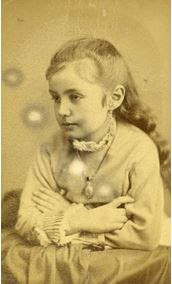 |
| Cora Biemiller |
Cora Biemiller was the youngest child
of the family, born in
The patriarch of the family, Andrew Biemiller died in

Andrew’s widow Louisa married Robert
McChesney, in 1885. Mr. and Mrs. McChesney resided in
 |
| Louisa Biemiller |
After her death in 1908, she was buried next to her first husband in


 |
| Lime kilns were prominent along the Sandusky waterfront in the 19th century |
In 1900 he purchased property that had been occupied by the National House hotel at the northwest corner of Market and Wayne Streets. He had the hotel razed, and built a multi-story brick building. At the street level was commercial property with large glass windows that would be home to the Cohn's department store for many years. On the upper floors were apartments that could be reached by either stairs or an elevator. Each apartment was modern, with hot and hot running water, steam heat, and a gas range in each kitchen. The Kunz block can be seen below on the 1905 Sanborn Fire Insurance Map, across from the Lea block, which is still there today.

In April, 1935 the Sandusky Masonic Bulletin, edited by Dr. C.H. Merz, announced that Mr. Kunz had recently celebrated his 90th birthday. At the time of his death in 1938, he was the oldest living member of Perseverance Lodge, 329, F. & A.M. He had been prominent on Masonic circles for several years. Mr. Kunz was survived by a son, three daughters, and several grandchildren, nieces, and nephews. Graveside funeral services were conducted by Rev. Donald Wonders, and burial was at Oakland Cemetery.

In 1984 about 300 customers visited the business each day. If you needed to, you could purchase just one nail or bolt at the store. If you had a problem at your house, you could go to Wholf Hardware, and the staff would help you determine just what you needed to make the necessary repair. Eventually Mr. Poeschl’s son and grandson helped run the business. Business began to decline at Wholf Hardware as larger retail stores began to carry more hardware products. At the end of April, 1995, members of the Poeschl family thanked local customers for their many years of patronage, as they announced the closing of the Wholf Hardware store in a letter to the editor of the Sandusky Register.
In a two-page article in the July 5, 1992 issue of the Sandusky Register, Virginia Steinemann and Helen Hansen wrote about the history of the section of Sandusky around Hancock and Monroe Streets, which had been the location of several homes and businesses owned by people of German descent.
The paint stirrer pictured below is now in the
collections of the Sandusky Library Archives Research Center.


Rev. J.G. Ensslin (sometimes spelled Enzslin) officiated at the baptismal service.


From about 1873 to 1890, George Peters operated a restaurant
and billiard parlor in the 600 block of
The Sandusky city ordinances of the time prohibited women from working in a business that served alcohol unless they were the wife or daughter of the owner.


George Peters was a native of
Vincent Kerber came from

Vincent Kerber and Constantina (Eckert) Kerber had a large
family of four sons and two daughters. Mrs. Kerber died in
Peeke’s A Standard History of Erie County, Ohio
contains biographies of John and Edward Kerber. Vincent Kerber’s obituary is
found in the September 18, 1898 issue of the
At St. Mary’s Cemetery, an angel adorns the monument in memory of Louise Kerber and Pauline Kerber Heiberger, the two daughters of Mr. and Mrs. Vincent Kerber.


Henry Hauser, their first child, died in infancy. The Hausers had five more children, three sons and two daughters.
John Hauser was a painter by occupation. He worked as a master painter for the Sandusky, Mansfield and Newark Railway (later merged with the Baltimore and Ohio) and the Mad River Railway, which became a part of the Big Four. During the Civil War, he served with Company B of the 145th Ohio Volunteer Infantry. When he wasn’t working, several hobbies kept him busy: he was quite fond of music and drama, and he was associated with German theatricals in Sandusky for several years. Additionally, he was an avid hunter and an enthusiastic botanist. He also was known as an expert in the repair of stringed instruments.
On February 23, 1900, John Hauser passed away at the age of 73. Funeral services were held at the home of a daughter, Mrs. Emma Wirth, on Market Street. Burial was at Sandusky’s Oakland Cemetery. Mrs. Margaret Hauser died on December 22, 1901 in Sandusky. She was survived by five children. An obituary in the December 23, 1901 issue of the Sandusky Register stated about Mrs. Hauser, “The deceased was a highly respected citizen of this city and her death came as a shock to all who knew her.”
Two of the grandchildren of John and Margaret Hauser were well known in academic circles. Dr. Norbert Lange was a chemistry professor at Western Reserve University, who is known for writing the classic text Handbook of Chemistry (now in its 17th edition). Dr. Lange and his wife were the benefactors for The Norbert A. and Marion Cleaveland Lange Trust of Sandusky Library, which has provided cultural and educational programs for Erie County residents for over twenty-five years.

Norbert Lange’s cousin, Dr. Elmer H. Wirth, was a professor at the University of Illinois from 1922 through 1947, serving as Head of the Department of Pharmacognosy for several years. He was the author of seven books and more than 300 articles on pharmacy.

The oldest son of Dr. Philip Graefe and his wife, the former Dorothea Kranz, also was a physician.

Dr. William Graefe was born in 1851 in

Another son of Dr. and Mrs. Philip Graefe, Dr. Charles
Graefe, also worked as a physician and surgeon in
A third son, Henry Graefe, was prominent as a banker in


During some of his time in business, August Guenther was in a partnership with his son Bruno. For several years his business partner was John J. Molter, former Sandusky Mayor. The company eventually went out of business due to the enactment of Prohibition laws.
In 1873 August Guenther married Sophia Kolbe. They had a family of three sons. Dr. Theodore Guenther became of physician with a practice in Brooklyn, New York. Son August E. Guenther was a professor of physiology at both the University of Michigan and the University of Nebraska. Sadly, Bruno Guenther died in 1910, after he suffered serious complications following a scratch from a copper wire. The elder August Guenther died on December 19, 1932, and he was buried in the family lot at Sandusky’s Oakland Cemetery.
In 1890 Otto Schimansky (sometimes spelled Shimansky) was the General Manager of the D. J. Brown Manufacturing Co., a company which manufactured hoops for barrels.

He was born in Germany, and settled in Oak Harbor, Ohio. He served in the Third Ohio Cavalry during the Civil War. In 1884, the Schimansky family moved to Sandusky. Otto held several patents, including a patent for cutting hoops, planing hoops, and pointing hoops.
Otto Schimansky and his wife Elizabeth were married for fifty-seven years. They were the parents of Dr. C. A. Schimansky and O. K. Schimansky, former publisher of the Cleveland Leader and Times. Otto was a member of the McMeens Post of the G.A.R. (serving as Inspector General), the Perseverance Lodge, and the First Congregational Church.
When he died in November of 1928, his sons received a condolence telegraph from General G. M. Saltzgaber, past commander-in-chief of the G.A.R. It began with “My heart was filled with grief on learning of the death of your noble father. He served with me during the great Civil War in the Third Ohio Veteran Volunteer Cavalry. Under the great Lincoln he was one of those fine young Americans who endured suffering and gave his great strength to recement our glorious union…”
Otto Schimansky and his wife and sons are buried in the family plot in Oakland Cemetery.
Here is a photograph of the 24th Reunion of the Third Ohio Cavalry held at Cedar Point:


