Showing posts with label Mills. Show all posts

Friday, December 17, 2021

Judge John Phelps and Sandusky Descendants


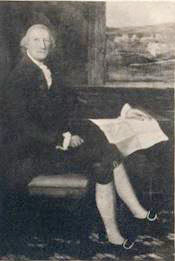
According to volume 3 of the book, New England Families, Genealogical and Memorial: A Record of the Achievements of Her People in the Making of Commonwealths and the Founding of a Nation, Judge John Phelps (born in Suffolk, Connecticut in 1736, died circa 1808) served as a Justice of the Peace and was a Representative to the Connecticut Legislature for several terms. Judge Phelps was associated with the manufacturing of iron, including the production of cannon balls and other war implements purchased by the United States Government. 

John Phelps married Mary Richardson, daughter of William and Lady Abigail Richardson, of Edinburgh, Scotland. One of their daughters was Abigail Phelps, who married Judge Isaac L. Mills, one of the co-founders of the city of Sandusky. William H. Mills, a well known Sandusky wine maker, was the grandson of the judge. 

Another descendant was Allen Phelps Mills, pictured with his mother in the daguerreotype below. Sadly, he died of diphtheria on November 7, 1869 at the age of nine. He was buried in the family lot at Oakland Cemetery.

Though Judge John Phelps lived and died in Connecticut, his descendants left a lasting impression on Sandusky. Mills School, Mills Street, and Mills Golf Course were all named after members of his daughter's family.

Monday, October 11, 2021

Plaque Honoring Sandusky’s Pioneers


 You might have driven past this monument many times and not noticed it, but it deserves recognition. It is a tribute to the founders of Sandusky.

On June 25, 1937 members of the Martha Pitkin Chapter of the Daughters of the Revolution unveiled a plaque honoring several of Sandusky’s pioneer citizens at the triangular park located between Huron Avenue, Wayne, and East Adams Streets. The bronze plaque, created by A. J. Balconi, was placed on a three ton boulder at the park.

Names on the top portion of the plaque include the founders of Sandusky:  Zalmon Wildman, Isaac Mills, and George Hoadley. On the bottom portion are the names of the nine men who directed the incorporation of Sandusky as a city in 1824. They were: Dr. George Anderson, Aaron C. Corbet, Cyrus W. Marsh, Alexander Clemons, Eleutheros Cooke, John Wheeler, William Townsend, William Kelly, and Moors Farwell, who served as Sandusky’s first mayor. Several of these men were Masons; an article in a 1937 issue of the Sandusky Masonic Bulletin recognized them and the construction and dedication of the monument

Visit the Sandusky Library Archives Research Center to learn more about the pioneer residents of Sandusky, Ohio. And be sure to stop and visit the monument in the park sometime.

Thursday, June 17, 2021

Did Fannie Mills Really Live in Erie County, Ohio? A Brief Adventure in Genealogy Research

In the 1880s Fannie Mills appeared in museums and sideshows as the “Ohio Big Foot Girl.” It seems that a medical condition caused Fannie’s feet to grow large, though the rest of her body was of a normal size. An article in the July 26, 1885 New York Times reported that Fannie wore size 29 shoes.


Did Fannie Mills really live in Erie County, Ohio at one time? By accessing Ancestry Library Edition, we learned that Fannie was eight and one half months old in the 1861 Census of England. She had been born in the registration district of Thakeham in Sussex, England. In 1861, Fannie resided in Sussex with her father George Mills, her mother Sarah Mills, and two older brothers. By the time of the 1880 U.S. Census, her name was listed as Fanny. On June 5, 1880, the census taker recorded the family of George and Sarah Mills as residing in Perkins Township of Erie County, Ohio. Fanny, her parents, and her brother Albert and sister Frances, all were born in England.

The census enumerator made a note next to the listing for Fanny Mills, age 14, that read  “deformed feet.”  A “Forty Years Ago Today” column in the Sandusky Register of April 9, 1929, reported that on April 9, 1886, Fannie Mills of Sandusky, who was noted as the girl with big feet, was appearing in New York. Newspaper accounts stated that she was offering $5,000 and a “well stocked farm” to the man who would marry her.  That may have been just a publicity item, rather than a fact, as Fannie/Fanny Mills married William Brown. To date, no marriage record has been located, but the Oakland Cemetery interment cards for Fannie Mills Brown list her burial date as May 4, 1899.  She was buried in Lot 6 of Block 76 at Oakland Cemetery.


Mr. William Brown, who died of cancer in 1904, was also buried in Lot 6 of Block 76 at Oakland Cemetery.


Census and cemetery records indicate that Fannie/Fanny Mills did indeed reside in Erie County, Ohio, and her death notice in the May 4, 1899 issue of the Sandusky Star helps to confirm it. 


The Follett House Museum in Sandusky has the lasts that were used to make shoes for Fannie Mills.

Wednesday, May 20, 2020

Mrs. Erastus Cooke


Fannie Anderson, born in New York in 1807, was the sister of pioneer Sandusky physician Dr. George Anderson. On November 1, 1826, she married Erastus Cooke; they had three children, James, George and Emma. 

By 1829 the Erastus Cooke family was residing in Sandusky, Ohio; Mr. Cooke served as Sandusky’s postmaster from 1836-1841. During the cholera epidemic of 1849, Mr. Cooke died of the dreaded disease (the same illness that had earlier killed her brother, Dr. Anderson), leaving Fannie a widow with three children. Shortly after Mr. Cooke died, both of Fannie’s sons became sick with cholera, but they both survived. 

According to an undated newspaper clipping, Mrs. Fannie Anderson moved from Sandusky to Fremont in 1869. Later she moved to Saginaw, Michigan, where she resided with her daughter Mrs. William H. Mills. In 1892, Fannie Anderson Cooke passed away in Saginaw, Michigan at the home of her daughter. Her remains were brought back to Sandusky, where she was buried in Block 61 of Oakland Cemetery. An undated Memorial said about Mrs. Cooke, in part, “She was identified with every good work: well may they say: She stretcheth out her hand to the poor. Yes, she reacheth forth her hand to the needy. Through many trials she came out triumphant.” 

Monday, August 12, 2019

Festival of the Flower Queen


On Tuesday evening, August 14, 1860, a performance of the Festival of the Flower Queen was held at Norman Hall, under the direction of Professor A.B. Chase of Cleveland, Ohio; he had directed productions of the same play in Worcester, Massachusetts in 1858, and in Cleveland in 1859.


The musical performance featured seventy five young ladies from the Sandusky area, all appearing in beautiful costumes which represented different flowers. Featured performers were: Josephine Chapman, Sarah Parish, Kate Burton, Sarah Monroe, Amelia Brainard, Nettie Wetherell, Alice Hard, Fanny Barney, Alice Porter, Jennie McGee, Lina Mills, Kate Monroe, and Miss Sallie Reber. The theme of the musical was that the flowers were meeting in a dell in order to choose their queen. A recluse, played by Professor Chase, was discontented with life. In song, the flowers told the recluse about love and duty, and by end of the performance he was ready to return to society among his fellow creatures.

The August 15, 1860 issue of the Sandusky Daily Commercial Register reported that the performance at Norman Hall was a “a most decided success in every way.” The article stated that the Daisy, who was played by Sallie Reber, was coaxed into an encore song; she would later go on to be a popular performer with the D'Oyly Carte Opera Company in New York. 

Monday, December 31, 2018

"Happy New Year to the Ladies of Sandusky"


In 1877 eight gentlemen from Sandusky wished the “Ladies of Sandusky” a Happy New Year. Possibly this was in conjunction with a party or dance that was held to celebrate the New Year. We do not know details about all the men, but some of the surnames included in the group come from families that were prominent in the early years of Sandusky’s history. In the 1870s  Fred M. Woolsey worked with his father, J.V. Woolsey in a factory that made wagon and carriage wheels. Charles L. Mills and Grayson Mills were both grandsons of Isaac Mills, who was one of the co-founders of the city of Sandusky. Fred Woolsey and C.L. Mills are two of the men in the picture below (at a "leap year party" the previous January); unfortunately we do not know which ones they were.


Edward H. Marsh was involved in the plaster business in this area.  He was a personal friend of President William Howard Taft. You can see Edward H. Marsh in a white jacket in the picture below, when future President Taft was campaigning in Sandusky in 1908.


Friday, January 13, 2017

Wildman & Mills Deeded Property to Martin Eldis in 1841


On August 14, 1841, several members of the Wildman and Mills families deeded property to Martin Eldis. (Zalman Wildman and Isaac Mills were original property owners, and are considered founders of the city of Sandusky.) The property was No. 29 Water Street, which was in the city of Sandusky, bounded to the north by Water Street, to the east by Lot 28, to the south by Lot 22, and to the west by Lot 30. 

Click to zoom

The property sold for $2, 082.83. A fee of ten cents was paid to the Erie County Auditor, Orlando McKnight. The deed was recorded in Volume 2 of the Records of Erie County, on pages 258 and 259. Horace Aplin was Erie County Recorder in 1841.


The deed was witnessed by Mayor S.B. Caldwell and by Associate Judge Moors Farwell.


The names of several pioneer residents of Sandusky appear on this deed. F.D. Parish, well known abolitionist, served as the attorney for Julia Ann Wildman and Mary Starr. Isaac A. Mills, attorney for Abigail Mills, was the son of one of the proprietors of Sandusky, also named Isaac Mills. Martin Eldis and his wife, the former Louisa Guckenberger, were among the earliest Sandusky settlers of German descent. They ran a bakery, which was taken over by Mrs. Eldis after the death of her husband in 1852.

Mrs. Louise Guckenberger Eldis

To read more about Mr. and Mrs. Martin Eldis, see page 94 of Sandusky Then and Now, available at the Sandusky Library.

Saturday, February 18, 2012

1874 Sandusky City Directory


The 1874 Sandusky City Directory was published by I. F. Mack & Brother. The introductory remarks state that Sandusky “has become about as much a point of interest to summer travelers in search of health and recreation as Niagara Falls, the Mountains of New England, or the Adirondacks of New York.”

Included in this directory are twenty pages of historical sketches. City founders Zalmon Wildman and Isaac Mills are discussed in a paragraph about “Ogontz Place,” which was an early name for Sandusky. Several “firsts” are mentioned, including the first frame building, the first frame dwelling, the first stone dwelling, first jewelers, first tavern keepers, first bakers, and first butcher. The first doctor was Dr. George Anderson and the first lawyer was Eleutheros Cooke.

On page 14 of the 1874 Directory is a listing of the householders in 1829. This information is helpful for persons researching early area residents. Erie County was not formed until 1838, so these residents were living in what was then a part of Huron County.


An article about the first Sandusky newspapers appears on page 17. David Campbell, who settled in Sandusky about 1821, was associated with several early newspapers with varying names. The tombstone of David Campbell, at Oakland Cemetery, is pictured below.

On page 18 is an interesting article about homicides in Sandusky. Lester Cone was murdered in 1835. A tailor named Evans shot Mr. Ritter, a saloon keeper, in 1840. Azo Philo was killed in 1848, by a man named Gilchrist. Mr. Gilchrist committed suicide shortly after being sentenced to the penitentiary.

Many interesting items can be found in early city directories. The following acrostic poem also appears in this directory:

S andusky City- in Ohio State -


A history claimeth but of modern date:


N obler by far – she ever strove to rise


D ependent on her peoples’ enterprise-


U ntil she now stands forth a city made,


S econd to few, so young in build and trade


K eenly alive her interests to defend,


Y ears yet to dawn shall see her high ascend.

Friday, December 09, 2011

Cooke Block

Sandusky’s Cooke Block, at the northeast corner of Columbus Avenue and Market Street, has been in existence since the 1850s. Ellie Damm wrote in Treasure by the Bay that the north section, known as the Union Building, was built first, along Columbus Avenue. Wildman Mills erected a large building at the corner of Columbus Avenue & Market Street, and he sold the building to Charles E. and George A. Cooke in 1866. In about 1876 the Cooke Block and the former Union Building were consolidated. Sandusky city officials met in the Union Building and the Cooke Block in the early days of the city’s history. From 1882 until 1899, the Melville Brothers ran a wholesale and retail drug business in the main corner building of the Cooke Block. Josh B. Davis and J. H. Wagenet were insurance agents in the upper levels of the building. When the men of Company B returned home from the Spanish American War, a huge parade in downtown Sandusky welcomed them home.


By 1908 the Commercial National Bank was the main business in the corner building of the Cooke Block. A variety of other businesses were located in the Cooke Block, including insurance and real estate agents, lawyers, doctors, restaurants, and retail stores.

From about 1923 and into the 1930s, Fred A. Martin operated a wholesale and retail confectionery business in the Cooke Block. In the picture below, you can just barely read the name Martin’s under the Dining Room sign. By the time Martin’s Confectionery was in the Cooke Block, streetcars and automobiles had replaced horse drawn vehicles.

At the time of the Northwest Territory Celebration Parade in 1938, Walgreen’s Drugstore was located at 172 Columbus Avenue, where Martin’s had formerly been in business.

Holzaepfel Brothers Sporting Goods was at the northeast corner of Columbus Avenue and Market Street from the 1960s to the 1980s. More recently, antique shops have been located at this address. The street numbers have varied slightly through the years on Columbus Avenue and Market Street, and businesses have changed hands numerous times. Check the historical Sandusky City directories for the names and addresses of specific businesses that have been located in the Cooke Block through the years. Article 51 of From the Widow's Walk, Volume II, by Helen Hansen and Virginia Steinemann provides a concise history of the east side of the first block of Sandusky’s Columbus Avenue.

Wednesday, July 14, 2010

Daguerreotype of Annette Tilden Mills and Son

Isaac Mills, who was the grandson of co-founder of Sandusky, Isaac L. Mills, married Annette Tilden in 1855. Annette was the daughter of Dr. Daniel Tilden, a pioneer physician in Sandusky. Pictured below is a daguerreotype of Annette Tilden Mills with her youngest son, Alan Phelps Mills.

Isaac and Annette Tilden Mills had four children, all who died young. Daniel Tilden Mills and Isaac Augustus Mills both died in 1859, and were under the age of 3. The two youngest Mills children died of diphtheria within days of each other. Annette Tilden Mills, whom the family called Annie, died at age 6 on October 31, 1869. Alan Phelps Mills died on November 7, 1869 at the age of 9. A tribute to Alan and Annie Mills was featured in the November 9, 1869 issue of the Sandusky Register:

Two very interesting children, son and daughter of Isaac Mills, have died within the past week of diphtheria. The parents, left childless, have the sympathy of the entire community, but of what avail. These “treasures in earthen vessels” have left their clay tenement, and gone to that “brighter world” to draw the long and loved ones upward.
Mr. and Mrs. Isaac Mills and all of their four children are buried at Oakland Cemetery in the Tilden family lot.

Thursday, May 27, 2010

Log House on the old Castalia Road

The image below is a graphical depiction of one of earliest log houses in Erie County. Notes which accompanied this item stated: It stood on the Venice Road just off the Castalia Road and was occupied by the family of Isaac Mills. In 1847 it was bought by Orlando Ransom. The latter's daughter, Mrs. William Marshall was born there in 1848. Mrs. William Marshall, the oldest daughter of Orlando Ransom, donated this item to the Sandusky Library Archives Research Center.

The book FOUR OHIO RANSOM LINES, by Mervin and Alberta Ransom, provides historical background information about Orlando Ransom and his family. Orlando Ransom was born in 1814 at Colchester, Connecticut. He taught school in Colchester, Connecticut for a year. In 1836 he traveled to Ohio by horseback. He stopped at Clarksfield in Huron County, where he taught school for one year. After he moved to Sandusky, Ohio in 1837, he taught school there until 1841.

In 1841 Orlando Ransom and his wife, the former Louise Newton, moved to Margaretta Township, where they rented a log cabin which was owned by Isaac Mills, a pioneer settler of Erie County. The Mills farm was located at the northwest corner of Homegardner Road and State Route 101. (State Route 101 was known as the Castalia Road in the 1800’s.) The first three Ransom children were born in the log cabin, Emma, William, and Clara Ransom. Shortly after Clara was born, Louise Newton Ransom passed away. This same year, Orlando and the children moved to the farmhouse on the Mills property, after Mr. Mills moved to Sandusky. Orlando married Ellen Osborne in 1852, and they had several children.

Orlando Ransom died in 1902, having outlived both his wives. He was survived by five sons and four daughters. Mr. Ransom was buried at Oakland Cemetery. Visit the Sandusky Library to learn more about the Ransom and Mills families. Ask for assistance at the Reference Services desk.

Tuesday, February 23, 2010

Birthday Party for Mrs. Julia Mills Chapman

Mrs. Julia Mills Chapman was born to William and Anna Elizabeth Marshall Mills on February 25, 1852 in Yellow Springs, Ohio. Nine of Julia’s friends held a surprise birthday party for her -- the date is unknown, but probably in the late nineteenth century.


Standing left to right are: Mrs. Mattie Barrow, Mrs. Frank Davis, Mrs. Kate Jenkins, Mrs. Libbie Butler, Mrs. Lib Livingston, and Mrs. Jennie Gurney. Seated left to right are: Mrs. Alice Mack, Mrs. Julia Chapman, Mrs. Jennie Hubbard, and Mrs. Emma Sadler.

Julia’s father William Mills was known as “The Yellow Springs Man,” because he was determined to bring national recognition to Yellow Springs. He helped to convince the sponsors of Antioch College to locate the college in Yellow Springs. He served on the Board of Trustees of Antioch College for many years. (He was a grandnephew of Isaac Mills, one of the original proprietors of Sandusky.)

In 1845, Julia Mills married William E. Chapman, son of Sandusky business man William P. Chapman and Eliza Pendleton Chapman. William E. Chapman eventually moved the family to Cleveland, Ohio where he was involved in the shipping business. William and Julia had three children: Winifred, Margaret, and Mills Chapman. Mrs. Julia Mills Chapman died on February 5, 1917. She was buried in Oakland Cemetery. One of Julia’s friends, Mrs. Jennie Hubbard, lived to be 103 years of age.

Tuesday, October 06, 2009

The Young Men’s Debating Association of Sandusky

The secretary’s book containing the minutes of the Young Men’s Debating Association is housed in the Archives Research Center of the Sandusky Library. The group was organized in 1840 and was later called the Philomathesian Society (a precursor of the Sandusky Library). The back of the book contains a listing of the questions which were debated as well as the bylaws, constitution, treasurers’ accounts, and a record of fines that were collected. The book was donated by Thomas B. Hoxsey. According to notes found with the secretary’s book, the group’s motto was “Knowledge is power.”

In the beginning, only the surnames of the members were given. Early members were: Mr. Lockwood, Mr. Campbell, Mr. Camp, Mr. Vrooman, Mr. McGee, Mr. Cooke, Mr. Mills, and Mr. Davidson. H. D. Cooke, brother of Jay Cooke, served as the Secretary-Treasurer in August 1840. A different member served as president of each meeting.

On October 7, 1840, the Young Men’s Debating Association met in Sandusky. Mr. J. Vrooman served as president, as the person who was designated to serve as president was absent. Attending the meeting were: Jacob A. Camp, William S. Mills, J. H .Lockwood, J. Steiner, E. B. Goodrich, J. S. Vrooman, and James McGee. The members debated the question: “Which is more desirable knowledge or fame?” The minutes read that “after a long and extremely animating debate” the president awarded the honor to both parties. The question for the next meeting was “Should fiction ever be considered as a vehicle for truth?”

Other questions debated were:

“Which affords the greatest field for eloquence, the pulpit or the bar?”
“Which has been the most benefit to mankind, invention or discovery?”
“Was Columbus the first discoverer of America?”
“Is conscience an innate principle?”

The final entry in the minutes book of the Young Men’s Debating Society is dated April 13, 1841. Jacob A. Camp was serving as the Secretary-Treasurer at this time, and Mr. Vrooman chaired the meeting.

Long before radio, television, cell phones, and the Internet, debating served as an enjoyable pastime for Sandusky’s young men. Visit the Sandusky Library’s Archives Research Center to view the minutes of the Young Men’s Debating Association.

Wednesday, May 13, 2009

William Henry Mills, Vintner

Pictured below is the former home of William Henry Mills. The home was located on the south side of Melville Street, between Camp and Pearl Streets. An article in the December 21, 1922 Sandusky Register featured an article about the home. The house was built for William H. Mills in the 1820’s, when he was a college student. William H. Mills graduated from Yale University in 1825. William T. West and R. B. Hubbard attended parties in the two large parlors on the second floor. Later the home was owned by Mrs. Daniel Newton. (The home no longer stands.)

William Henry Mills was the son of Isaac L. Mills and Abigail Phelps Mills. Isaac L. Mills was one of the proprietors of Sandusky, and was one its earliest settlers. According to Helen Hansen’s At Home in Early Sandusky, the Mills family was closely associated with the development of the Firelands and Sandusky. Mills Street and Mills School are both named for the Mills family. Most of the land holdings of the Mills family were in the Western Liberties section of town. William Henry Mills married Caroline Hurd, the daughter of James C. Hurd, who died in a shipwreck in 1829. They had a large family, and lived in a house on Washington Row, where the Mahala Block later stood.

The June 1937 Firelands Pioneer reported that when ground was broken for the Mad River and Lake Erie Railroad in 1835, a procession was formed in from of the Verandah Hotel, with General William H. Mills as marshall, assisted by Major White and Captain Kenney. General William Henry Harrison came to Sandusky for the great occasion.

In 1861, William Henry Mills began raising grapes for wine. According to History of Erie County, Ohio, ed. by Lewis Cass Aldrich, the first wine from the Mills vineyard was pressed in 1865, and “since which time he has produced an average of 15,000 gallons per year.” Brands of champagne produced by William H. Mills were Sans Pareil and LeDiamont. The following entry appeared in the “Reports and Awards” listings for the United States Centennial Commission’s International Exhibition of 1876. Exhibits of Group IV, which included animal and vegetable products, were on display in the Agricultural Hall.
The wine cellars of William H. Mills were located on the north side of Monroe Street, adjacent to Sandusky Bay, as pictured below in the 1886 Sanborn Map.

William Henry Mills died on March 8, 1897. His obituary appeared in the March 9, 1897 issue of the Sandusky Register. He is buried in the Family Plot in Sandusky’s Oakland Cemetery. You can read about the son of William H. Mills, Judge Grayson Mills, in Patty Pascoe’s book, Elected to Serve Erie County, found at the Archives Research Center of the Sandusky Library. A biography of Sallie Mills Johnson, the daughter of William H. Mills, is found in the book, American Women: Fifteen Hundred Biographies, which is accessible on Google Books.