Showing posts with label Cholera Cemetery. Show all posts

Monday, July 24, 2023

Nearly All of the Loeffler Family Died in the 1849 Cholera

St. Joseph's Cemetery, Sandusky

According to the book, Sandusky Then and Now, in the course of a few days, John Loeffler, his wife Catherine, and four children all died from cholera in the summer of 1849. The only member of the family to survive was the youngest child, Johannes/John Loeffler, Local residents took the young child in, and the younger John Loeffler lived in Sandusky until his death in 1928 at age 82. He never married, and he worked as a gardener, tending to gardens and lawns all over Sandusky.

The elder John Loeffler came from Rentheim, Baden, Germany to Sandusky in 1835. He married Catherine that same year. Eventually, he ran a tailoring business, in conjunction with a tavern and grocery store at the corner of Fulton and Market Streets. John Loeffler was the first in the family to die from cholera, on July 24, 1849. On July 26, Catherine, Frank and George died. The last child to die was Conrad, who passed away on July 28, 1849.

John Loeffler, the young child who survived the deadly epidemic, made a career as a caretaker of lawns and gardens, and was buried at St. Mary’s Cemetery in Sandusky in 1928.

Though no stones have been located, St. Joseph’s Cemetery records list all six members of the Loeffler family as having been buried in Section B at St. Joseph’s Cemetery. A total of 357 persons died from cholera in 1849, and smaller epidemics took place in 1852 and 1854. While many have tombstones at Oakland Cemetery and St. Joseph’s Cemetery, most victims were laid to rest at the Cholera Cemetery on Harrison Street. An historical marker was placed at the Cholera Cemetery in 1966.

You can read more about the cholera epidemic in Sandusky in Hewson Peeke’s book, A Standard History of Erie County, Ohio (Lewis Pub. Co., 1916.)

Thursday, May 06, 2021

Cholera Cemetery Headstones


Have you ever wondered why there are only three headstones in the Cholera Cemetery? It has been something that has bothered me since my first visit to that cemetery. In preparation for an upcoming program, I decided to dig into this question, and the real answer was strange and just raised more questions. Just as a refresher, the largest outbreak of cholera here in Sandusky was 1849. All of those who died, 382 people, were buried in what is now called the cholera cemetery. This cemetery did exist before the outbreak, but after the cholera epidemic it was mainly thought of as the cholera cemetery. Shortly after the outbreak was over, the cemetery was abandoned, and Oakland Cemetery became the new city cemetery. Once Oakland Cemetery was opened, the cholera cemetery fell into disrepair and was not maintained.  

Now, fast-forward to December of 1893. The Sandusky Register runs an article about the Cholera Cemetery. It states that the headstones are stacked in the corners of the cemetery and the cemetery itself has been plowed for planting crops, and pigs may have been butchered in one corner. This caused an uproar in the community. The Sandusky City Council formed a committee to investigate what happened. In less than a month this special committee reports to the City Council. They find that the head of the Cemetery Committee, Voltaire Scott, paid a Peter Cann to move all the headstones from the Cholera Cemetery to Oakland Cemetery. Cann was paid $25.00 to move the headstones (about $733 today). It seems that Scott asked each member of the Cemetery Committee if they would agree to having the headstones moved to Oakland Cemetery. While each member of the committee did agree to this, there was never formal vote at either a Cemetery Committee Meeting or a City Council meeting. It also seems that Scott never checked to see if the headstones were moved. This resulted in the stacked headstones as described in the Register article. Scott, after only consulting with one committee member, leased out the land to be farmed by a local farmer. It is interesting to note that Scott was invited to be interviewed as part of the special committee’s investigation to this but decided not to show up.


Once all of this comes out, the City Council decides to act! First, they hold a vote that the headstones should be replaced in the cemetery at the expense 
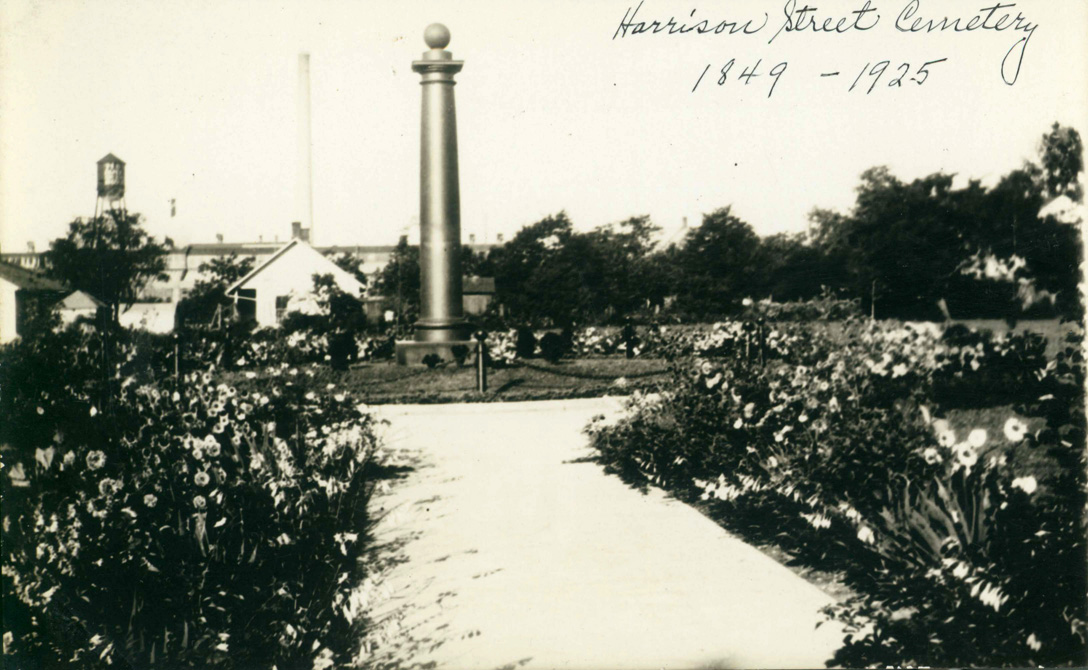
of Voltaire Scott. This vote fails by a small margin. There is never another vote to move the headstones back to the Cholera Cemetery. Next, a motion is made to impeach Scott since all his actions were done without authority by the City Council and made those acts illegal. This motion is tabled to be brought up another time but as far as my research goes, Scott was never impeached or punished for his actions in anyway. Finally, the City Council votes to build a fence around the cemetery and put up a monument to honor those who died during the first cholera outbreak. This project will be funded by selling off land that is technically part of the Cholera Cemetery. I can find no record of the city ever selling land that was connected to the cemetery. An iron fence was built sometime before 1924 but I was unable to find out when that fence was built. The current monument in the cemetery was built in 1924 and funded by private donations.  


Of course, none of these answers the question where are the headstones from the cemetery? The short answer is, who knows! I was able to track down about a dozen of the headstones that are now in Oakland Cemetery. The rest are, unfortunately, lost to history. There may be something in the old legend that they were broken up and used in paving projects around town. Sandusky was doing some major road work in 1894 and those headstones would make good gravel. It also raises the question, where did the three headstones that are currently in the Cholera Cemetery come from. Are they originals that made their way back into the cemetery or were they put there later? If they are the original, how did they get back in the cemetery? If put in later, then who put them there? As I said in the beginning, the story of the missing headstones is strange and raises many more questions that will probably never be answered. 

Monday, July 30, 2018

Dr. Elwood Stanley


Elwood Stanley was born in Columbiana County, Ohio in 1823, to Joshua and Rachael Stanley. When Elwood was quite young, he was orphaned. He pursued medical studies at the Cleveland Medical College, graduating in 1849. He had hoped to begin a medical practice in Canton, Ohio that year, but was called to Sandusky to aid in the cholera epidemic in the summer of 1849.  An article in the July 21, 1949 issue of the Sandusky Register Star News stated that Dr. Stanley seemed to never sleep during the epidemic. He walked from house to house, to minister to the sick and console grieving family members. An unidentified elderly African American man was often at his side, as he took care of the many people afflicted with the dreadful disease. 

Dr. Stanley was an active member of the Erie County Medical Society. In 1887 he wrote an article about “The Sanitary Condition of Sandusky Before and After the Completion of the Water-Works and Sewerage System” for a publication of the Ohio State Sanitary Association.


Dr. Stanley had seen first-hand how unsanitary water in Sandusky was a major factor in that city’s cholera epidemics.  

From 1881 to 1885, Dr. Stanley served as Erie County Coroner. On January 4, 1902, Dr. Elwood Stanley died after an extended illness. He was the oldest physician in the city of Sandusky at the time of his death. The Erie County Medical Society adopted resolutions regarding the death of Dr. Elwood Stanley.  Dr. Stanley was survived by his wife Lydia, and an adopted son, Frank Stanley. He was buried at Oakland Cemetery. Dr. Stanley’s  name is listed on the historical marker at the Cholera Cemetery in Sandusky, which honors several physicians and city leaders who played an important part in aiding the cholera victims during the cholera epidemic of 1849.


Tuesday, July 30, 2013

Cholera Victims of 1849: in Sandusky, Erie County, Ohio


In the fall of 1986, Mrs. Katharyn L. Wunderley completed a project which resulted in a compilation of information about hundreds of individuals who lost their lives in Sandusky’s cholera epidemic of 1849. Mrs. Wunderley used these ten sources in her research.


Names are listed alphabetically, with the sources used indicated for each name.


Some entries provide very brief details, while others are lengthy, such as this listing for William Townsend:


About two hundred fifty victims of cholera were buried in the Harrison Street Cemetery, now known as the Cholera Cemetery.  A single column honors the memory of those who died. About one hundred twenty persons were buried in the St. Joseph Catholic Cemetery. After Oakland Cemetery was opened in 1850, at least thirty tombstones were put in place in memory of cholera victims who lost their lives in 1849.  Three ministers who died of cholera are buried side by side at Oakland Cemetery.


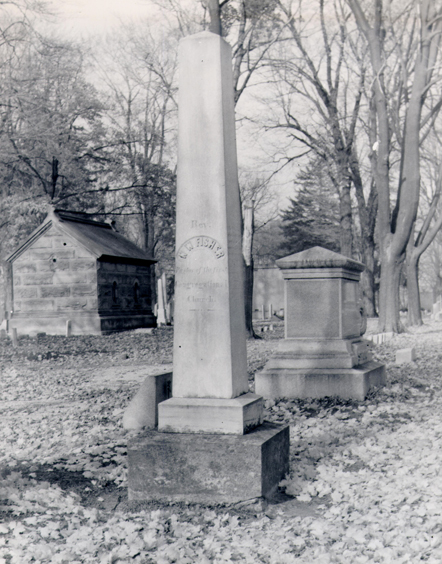
A marble monument bears the name of Rev. N.W. Fisher, former pastor of the Congregational Church; Rev. H.P. Ward, a Methodist minister; and Rev. T.C. Cooper of the Bethel Church. To learn more about the many individuals who died of cholera in Sandusky in 1849, see Katharyn Wunderley’s book Cholera Victims of 1849: in Sandusky, Erie County, Ohio, shelved with the genealogy and local history books in the Lower Level of the Sandusky Library. This resource is invaluable, as it covers a time in history prior to the publication of Sandusky City Directories.