Showing posts with label Nielsen Opera House. Show all posts

Saturday, April 30, 2022

Publicity Photos from The New Dominion


On April 30, 1903, an amateur production of the play The New Dominion was presented by the Joe Jefferson Club at the Neilsen Opera House in Sandusky. The play was written by Broadway playwright Clay Clement, Sr.  

A.J. Peters portrayed the Baron Franz Victor Von Hohenstauffen. Mr. Peters is pictured below with Adah Kunz, who played Miss Flora May Randolph in the play.


E.L. Marsh played the character of Mr. Marshall Boner. The part of Miss Martha Boland was played by Mrs. G.E. Wilder.

Local photographer W.A. Bishop played Mr. J. Charles McVeigh in the play.
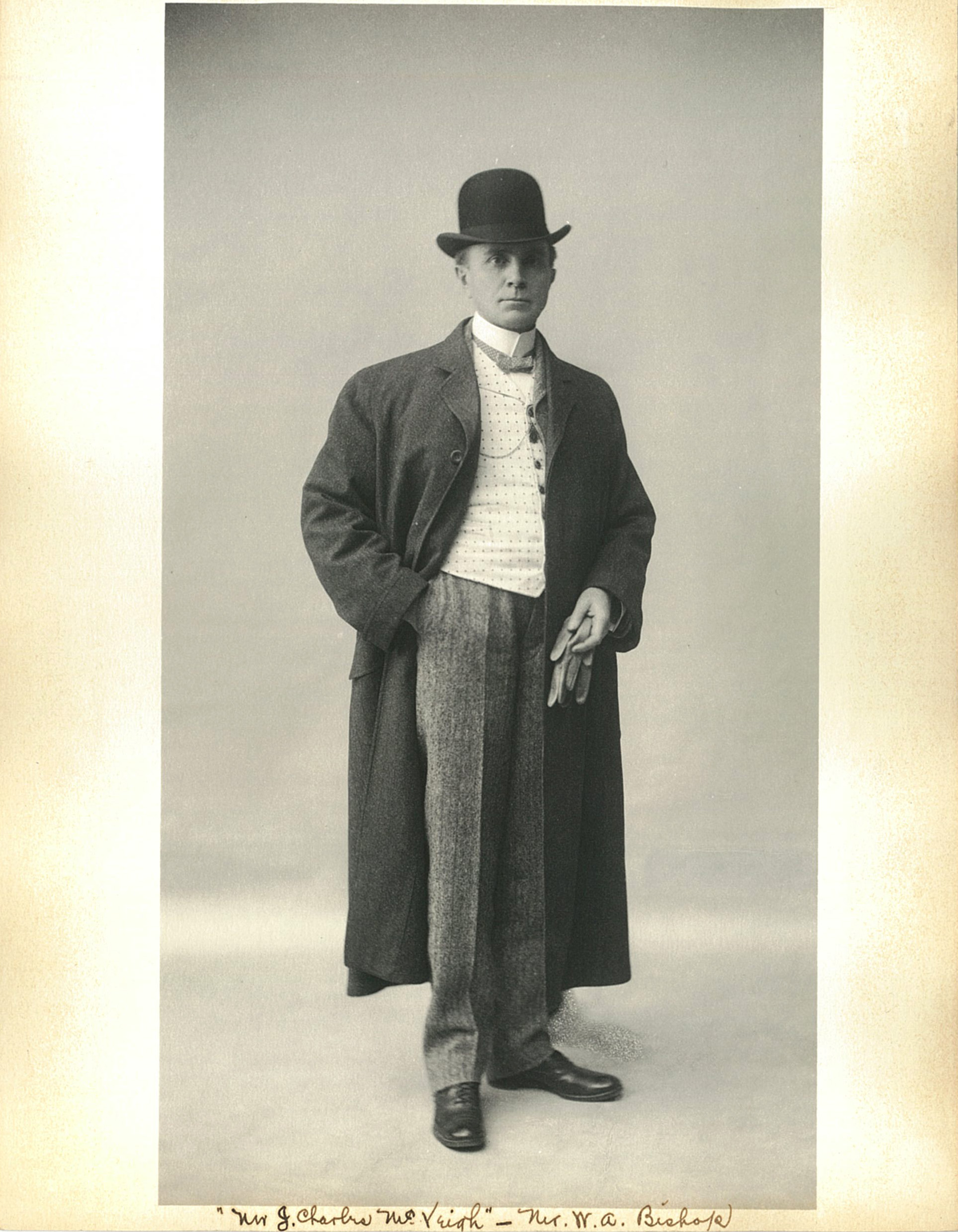
The May 1, 1903 issue of the Sandusky Register reported that the performance was a “flawless production.” A.J. Peters gave a finished performance, and Mr. Bishop was humorous in his love scenes. The Register article stated that “The characters were well cast and showed to the best of their ability, the attention and interest they centered in their accredited parts.” Theodore Taubert’s ten piece orchestra played musical selections between acts. 

Visit the Sandusky Library Archives Research Center to view the complete collection of publicity photographs from “The New Dominion.”

Thursday, November 28, 2019

Thanksgiving Dinner at the Opera House Cafe in 1900


According to the November 29, 1900 issue of the Sandusky Daily Star, on Thanksgiving Day in 1900, George A. Boeckling invited one hundred youngsters to have dinner at the Opera House Cafe. Mr. Boeckling asked Truant Officer Ulrich Zuercher to pass out the dinner invitations to needy children in Sandusky.


 The Opera House Cafe was located on Water Street, next to the Nielsen Opera House, seen at the far right in the picture above. Boeckling and Zuercher met the crowd of hungry youngsters at the cafe at 11:00 on Thanksgiving Day. Waiters and waitresses served the children a traditional turkey dinner with all the trimmings. The Star article reported that the children had their appetites with them and they gave “an exhibition of knife and fork play that has never been rivaled in the cafe.” Mr. Boeckling was making plans to have Santa Claus make an appearance at the lobby of the Nielsen Opera House on Christmas Eve, at which time he planned to pass out one thousand complimentary tickets.

Monday, November 04, 2019

Black Patti Troubadours at the Grand Theater


In 1905 the Black Patti Troubadours appeared in Sandusky at the Grand Theater (on Water and Jackson Streets, originally known as the Sandusky Opera House). The Black Patti Troubadours were a group of African American performers who performed musical comedy. They traveled throughout the United States between 1896 and 1915. The group was centered around a talented performer, Matilda Sissieretta Joyner Jones. 


Image from the Library of Congress: http://www.loc.gov/exhibits/treasures/images/at0155.2s.jpg

Madame Jones (as she was commonly identified) had a trained operatic voice, and the local press of her day compared her to the well known opera singer Adelina Patti. Madame Jones was the first African American performer at
Wallack's Theatre in Boston in the late 1880’s, and sang at the White House for President and Mrs. Harrison in 1892. She sang in concerts in the United States, South America, and in Europe.  After facing racial discrimination, Madame Jones formed her own entertainment troupe known as the Black Patti Troubadours.


Looney Dreamland was the name of the show in 1905. Voelckel and Nolan were the managers of the Black Patti Troubadours at that time. The show, staged by Robert Cole, was advertised as “a musical visit to Dreamland.”

Madame Jones sang “My Dear Southern Home,” “At  Home,” and “Old Man Moon” in the second act. She performed the leading role in the final act of the evening, a condensed opera performance.

The Black Patti Troubadours also had appeared in Sandusky on November 1, 1898. The performance, at the same location (then called the Nielsen Opera House), featured comedy, songs, a cake walk, and operatic masterpieces. An article in the November 1, 1898 issue of the Sandusky Star reported that the Troubadours had “irresistible and fascinating charm” during their stage performance. The Black Patti Troubadours were considered “one of the marvels of the metropolis” during their 1898 run in New York City.

To learn more about Matilda Sissieretta Joyner Jones, you can read or listen to an NPR story from 2007.

Friday, October 19, 2018

Eighty-First Annual Assembly of the Grand Lodge of Ohio

Nielsen Opera House

On October 15 and 16, 1890, the 81st Annual Assembly of the Grand Lodge of Free and Accepted Masons of Ohio convened in Sandusky, Ohio. The opening meeting was held at the Opera House, where Grand Master Leander Burdick gave the address. Masonic groups from all over the world sent greetings to the Ohio lodge members. Several committee reports were given, and officers were elected. During the evening hours, Lodge officers, members, and ladies were invited to a reception at the newly-built Sandusky Masonic Temple. Mr. W. G. Mellish gave a speech, and entertainment was provided by the Masonic Quartette and the Opera House Orchestra.

Sandusky Masonic Temple

Nearly 500 members attended the banquet on October 15, held at the Sloane House.


That same evening the Masonic Veterans Association of Ohio met at the Odd Fellows Hall in Sandusky. During their time in Sandusky, lodge members were invited to go fishing. Local lodge members arranged for boats and fishing tackle to be available to all visiting lodge members. 

You can read about the 81st Annual Assembly of the Grand Lodge of Ohio in the October 16, 1890 issue of the Sandusky Register, available on microfilm at the Sandusky Library Archives Research Center.


Wednesday, November 27, 2013

Thanksgiving Dinner at the Opera House Cafe in 1900


According to the November 29, 1900 issue of the Sandusky Daily Star, on Thanksgiving Day in 1900, George A. Boeckling invited one hundred youngsters to have dinner at the Opera House Cafe. Mr. Boeckling asked Truant Officer Ulrich Zuercher to pass out the dinner invitations to needy children in Sandusky.


 The Opera House Cafe was located on Water Street, next to the Nielsen Opera House, seen at the far right in the picture above. G.A. Boeckling and Ulrich Zuercher met the crowd of hungry youngsters at the cafe at 11:00 on November 29, 1900. Waiters and waitresses served the children a traditional turkey dinner with all the trimmings. The Star article reported that the children had their appetites with them and they gave “an exhibition of knife and fork play that has never been rivaled in the cafe.” Mr. Boeckling was making plans to have Santa Claus make an appearance at the lobby of the Nielsen Opera House on Christmas Eve, at which time he planned to pass out one thousand complimentary tickets. 

Sunday, October 21, 2012

The Sandusky Theatre


In the picture above, three individuals can be seen painting a sign and the building of the Sandusky Theatre, about 1930. The Sandusky Theatre had a long, rich history according to an article by John Himmelein in the Twin Anniversary Edition of the Sandusky Register-Star-News from November 24, 1947. The theater was built in 1877 by Andrew Biemiller. It was first known as the Biemiller Opera House, located at southwest corner of Water & Jackson Streets on property that had originally been owned by William T. Townsend.


Biemiller’s Opera House accommodated 1,500 persons, and featured cushioned seats and excellent acoustics. The cost of the original building was $48,000. The spacious stage was sixty-six feet wide and thirty-three feet deep. The first opera to play at Biemiller’s Opera House was Wagner’s “Lohengrin.” In May of 1895, the building was purchased by Carl Neilsen. Mr. Nielsen remodeled the Opera House and changed its name to the Neilsen Opera House.

John A. Himmelein acquired the building in 1902. Again, the theater was remodeled. Mr. Himmelein stated that several types of amusements were performed here, including opera, dramatic, musical, minstrel, vaudeville, and plays by stock companies. The first attraction after the remodeling project was the play “York State Folks,” which opened on September 7, 1905. Between 1905 and 1907, the building was known as the Grand Opera House. By 1908, the name was changed to the Sandusky Theatre, after the building was leased to O.S. Hathaway. The Seitz Amusement Company leased the building in 1936 to show motion pictures, bought it in 1950, and sold it four years later. The building was razed in 1955.


Visit the Sandusky Library Archives Research Center to see a variety of programs from performances at this former Sandusky landmark.