Showing posts with label Market Street. Show all posts

Friday, January 27, 2023

A Home to Many Businesses on Market Street


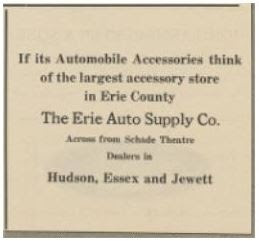
From the early 1920s through the mid 1930s, The Erie Auto Supply Co. was located at 208 West Market Street in Sandusky. The company sold wholesale and retail automobile parts, and serviced vehicles in the space behind the store. Hudson, Essex and Jewett were some of the brands carried by Erie Auto Supply.

In 1936, Erie Auto Supply moved to 212 Hancock Street. From 1942 until the mid 1960s, Weber’s Men’s Wear was in business at 208 West Market Street.

Weber’s was one door away from City Hall. Other stores visible on Market Street in this 1950s era picture above were Gray’s Drugstore, Herman’s Jewelry, and Third National Bank.

Through the years, several different businesses operated at 208 West Market Street, including Sears, Spiegel Inc., Sonrise Ceramics, Revelations, and Bloomquist TV.


Today the Crowbar is now in business where Erie Auto Supply Company was once located.

Friday, September 14, 2018

A Snapshot of East Market Street from 1955


Helen Hansen, former curator of the Follett House Museum, took this picture of a portion of the Cooke Block and the north side of East Market Street on September 3, 1955. At this time Donald Smith ran the Smith Drug Store, where Holzaepfel’s would later operate a sporting goods store. When you take a closer look, you can see a sign in the shape of an LP record over the door of Meggitt’s Music Shop.


Other stores familiar to the “Baby Boom” generation of local residents include Jean Frocks, the Neisner Five and Dime, and the Sears store, where Santa would visit with youngsters each holiday season. Joseph’s Department store was to the east of the large Sears store. In the next block of East Market, was the former Whitehouse restaurant, later Markley’s, and Gossoff’s Carpet and Linoleum store.


Check out the library's online Archives to view more historical images from Sandusky and Erie County.

Wednesday, November 30, 2016

When Sandusky’s City Building was on Market Street


The building which began as Sandusky's Central Police and Fire Station building in 1890 served as Sandusky's City Building from 1915 until 1958. Local photographer Robert E. Frank took several pictures of the former City Building before it was razed in 1958. In the picture below, several businesses along West Market Street are visible, including Gray Drugs, Weber's Men's Wear, and Herman's Jewelers.


In a closer view, you can see the words "City Building" above the large doors on the street level. The lower level of the building originally housed horse-drawn vehicles for the city’s police and fire departments.


You can see the old city building in this picture postcard, which was taken from West Market Street looking east.


An image of Sandusky's former city building graces the cover of the Old House Guild's Downtown Architectural Walking Tour of Sandusky

Monday, January 05, 2015

Views of Market Street Looking East from Jackson

                 
This postcard of Market Street, looking east from Jackson Street, was created in the 1920s. E.B. Ackley’s billiard parlor is on the north side of West Market Street, adjacent to Jackson. You can see the marquee of the Schade Theatre, which later became the Ohio Theatre. In the distance, the Cooke building is visible at the northeast corner of Columbus Avenue and Market Street. The Hotel Rieger building (which recently opened as an apartment building, the Rieger Lofts) is on the south side of West Market Street, just opposite the Star Journal building, which now is home to the Sandusky Register. Going east down Market Street, the Third National Bank is next to the Hotel Rieger. A sign advertising an auto supply store is visible, just west of the old city building, with its two towers. In the distance you can see the Feick building, a tall structure on the south side of East Market Street. A variety of offices and small businesses are found all along Market Street, on the street level as well as on upper floors. The Hotel Rieger featured some businesses which were below street level. Below is a view of Market Street in a picture that was taken between 1890 and 1910.


The Manhattan clothing store is located where Mr. Ackley later had his billiards parlor. Dr. Nicholson had his dental office above the Manhattan store. The Hotel Rieger and Star Journal buildings had not yet been constructed, but the Cooke building and former city hall can still be seen. Street cars and horse drawn vehicles were the mode of transportation at this time, instead of the autmobiles seen in the postcard above. You can see several other images of Market Street at the Sandusky History blog by clicking on this link.

Thursday, August 07, 2014

Postcards of Sandusky

In the historical postcard collection of the Sandusky Library Archives Research Center are several postcards of Sandusky from years gone by. The first three postcards are from the early part of the twentieth century. This “bird’s eye” view of Columbus Avenue was created by the Alexander Manufacturing Company. The view in this postcard scans the eastern side of Columbus Avenue from the Cooke block to Saints Peter and Paul Catholic Church.

                  
This black and white postcard from the Pesha Postcard Company, owned by Louis James Pesha, also features Columbus Avenue. Several people can be seen along the busy business district of Sandusky’s downtown.


In this postcard, taken on East Market Street, looking east from the Cooke building, Sandusky’s Big Store was a key business in this section of town. Several horse drawn vehicles are visible along Market Street, as well as two youngsters standing near a cart.


Moving forward several decades, this postcard from the Rich Holt Company shows Sandusky’s downtown in the late 1960s.


Stores that were well known to many area residents are pictured, including Lasalle’s, J.C. Penney, the Gray Drug Store, and the Manhattan men’s clothing store.  

Monday, June 18, 2012

A View of the North Side of East Market Street in 1956


In the Sandusky Pictures Collection of the Sandusky Library Archives Research Center is a photograph of the north side of East Market Street in Sandusky which was taken in September of 1956. At the northeast corner of Columbus Avenue and East Market Street, Donald A. Smith operated the Smith Drug Company, which was affiliated with the Walgreen Agency. Prescriptions and health and beauty aids were sold here, along with light meals served at the luncheon counter. Baked goods were sold at Cassidy’s Fine Foods at 121 East Market Street. Moving east down East Market Street we find Jean Frock’s, the Neisner Brothers five and ten cent store, and the William S. Frankel store, which sold women’s apparel. Walter’s Shoe Store was located at 151 East Market Street, and the large Sears and Roebuck department store was at 161 East Market. Not pictured in this picture is the Joseph’s Store which was at the end of the block. Joseph’s sold women’s and children’s ready to wear clothing in the mid-1950s.  On the left side of the picture you can see the clock from the Citizens Banking Company which was in the Feick Building at that time, on the south side of East Market Street.  Visit the Sandusky Library to browse through decades of historical Sandusky City Directories. The earliest Sandusky City Directory in our collection dates back to 1855.

Saturday, May 12, 2012

The Bazar and Frankel’s

In 1890 Alexander J. Scheuer and Henry J. Lehman took over Hammond’s Bazar, located on East Market Street in downtown Sandusky. Their store stocked everything from mirrors and baby carriages to fine cut glass. Shoppers who visited Sandusky could purchase souvenirs at the Bazar or buy clothing for any member of the family. The Bazar even stocked lamps, swings, oil stoves, and hammocks. The Bazar can be seen in the picture below of the parade honoring the returning Spanish American War soldiers from Company B of the Sixth Ohio Regiment in May of 1899.


After the death of Mr. Lehman in 1911, A. J. Scheuer and his brother Henry J. Scheuer operated the store. By 1915, the Scheuer Brothers moved to the 100 block of East Market Street. In 1919, William S. Frankel acquired the interests of A. J. Scheuer, and the store became known as the Scheuer-Frankel Company. Around 1929, William S. Frankel, Sr. became the sole owner of the business, and it was known as the William S. Frankel Company. After William S. Frankel, Sr. passed away in 1949, his son William S. Frankel took over the business. Frankel’s was a popular department store for area residents until the mid 1960’s.

Friday, January 27, 2012

Group of Youngsters in Front of the Citizens Banking Company

The Citizens Banking Company opened its new headquarters in the Feick Building on East Market Street in downtown Sandusky in 1924.  A group of boys is standing in front of the Citizens Bank. All the children are holding up an unidentified promotional paper. One young man is wearing a Boy Scout uniform. Note the vintage cars parked in front. Several bicycles are on the sidewalk as well. A large burglar alarm can be seen directly under the name of the bank. And if you look closely, you can see someone in an upstairs window. Today the Feick Building is still home to several Sandusky businesses and offices.

Friday, January 14, 2011

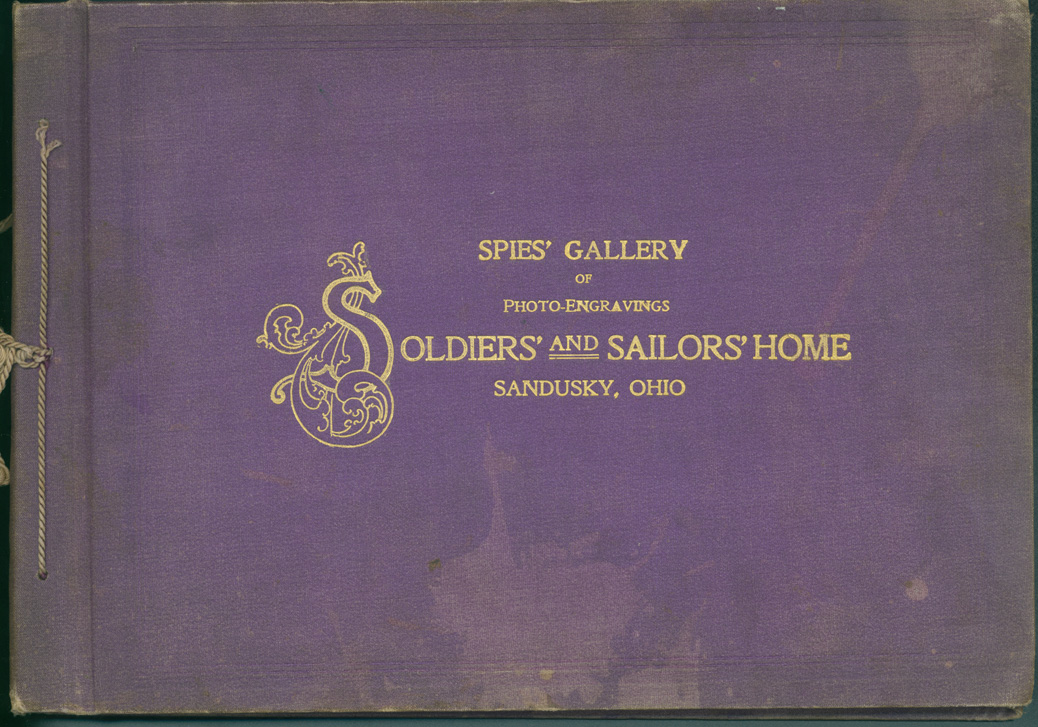
Spies’ Gallery of Photo Engravings: Soldiers’ and Sailors’ Home


First published in 1896, August Spies copyrighted and published a second edition of Spies’ Gallery of Photo Engravings: Soldiers’ and Sailors’ Home in 1902. On pages 2-3 of the 1902 edition is a brief history of the Ohio Soldiers’ and Sailors’ Home, which stated that the facility in Sandusky was “the most beautiful Soldiers’ home in the United States.”

The Administration Building, which is now home to the Ohio Veterans Home Military Museum, is pictured on page 14.

General Manning F. Force was the first Commandant of the Ohio Soldiers’ and Sailors’ Home. His picture appears on page 4 of the 1896 edition of Spies’ Gallery. General Force was appointed Commandant of the Ohio Soldiers’ and Sailors’ Home by Ohio Governor Joseph Foraker in October 1888 and he served in his official capacity until his death on May 8, 1899.

In 1902 General Thomas M. Anderson was Commandant of the Home.

The Ohio Soldiers’ and Sailors’ Home was arranged on the Cottage Plan. Residents had sleeping quarters and a sitting room.

Residents could read newspapers and books in the library.

In 1902 the Home used about 750 tons of ice each year, which was harvested from the lake on the grounds. Enough ice was harvested at the Ohio Soldiers’ and Sailors’ Home in the early 1900’s to fill two ice houses, as well as have a three month supply of ice which was stored just outside the ice houses.

The hospital at the Ohio Soldiers’ and Sailors’ Home employed both male and female nurses.

Many photographs can be seen in the Spies’ Gallery, including pictures of the fire department, work shop, cemetery, post office, railway station, and several view of the residents’ cottages and officials of the Home. The Ohio Soldiers’ and Sailors’ Home is now known as the Ohio Veterans Home.

From about 1900 until 1923, August Spies had his photographic studio at 123 West Market Street in Sandusky, above the offices of Buerkle and Lermann’s General Insurance business.

Friday, January 22, 2010

Through the Years at the Northeast Corner of West Market and Jackson Streets

The Majestic Theatre was located at the northeast corner of West Market and Jackson Streets in 1908. The theater was not damaged in the fire which broke out in the Andres and Frey furniture store and undertakers building on January 10, 1908. The Sandusky Star Journal reported that the stone wall construction of the Market Street buildings helped prevent more serious fire damage to the adjacent buildings.


In 1925, Eugene B. Ackley had a Billiard Academy at the northeast corner of West Market and Jackson Streets in downtown Sandusky. Mr. Ackley was also the director and manager of Ackley’s Band and Orchestra. E. B. Ackley was associated with area bands from the late 1890’s through the 1903’s.


In the 1955 photograph below, Hills Supply Company, Martin’s Restaurant, and the Ohio Theater can be seen on West Market Street.


Currently, a municipal parking lot is located at the site of these former Sandusky businesses. If you would like to learn more about the history of Sandusky and Erie County, visit the Archives Research Center of the Sandusky Library. Historical atlases, city directories, local history books and hundreds of historical photographs can help you learn more about the people and businesses that have contributed to the rich history of Erie County.

Tuesday, January 19, 2010

C. Weston Dash, Reporter and Photographer


C. Weston Dash was born in Cleveland, Ohio on June 7, 1914. Learning the printing business from his father as a young man, Mr. Dash was the editor and reporter for his high school and college newspaper. Later, while he was a correspondent with the International News Service, he covered the 1936 Republican National Cenvention in Cleveland.

He lived in Sandusky from June of 1937 through October 1940. While in Sandusky, Mr. Dash was a reporter and editor with the Sandusky Register and Star Journal. He also served as Sandusky School Superintendent of the Methodist Church, and worked on set construction for the Harlequins. He was the publicity chairman for the Ohio Grape Festival, 1939-1940.  In the summer of 1938, C. Weston Dash married Anne Elizabeth Chamberlain Warren, and they were wed for 62 years. Mr. and Mrs. Dash made lifelong friends with Sandusky residents during their years in Ohio.

In 1990, C. Weston Dash donated several negatives to the historical collections of the Sandusky Library. Below is a photograph from the 1940 Grape Festival held at Sandusky September 19-22, 1940.

During the March 31, 1939 fire in downtown Sandusky, Dash took photographs of the fire and fire fighting efforts for several hours.


C. Weston Dash passed away at the age of 89 in Maine on January 30, 2004. A quotation cited at the end of Mr. Dash's obituary gives us insight into his personality:

The most wasted of all days is one without laughter

 
-- E. E. Cummings

Thursday, June 26, 2008

The Boy Scout Jamboree of 1937

The first National Jamboree of the Boy Scouts of America was held June 30 through July 7, 1937 in Washington D.C. at the invitation of President Franklin D. Roosevelt. Total attendance was 27,232 representing 536 councils of Scouts. Scouts arrived by bus and train, and set up tents over 350 acres. The Scouts listened to speeches, participated in drills and flag ceremonies, and toured the nation’s capital. There were 200 physicians and 250 cooks on hand for the big event. The cost for the National Jamboree was over $500, 000.

A highlight of the Jamboree was when President Roosevelt rode in a motorcade down Constitution Avenue as he reviewed the thousands of Boy Scouts and leaders lined up for two miles. Time Magazine featured an article about the National Jamboree in the July 12, 1937 issue.

Pictured below are Boy Scouts from the Firelands area marching down Jackson Street and Market Street in Sandusky before they left for the Jamboree:

The Scouts all carried camping equipment, and were led by the Sandusky High School band. Eleven Boy Scouts were from Sandusky. Assistant Scoutmasters Ernest and Paul Marchus accompanied the Scouts to Washington D.C. The Scouts took with them a replica of the entrance and fence of Camp Lake Shore.