Wednesday, February 21, 2007

Program Announcement: Oral Traditions in African-American Literature

Join us in the Sandusky Library program room this Saturday, February 24, at 2PM, when Dr. Herbert Woodward Martin, Professor of English and Poet-in-Residence at the University of Dayton, will present a talk on "Oral Traditions in African-American Literature,"sponsored by a grant from the Ohio Humanities Council. From the program description on the Ohio Humanities Council website:
"Forms of indigenous speech and song are an influential part of African-American literature. This program explains how the sermon, the spiritual, the worksong, the dozens, the catches, the blues, gospel, jazz, and popular ballads, as well as folk tales operate to keep African-American literature alive and well."

Dr. Martin was in Sandusky a few years ago to speak about the poet Paul Laurence Dunbar, a talk that received much praise in the community. You can be sure that this Saturday's program will be equally as interesting. For more information, contact the library at 419-625-3834.

"Since 1972, the Ohio Humanities Council, state affiliate of the National Endowment for the Humanities, has provided leadership, resources, and financial support for the humanities in Ohio."

Thursday, February 15, 2007

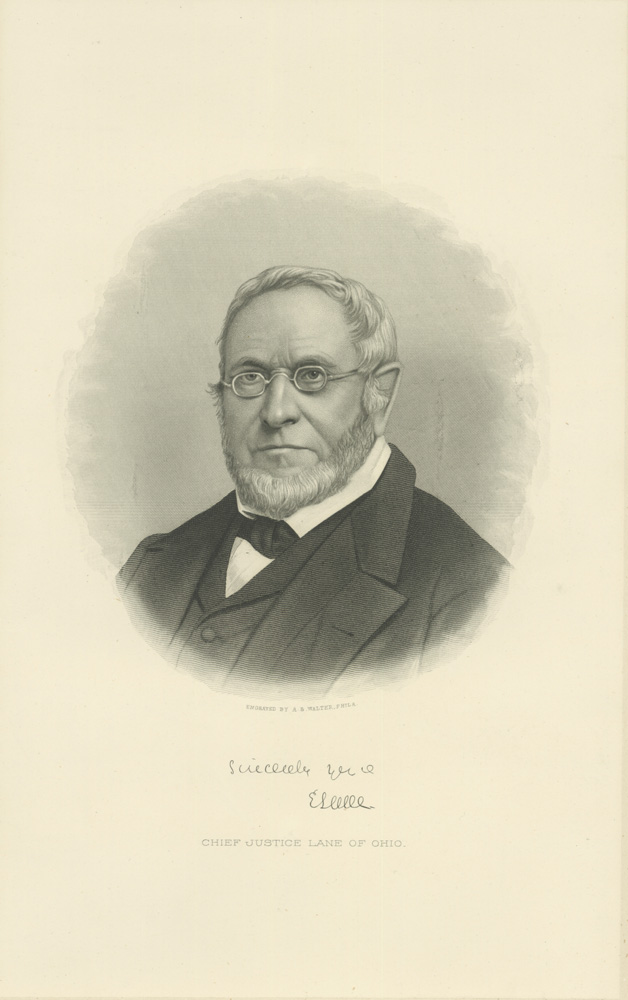
Judge Ebenezer Lane: the “Walking Library”


Early Ohio lawyer Ebenezer Lane was a Harvard University graduate who moved to Ohio in 1817. Born in Massachusetts in 1793, he received his degree from Harvard in 1811. After briefly practicing law in New England, he migrated westward and settled in Ohio, where he established his legal practice (around 1817). He was appointed Judge of Common Pleas of the Second Circuit in 1824, and became a Judge of the Supreme Court of Ohio in 1830. After he retired from the court, he had interests in the Junction Railroad, the Mad River and Lake Erie Railroad, and the Illinois Central Railroad.

While Judge Lane lived simply, he was an avid book collector. He read every one of the four thousand books he owned. Rev. Alfred Newton said in his memoirs of Ebenezer Lane that he could so accurately retain the knowledge of what he had read that he was a “walking library.”

After Judge Lane’s death in 1866, his book collection was passed down to his son Dr. Ebenezer S. Lane, in Chicago. The Ebenezer Lane library was the only library collection within the city limits of Chicago to survive the Great Chicago Fire of 1871. In 1922 the Ebenezer Lane book collection was donated to the University of Chicago by his grandchildren, the third Ebenezer Lane and Fanny Griswold Lane.

Judge Lane’s granddaughter, Mrs. Charles H. Moss, served on the first Board of Trustees of the “Library Association of Sandusky” which was incorporated in 1895.

A sketch of the life of Judge Ebenezer Lane can be found in the June 1867 Firelands Pioneer. The Ohio Supreme Court's Cases of Judge Ebenezer Lane are available in the Archives Research Center in the Sandusky Library.

Friday, February 09, 2007

Valentines

Valentine's Day has been celebrated for centuries in the West. Derived from a Pagan festival, Valentine's Day became a Christian feast day around the fifth century A.D. Today, February 14 is observed as a day for romance (and commerce, in chocolate, flowers, and greeting cards).

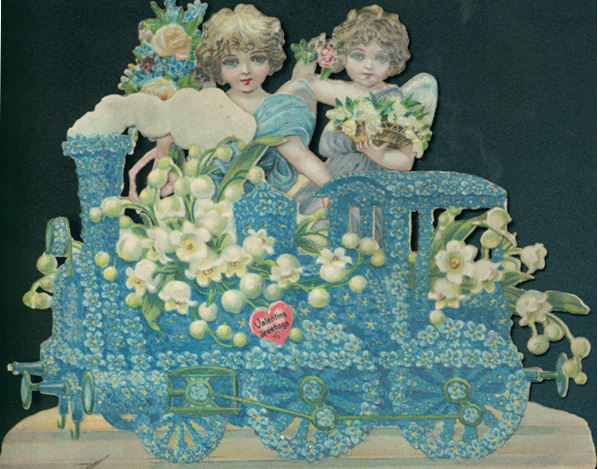
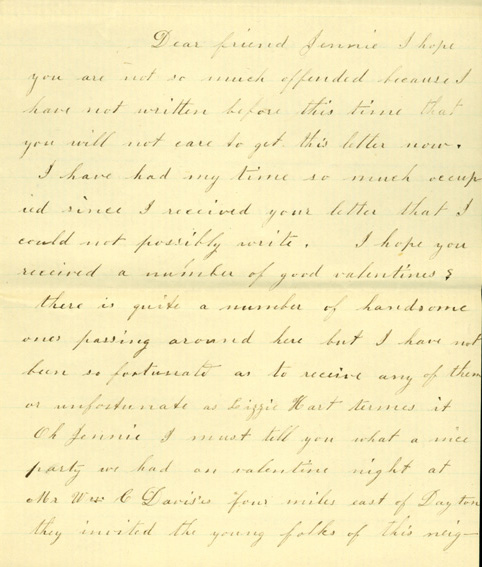
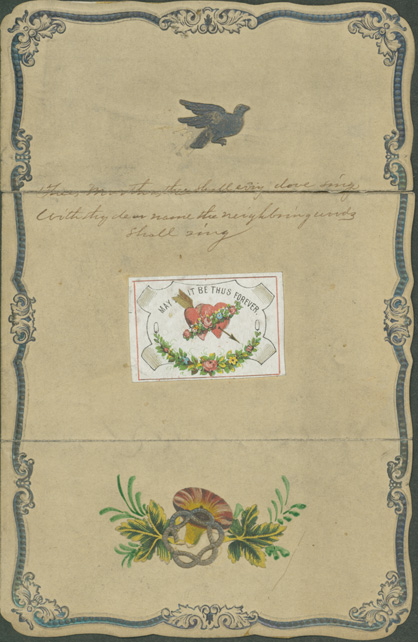
Of course, Valentine's Day was celebrated in Sandusky from its earliest days. Items from the collections of the Sandusky Library Archives Research Center and Follett House Museum provide evidence of Valentine's Day observances in Sandusky. The Valentine train above is one of many Victorian-era Valentines from the Follett House collections. Below is an excerpt of a letter written by "Lizzie" to her "Dear Friend Jennie," where she talks about (not) receiving Valentines, and attending a Valentine party that year: "I hope you received a number of good valentines . . . "
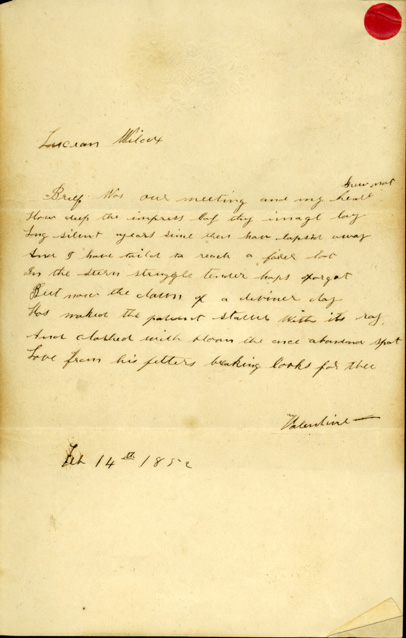
The note below is a love letter to Lucian Wilcox to his "Valentine" in 1852: "Brief was our meeting and my heart knew not / How deep the impress of thy image lay / Long silent years since then have lapsed away / And I have toild to reach a fairer lot / In the stern struggle tender hope forgot / But now the dawn of a diviner day / Has waked the patient [?] with its ray / And clothed with bloom the once abandoned spot / Love from its fetters breaking looks for thee."
Below are two of the earliest Valentines from the Follett House collections (from the 1850s):

Friday, February 02, 2007

Emogene Niver Marshall and Her Civil War Memorial to Her Brother


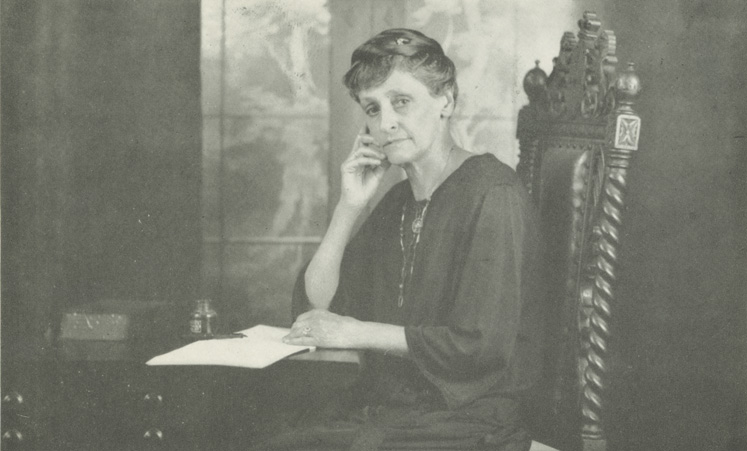
Mrs. Emogene Niver Marshall was a well known Sandusky resident who died in 1935, at about 85 years old. She gave many years of service to the Soldiers and Sailors Home (now the Ohio Veterans Home), giving entertainment to the residents and cheering the sick in the hospital. Emogene was married to Joseph T. Marshall, who served in the 101st Ohio Volunteer Infantry in the Civil War. Though Mr. Marshall had never been a resident of the home, over four hundred persons associated with the Soldiers and Sailors Home attended the funeral service Joseph T. Marshall in 1910, to show their respect and appreciation to Emogene Niver Marshall for her service at the Home.

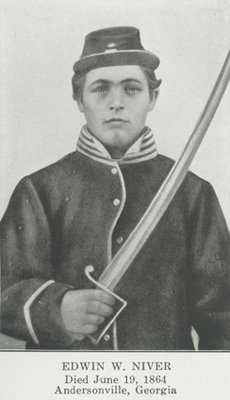
She had an elder brother, Edwin M. Niver, about five years older. In 1861 Edwin enlisted in the 3rd Ohio Volunteer Calvalry, before he reached his seventeenth birthday, and served in battle through Tennessee and Alabama. He was captured by Confederate forces in November 1863, and sent to the Confederate prison at Andersonville, Georgia, where he died on June 19, 1864.

In 1932 Emogene Niver Mashall wrote a book in memory of her brother and his service in the war. In this book, REMINISCENCES OF THE CIVIL WAR AND ANDERSONVILLE PRISON, you can read the letters that Edwin M. Niver wrote home to his family. Emogene writes of the dreadful conditions of the prison, and includes a lengthy poem honoring the dead heroes buried at Andersonville. In the foreword to the book, E.H. Mack, Editor of the Sandusky Register states that Mrs. Emogene Niver Marshall was called the “Angel of the Home.” To view Mrs. Marshall’s tribute to her brother, inquire at Reference Services located on the Lower Level of Sandusky Library.

Thursday, February 01, 2007

Mystery Photos: Know Where This Is?

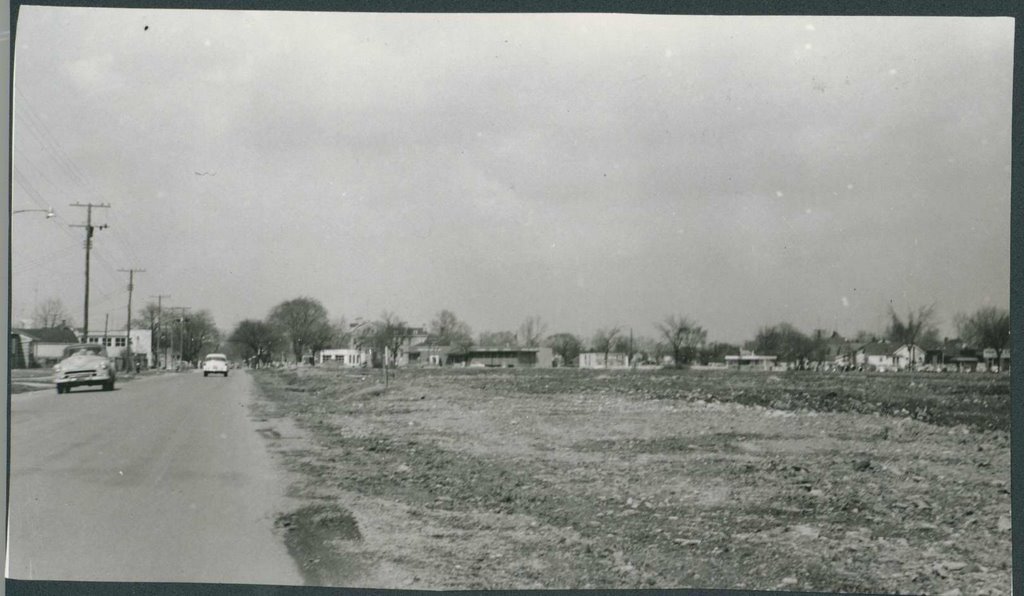
After a hiatus, the "Mystery Photos" game is back. Here are two photos showing different views of the same location. It looks a lot different today, but if you look very closely, you might be able to recognize where it is.
Hints: Both pictures were taken in March 1955, and the scenes in the images are within the city limits of Sandusky.

The answer is in the comments section.

Wednesday, January 31, 2007

Program Announcement: The Underground Railroad in Sandusky (Brown-Bag Lunch Series)

Continuing the series of lunchtime historical programs at the library, Follett House Museum curator Maggie Marconi will present a talk on the roles many Sanduskians played in helping fugitive slaves reach freedom. The presentation will be in the library program room at noon on Wednesday February 7.

Ohio was a major transit point for freedom-seekers as they fled from the slave lands of the south to the free territories in Canada and the northern United States. Of course, due to the nature of the activity, there is little documentary history of the Underground Railroad, but the memories of participants were frequently recorded -- most notably by Professor Wilbur H. Siebert of the Ohio State University, author of the classic book, The Underground Railroad From Slavery to Freedom (in the Sandusky Library at 326 SI).

Come to the program on Wednesday afternoon to learn more about Sandusky's contribution to freedom.

Friday, January 19, 2007

Program Announcement -- Identifying and Preserving Your Family Documents

On Saturday, January 27, at 2:00 p.m. in the Library Program Room we will have a "hands-on" presentation on identifying and preserving your historical documents. Using examples from the Library's archival collections, we will show you how to identify your documents - what they are, what they are made of, and how old they might be - and offer tips on how to care for these items, so you can preserve your history for future generations. The program will include a brief overview of formats and preservation techniques, with tips on care for specific items, and where to go for supplies and more information.

You are welcome to bring in samples of your own family documents to discuss particular issues you might have with their care and handling. (Because of time constraints, we cannot guarantee detailed discussion of all items; please limit your materials to one or two items.)

To register for the program, call 419-625-3834 and press 0 to speak with a switchboard operator (9-5, Monday-Friday) or press Option 6 to leave a message.

Friday, January 12, 2007

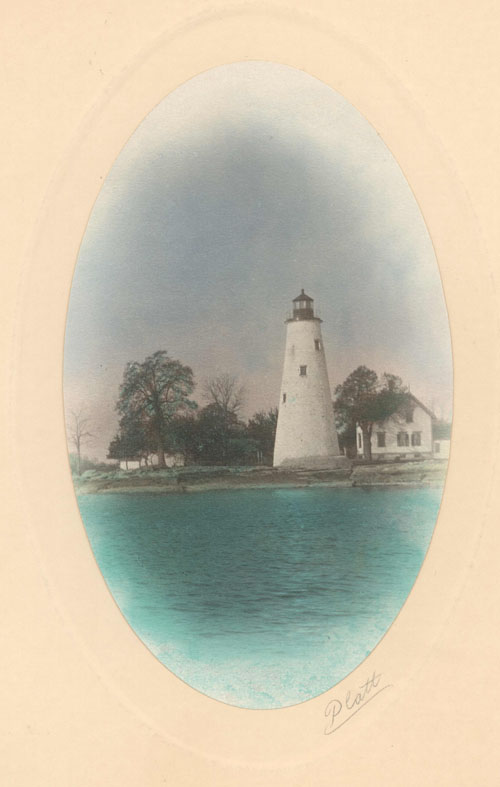
Program Announcement - Sweet Water Lady: The Marblehead Lighthouse Story

Join us for a brown-bag lunch program in the Library Program Room at noon on Wednesday, January 17, when Berlin Heights filmmaker Tom Koba will present a screening of his film, Sweet Water Lady, the Marblehead Lighthouse Story.

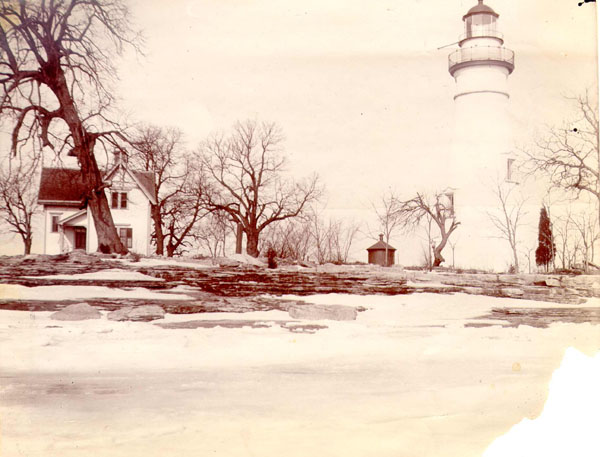
The Marblehead Lighthouse is the oldest continuously-operating lighthouse on the Great Lakes, illuminating the Lake Erie shoreline since 1822. The grounds of the lighthouse and the keeper's house (as seen in the photo below, circa 1890) are now the site of a state park, where tours are offered of the lighthouse interior.


Monday, January 08, 2007

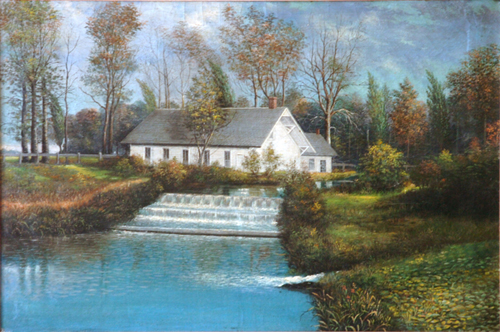
Ralph Smalley Tebbutt—Artist

Ralph Smalley Tebbutt was a well known Sandusky area artist. Born in England on May 14, 1849, he immigrated to Sandusky with his parents when he was five years old.

For sixty years he ran a painting and decorating business. For a time, was in business with another local artist, John Holland, but they dissolved their partnership in January, 1895. We know that in 1870, Tebbutt kept a studio in the Reber Block in downtown Sandusky.

Ralph Tebbutt lent his talents to local efforts. During the first World War, painted signs and banners for the Red Cross. In 1920, he painted two scenes for a pageant that was put on by local school children. One was a scene of the Santa Maria, and the other was for a sketch about Francis Scott Key.

Tebbutt enjoyed painting religious scenes, and several were given to area churches. Tebbutt used many mediums, including oil, pastel, charcoal and watercolor. He painted portraits, landscapes, religious themes, marine paintings, manufacturing plants, ships and animals.

An article appeared in the Register after his death detailing a quartet of four drinking scenes painted for a forgotten local brewery. The article described the paintings as “remarkably free in execution, that is they are natural and look as if they just flowed from the painter’s brush. The lights and shades, shadows and expression are handled with all the skill of a master painter.” No one knows what became of these paintings.

He painted for the love of the work, apparently never attempting to sell his work, although if offered a price and it suited him, he would sell and did sell many of his paintings. According to his son, Tebbutt painted constantly until his death. At the time of his death, art critics were saying that Tebbutt had many earmarks of a genius.

Ralph Smalley Tebbutt died March 4, 1930 at the age of 81. He is buried in a family plot in Oakland Cemetery.

Wednesday, January 03, 2007

One of the Oldest Items in Our Collections

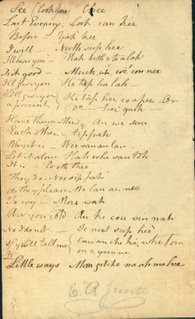
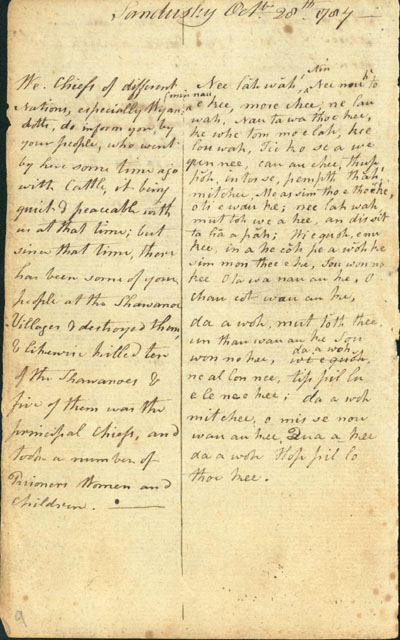
In the vault of the Sandusky Library Archives Research Center is a manuscript copy, dated 1787, of a phrase book, containing translations of words, phrases, and speeches, from English to a local Native American language, possibly the Wyandot/Huron language. This item was donated to the library in 1943, by Dr. Marjorie Anderson (1892-1954) -- a professor at Hunter College in New York, a poet, author, former employee at the Sandusky Library, and native Sanduskian. (She was the great-granddaughter of Dr. George Anderson, Sandusky's first physician -- he died in the cholera outbreak of 1834, after treating infected patients.)

The manuscript is attributed to E.R. Jewett, but the accuracy of this claim is far from certain -- the only signatures with the Jewett name are written in pencil along the margin of a page, and don't seem to match the rest of the handwriting. Who E.R. Jewett was is also unclear -- there was a businessman in Buffalo named Elam R. Jewett, who owned a publishing company and engraving business; this E.R. Jewett, however, appears to have been born around 1811, much later than the date of this manuscript. Could there have been an earlier E.R. Jewett, who travelled around the Sandusky Bay in 1787? Or was this phrase book written by someone else (whose name we do not know), but later owned by E.R. Jewett of Buffalo? Or is there another explanation? (Anybody out there looking for a research project?)

Also, some of you might be wondering, "How could this manuscript be marked 'Sandusky, 1787' when we know that the city of Sandusky was not founded until 1818?" In fact, in that era most of the region around Sandusky Bay and along the Sandusky River was identified simply as "Sandusky." It is possible (or even likely) that this phrase book was written in or around what is now known as the city of Fremont, which was called Lower Sandusky until 1849, and was the site of a Wyandot village in the 18th century. (The city named Upper Sandusky -- farther up the Sandusky River -- still exists, of course.) For those who study Native American languages and cultures, and the early interactions between those peoples and the European settlers, this document may prove an invaluable resource. Although access to the original item is restricted due to its age and fragility, the entire document (21 leaves on 32 digital images) is available in digital format at the library.


Update: Oops. . . . I forgot about the Reverend Edward R. Jewett, who was a founder of the Bethel Church on Water Street (between Decatur and Jackson) in Sandusky in 1852. The image below shows Reverend Jewett some thirty years later. So we might be able to assume that the phrase book was in the Reverend Jewett's possession at some point, but we still do not know the complete provenance of this document.
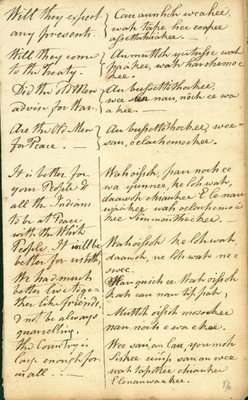
Update 2: Here is an enlarged view of a portion of a page from the phrase book: