Showing posts sorted by relevance for query pitkin. Sort by date Show all posts

Tuesday, February 26, 2013

Martha Pitkin and the Sandusky Chapter, D.A.R.

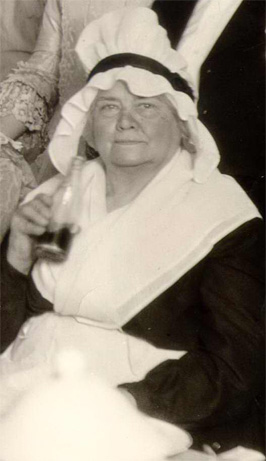
Mrs. E. Lea Marsh, nee Elizabeth Diodate Griswold Marsh, is pictured below. She is one of the many descendants of Martha Pitkin, whose name is associated with the Sandusky chapter of the Daughters of the American Revolution.

The founder, organizer, and first regent of the Martha Pitkin Chapter of the D.A.R. was Mrs. Jay Osborne Moss, who was born Frances Griswold Boalt. The local chapter was organized on April 27, 1897, with fourteen charter members. Mrs. Moss was a direct descendant of Martha Pitkin. Judges Ebenezer Lane and William G. Lane were also directly descended from Martha Pitkin and her husband Simon Wolcott.

A history of the Martha Pitkin chapter of the D.A.R. was reported in the May 1, 1927 Sandusky Register, on the thirtieth anniversary of the organization’s founding. Mrs. Curtis Schaufelberger, historian, wrote about Martha Pitkin: “Martha, a young woman of religious character, was possessed of a natural brilliancy of intellect, which was later on developed by an education in London. In addition to these attributes she was endowed with great beauty.” Charles Knowles Bolton wrote a “versified narrative” which describes the courtship of Martha Pitkin and Simon Wolcott. The title is On the Wooing of Martha Pitkin. Martha Pitkin was born in England. She came to the United States in 1661. Her first husband was Simon Wolcott. Among their descendants were five Connecticut governors. Martha’s grandson Governor Oliver Wolcott was a member of the Continental Congress and a signer of the Declaration of Independence. After the death of Simon Wolcott, Martha married Daniel Clark. Martha Pitkin Wolcott Clark died in 1719, and is buried in East Windsor, Connecticut.

The records of the Martha Pitkin Chapter of the Daughters of the American Revolution are located in the Archives Research Center of the Sandusky Library. Included in the collection are financial records, historian’s records, and several scrapbooks.

Reminder: Those interested in learning more about genealogy and the D.A.R. are invited to the Genealogy workshop sponsored by the Martha Pitkin Chapter, at the Sandusky Library, beginning at 10:30AM Saturday, March 2.

Wednesday, August 23, 2006

Clubs and Organizations in Erie County

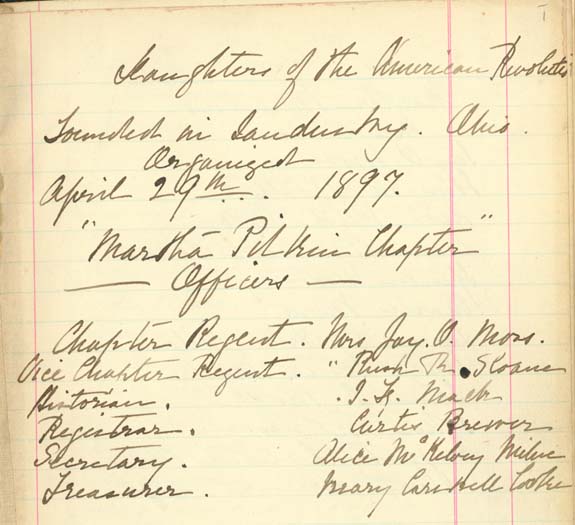
For better or worse, social clubs and community organizations are not as popular as they once were. With the advent of movies, television, the Internet, the automobile, and many other developments in technology and culture, clubs and organizations play a smaller role in the community than they did, say, in 1897, when the Daughters of the American Revolution, Martha Pitkin Chapter, was founded in Sandusky. (An excerpt from the D.A.R. secretary's book is shown above.) In the nineteenth century and well into the twentieth century, the role of clubs and organizations in the community was dominant. For an analysis of this development in society, you might want to read Robert Putnam's book Bowling Alone (in our library collection at 306.0973 PU) -- but don't take my world for it, since I haven't read the book yet.


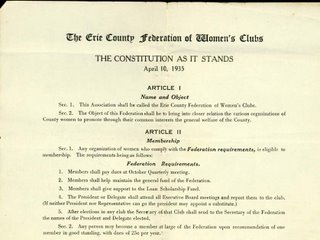
It does seem clear, however, that studying the history of local clubs and organizations will help you understand the culture and society from which they come (or at least that portion of society represented by the members of that particular club). The Sandusky Library Archives Research Center holds records and documents from several local clubs and service organizations, including: the Daughters of the American Revolution, Martha Pitkin Chapter; the Erie County Federation of Women's Clubs, and the Sandusky Federation of Women's Clubs; the Art Study Club; the Men's Literary Club; the Sunyendeand Club; the Nineteenth Century Club; the Sandusky Concert Association; and others. Thanks to the help of our summer archives intern, we have new and updated finding aids describing many of these documents and collections, for those interested in researching this aspect of our history.

For those of you involved in a local organization or who owns the records of local clubs from the past, we encourage you to consider depositing those records with the Archives Research Center, to preserve these documents for future generations. We will be glad to explain how we will store and record your donation in the library as a record of our community. For more information, call (419-625-3834) or email the Archives Librarian.


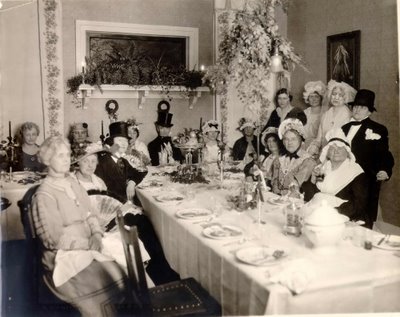
The photo above is of a costume party given by the Art Study Club (probably circa 1920), where guests came dressed as famous literary characters. (From the Library's historic photo collection -- CLUB-047.)

Friday, August 19, 2011

Jay Moss Home, 414 Wayne Street

The building at 414 Wayne Street was originally built as the home of Mr. and Mrs. Jay O. Moss in 1872.


A portion of the lot was a gift to the couple from Jay’s father, banker A.H. Moss. The remainder of the property was purchased from Oran Follett, who lived nearby at the southeast corner of Wayne and Adams Streets. The Martha Pitkin Chapter of the Daughters of the American Revolution was organized at the Moss home in 1897. In 1899 Mrs. Jay O. (Frances) Moss, who was acquainted with Andrew Carnegie, helped to secure a generous donation from Mr. Carnegie towards the building of the Sandusky Library.

In 1917, the home was purchased by Herbert Farrell, Sr., president of the Farrell-Cheek Foundry. The Sandusky Business Women’s club became the owner of this property in 1926, with financial assistance from the Women’s Building and Restroom Association. Meetings and social gatherings were held here, and apartments in the building were rented, to help pay for the upkeep of the building. For a few years in the 1970’s, the Harlequins owned the property at 414 Wayne Street, but they soon sold the main home to Mr. and Mrs. George Gilbert, who converted the building for use as apartments. The Harlequins retained ownership of the former carriage house for use in the group’s theatrical productions. Since 1984 the former Moss home at 414 Wayne Street has housed offices for several Sandusky attorneys.

Sunday, May 22, 2011

Mothers of Erie County, by Marjorie Cherry

Marjorie Loomis Cherry wrote Mothers of Erie County in 1932. She subtitled her book A Pageant of Historic Personages. Mrs. Cherry provides brief biographical information about thirty women from Erie County. In the sketch about Minerva Bell, a recounting of Minerva out-screaming a wild panther is told. Mrs. Katherine Banks Darling’s role in the Underground Railroad is told in Article 25.

The text is anecdotal in nature. The article about Lorania Mitchell discusses the life of a pioneer woman, including chopping wood, building a fire, and the use of herbal medicine. Mrs. Cherry points out that while Frances Ann Griswold Lane, wife of Judge Ebenezer Lane, was the daughter of Governor Griswold of Connecticut, she still knew how to milk a cow, and care for a baby at the same time. The story gives an account of the Lane family moving to Norwalk from Elyria on horseback. Judge Lane put a pillow in front of the saddle, and after Frances placed her infant on the pillow, she got on the horse as well. They rode through the woods to their new home, all riding on horseback.

Marjorie Loomis was born in 1889 in Steuben, Ohio. She was married to Ross Cherry. Mrs. Cherry lived in either Norwalk or Sandusky for most of her life. She was the author of several books dealing with local history and genealogy. Marjorie was considered an authority on flags and early American costume. She was responsible for planning numerous historical pageants given in Ohio. In 1951, the Toledo Blade reported that Mrs. Ross Cherry was the head of a state conference of the United States Daughters of 1812. Members from all over Ohio met at the Hotel Rieger in Sandusky in April 1951.

Mrs. Marjorie Loomis Cherry died on January 22, 1978. Her obituary appeared in the January 23, 1978 issue of the Sandusky Register. Marjorie had been a member of the Peru Farm Women’s Club, the Opportunity Club, the Firelands Historical Society, Sandusky County Historical Society, the Western Reserve Historical Society, and the Ohio State Historical Society. She had also been past president of the Joshua Giddings Chapter Daughters of 1812, and was past regent of the Martha Pitkin Chapter of the Daughters of the American Revolution.

Visit the Archives Research Center of the Sandusky Library to read several historical books written by Marjorie Loomis Cherry.

Wednesday, March 31, 2021

Miss Jessie Wilcox, Cultural Leader


Jessie Martha Wilcox was born in Sandusky, Ohio in April of 1861, the same week that the Civil War broke out in the United States. Her parents were Rollin M. Wilcox and the former Martha Ellen Newton. For many years, Jessie’s father was a partner in the R.M. and C.B. Wilcox Company, a popular department store in downtown Sandusky. 


When Jessie was just a toddler, her mother Martha passed away at age 28. 

Jessie graduated from Sandusky High School on June 27, 1879; her niece, Esther Sloane Curtis, donated her aunt's high school diploma to the Sandusky Library Archives Research Center. 


In 1884, she graduated from Wellesley College in Massachusetts. After graduation, she taught school in Fond du Lac, Wisconsin, before moving back to her hometown of Sandusky, where she also taught school. 

From 1904 to 1937, Miss Wilcox was a member of the Board of Trustees of the Sandusky Library, serving for a time as President of the Board. She was also a member of the Nineteenth Century Club, the Martha Pitkin Chapter of the Daughters of the American Revolution, and Trinity United Methodist Church. 

On August 12, 1937, Jessie Wilcox died suddenly at her home on Franklin Street in Sandusky. Funeral services were held at the home of Jessie’s niece, Mrs. Worth Curtis, with the Rev. Roy Smith of Trinity Methodist Church officiating. Burial was at Oakland Cemetery. An obituary in the August 12, 1937 issue of the Sandusky Star Journal reported that Jessie had been one of the area’s most prominent women, and she had been a leader in the cultural life of Sandusky. The Sandusky Library closed from 2:30 to 3:30 on Saturday, August 14, 1937, during the funeral service, in honor of her many years of service to the Library.

Tuesday, October 03, 2017

Miss Harriet C. West


Harriet C. West was born in Sandusky, Ohio in 1861 to Abel Kingsbury West and his wife, the former Caroline E. Wood. Abel K. West was an early dry goods  merchant in Sandusky and operator of the West House hotel with his brother William T. West in the 1850s. After the death of her parents, Harriet  (also known as Hattie) resided with the family of her sister, Mary West Anderson. 

In the  1890s, Harriet C. West served as the secretary of the Library Building Fund Association. At the time of the Sandusky Library’s grand opening in July of 1901, Miss West was the treasurer of the Board of Trustees of the Library Association, and was on the local reception committee when the Ohio Library Association held its seventh annual meeting at the Sandusky Library from October 1 to October 4, 1901.


On April 13, 1916, Miss Harriet C. West passed away at her sister's home on Wayne Street.  She had been ill with pneumonia. Funeral services were held at the Anderson residence on April 15, 1916, with the Rev. C. Argylle Keller officiating. Miss West had been a member of the First Presbyterian Church and the Martha Pitkin Chapter of the Daughters of the American Revolution. An obituary which appeared in the April 13, 1916 issue of the Sandusky Star Journal stated about Miss West, “For years she had been an active member of the library board and a great worker for that institution.” Harriet C. West was buried in the West family lot in the North Ridge section of Oakland Cemetery.

Monday, September 28, 2015

Mrs. Malcolm Kelly, Library Trustee and Suffragist


Mrs. Malcolm Kelly was born Susan Smith, a daughter of John and Eleanor Smith, who were pioneer residents of Sandusky County, Ohio. In 1876 Susan Smith married attorney Malcolm Kelly, who later became a Circuit Judge. Judge and Mrs. Kelly lived in Sandusky from 1898 through the 1920s. 

In October of 1912, Susan Kelly was part of a group of women who formed a Women’s Suffrage organization in Erie County. The women spoke at local club meetings, granges, and farmers’ institutes, to solicit members and pass resolutions favorable to women receiving the right to vote. The members of the Equal Suffrage League of Erie County decorated automobiles and rode in the Perry Centennial Celebration parade in Sandusky on September 8, 1913. (To read more about women’s suffrage in Erie County, see the January 1921 issue of the Firelands Pioneer.) Though we do not have a picture of the ladies’ decorated automobile, here is a picture of downtown Sandusky at the time of the Perry Centennial Celebration.


For many years in the early twentieth century, Mrs. Kelly served on the board of trustees of the Library Association of Sandusky. While serving as secretary of that board, Mrs. Kelly prepared an annual report which was printed in the Sandusky Register of January 4, 1922.


Susan Kelly was active in several women’s organizations, including the Martha Pitkin Chapter of the Daughters of the American Revolution, the Monday Literary Club, the Nineteenth Century Club, the Women’s Rest Room Association, and she was the former president of the Sandusky Federation of Women’s Clubs. 

Mrs. Susan Kelly died on November 9, 1935 in Westchester County, New York, at the age of 86. An obituary which appeared in the November 12, 1935 issue of the Sandusky Register stated that Mrs. Kelly was “for years prominent in the women’s clubs and cultural life of Sandusky.” She was buried at Lakeview Cemetery in Ottawa County, next to her husband Judge Malcolm Kelly, who had died in 1923.

Wednesday, May 06, 2009

Annette Fitch Brewer Nelson, Historian and Author

Annette Fitch Brewer was born in Ashtabula, Ohio in 1870 to a pioneer Ashtabula County family. She was widely known as an author and historian and was considered an authority on the early history of the Western Reserve. In the late 1930’s Annette broadcast historical radio programs on Radio Station WICA. She was a founding member of the Martha Pitkin Chapter of the Daughters of the American Revolution, and the Society of Mayflower Descendants in the State of Washington. Later she was active in the Mary Stanley Chapter of the D.A.R. in Ashtabula.

After graduating from Lake Erie Seminary in 1890, Annette Fitch was active in the women’s suffrage movement. In 1893 Annette Fitch married I. C. Brewer, a prosperous Sandusky business man. In April 1903, Annette Fitch Brewer played “Mrs. Josephine Dulaney” in the local production of the play “The New Dominion.” The play was given at the Nielsen Theater, and received favorable reviews in the local newspaper. Cast members included local photographer W. A. Bishop, as well as. A.J. Peters, J.W. Andrews, E.L. Marsh, G.E. Wilder, Leontine Woolsey and Adah C. Kunz. Annette is pictured below with W. A. Bishop. (A set of photographs of the entire cast of “The New Dominion” is held by the Archives Research Center of the Sandusky Library.)
In 1905, following her divorce from I. C. Brewer, Annette Fitch Brewer fled Sandusky with her young son, I. C. Brewer, Jr. They went to Canada and the western United States using aliases to avoid being found by Mr. Brewer. Annette wrote a book entitled The Story of a Mother-Love chronicling her adventures. Newspaper editor I. F. Mack carried a serialized version of Annette’s book in the Sandusky Register. In April of 1910, Annette Fitch Brewer and her son were located in Washington, under assumed names. I.C. Brewer, Jr. was returned to the custody of his father, though his mother received visitation privileges.

Later both Annette Fitch Brewer and I. C. Brewer each married again. Annette Fitch Brewer married Adolph Nelson. She continued writing historical feature articles in the Jefferson Gazette. Annette Fitch Brewer Nelson lived in Ashtabula County until she died in 1960 at the age of 90.

Monday, May 31, 2010

Francis McQuown, Revolutionary War Soldier

On Memorial Day in 1939, the Martha Pitkin Chapter of the Daughters of the American Revolution placed a marble tombstone at Oakland Cemetery, to honor the memory of Francis McQuown. According to clippings in a D.A.R. notebook housed at the Archives Research Center of the Sandusky Library, Francis McQuown first enlisted as a private in the Company of Edward Grimes, 7th Battalion, at Cumberland County, Maryland. Mr. McQuown was with the Maryland Militia in 1778, and advanced to the rank of Captain in the Sixth Class, Third Company, Fifth Battalion, Cumberland County, Militia.

In 1849, Francis McQuown came with his family to Sandusky, Ohio. He first married Jane Gregg, with whom he had eight children, and then married Agnes Smythe, and they had three more children. Francis McQuown died in 1855, at the age of 99. His grave is located near the Schade Mausoleum at Oakland Cemetery.

The surname McQuown became to be spelled McEwen in Sandusky. One of the sons of Francis McQuown, Thomas C. McEwen, was the postmaster in Sandusky in the 1860’s. He was initially appointed to be Deputy Postmaster by Abraham Lincoln, according to the Journal of the Proceedings of the United States Senate.
Another descendant of Francis McQuown was Miss Sarah Elizabeth McEwen. Sarah McEwen was associated with the Sandusky Library for over forty years. Miss McEwen passed away at the age of 91 in March of 1933.

To learn more about the family history of the McQuown/McEwen family, see the book Our McEwen Heritage: The James McEwen Faamily in America Since 1736, available full text at the Family History Archives of Brigham Young University.

Monday, October 09, 2017

George W. Paine, Railroad Agent


George W. Paine was the freight agent for the Lake Shore and Michigan Southern Railroad, and its successor the New York Central, for almost fifty years. From the early 1880s until the family moved to California in 1922, Mr. and Mrs. George W. Paine lived in Sandusky, Ohio. Mr. Paine served as the organist for the Congregational Church, and Mrs. Paine was active in the Martha Pitkin Chapter, Daughters of the American Revolution. During the Civil War, he served in Company D of the 101st Ohio Volunteer Infantry. When Fremont and other cities in northern Ohio were affected by severe flooding in March of 1913, Agent Paine worked with local officials and organizations to transport food, clothing and other supplies over the New York Central railroad lines at no cost.
       

Local citizens and community organizations gathered supplies in a room at the Hubbard building on Water Street. A special car from the New York Central Railroad took the supplies to Fremont on March 27, 1913. Sandusky’s Company B, Sixth Regiment of the Ohio National Guard was also ordered to duty to assist in providing aid to flood victims.


Friends and family met at the New York Central station in August, 1922 to see the Paine family off to their new home in California. George W. Paine died in California on March 3, 1926. He was long remembered for his many years of service and leadership during his long career with the railroad in Sandusky.

Monday, November 09, 2015

Jessica Follett Foster


Jessica Follett Foster was born in 1869 in Sandusky, Ohio to Frank E. Foster and his wife, the former Eliza Ward Follett. Jessica’s father and her maternal grandfather, Oran Follett, were the publishers of the Lincoln-Douglas Debates. While living in DeKalb, Illinois, Jessica taught at the Northern Illinois State Teachers College for seventeen years. She was a member of the Martha Pitkin Chapter of the Daughters of the American Revolution, tracing her ancestry back to Revolutionary soldier Frederick Follett. Jessica’s lineage is found in volume 35 of the Daughters of the American Revolution Lineage Book.


From about 1923 to 1934, Miss Foster resided on Wayne Street in Sandusky, and during that time worked as an agent for the New York Life Insurance Company. This advertisement appeared in the January 19, 1924 issue of the Sandusky Star Journal.


In Sandusky, Jessica was a member of the Art Study Club, pictured below at an event in which all the members dressed in historic costume.


In the Centennial issue of the Sandusky Register, on December 22, 1922, she shared excerpts from her grandfather Oran Follett’s meeting with President Abraham Lincoln in October of 1862 (available on microfilm at the Sandusky Archives Research Center).  

In the 1930s, Jessica Follett Foster moved to Los Angeles. She resided there until her death on April 30, 1960. Miss Foster was buried in the family lot at Sandusky’s Oakland Cemetery. 

In the collections of the Follett House Museum is a chair which once belonged to her grandparents, Oran and Eliza Follett, and was a favorite of her mother when she was a child.


Friday, June 10, 2022

Helen Gallup Pyle


Helen Gallup was the daughter of Frank Gallup and the former Fannie Walker, born in Sandusky, Ohio in 1892. Both Helen’s father Frank and her paternal grandfather Mozart Gallup were associated with the Sandusky Tool Company. Above is a close-up from her third grade class picture at Monroe School about 1900. During her later years of high school, Helen attended Rogers Hall School for Girls in Lowell, Massachusetts, graduating in 1911.

In 1917, Helen Gallup married Joseph Gilpin Pyle, Jr., an attorney. The marriage took place at Grace Church in Sandusky.

A copy of the wedding invitation is in a collection of historic invitations from Sandusky area events in the Sandusky Library Archives Research Center.

Mrs. Helen Gallup Pyle was very active in the Martha Pitkin Chapter of the Daughters of the American Revolution. An article from the February 8, 1922 issue of the Sandusky Star Journal reported that both Mr. and Mrs. Pyle took part in a group of period dances at the D.A.R. Ball held at the Odd Fellows Hall in Sandusky. Helen served as both a teacher and a dancer for the special event. 

By 1927 Mr. and Mrs. Joseph G. Pyle, Jr. had moved to Pasadena, California with their two children, Joseph G. Pyle, III and Hermoine. Both of the Pyle children would later serve in the U.S. Military during World War II. Corporal Joseph G. Pyle, III was in an Infantry unit in the South Pacific in 1944, and Hermoine Pyle was with the Women’s Army Corps branch of the U.S. Army. 

A brief article in Sandusky Register of July 14, 1934 stated that Mr. and Mrs. Joseph G. Pyle, Jr. had divorced. Mr. Pyle passed away in 1940. Mrs. Helen Gallup Pyle died in York, Pennsylvania in 1965, and her remains were returned to Sandusky for burial in the Gallup family lot at Oakland Cemetery.

Monday, October 11, 2021

Plaque Honoring Sandusky’s Pioneers


 You might have driven past this monument many times and not noticed it, but it deserves recognition. It is a tribute to the founders of Sandusky.

On June 25, 1937 members of the Martha Pitkin Chapter of the Daughters of the Revolution unveiled a plaque honoring several of Sandusky’s pioneer citizens at the triangular park located between Huron Avenue, Wayne, and East Adams Streets. The bronze plaque, created by A. J. Balconi, was placed on a three ton boulder at the park.

Names on the top portion of the plaque include the founders of Sandusky:  Zalmon Wildman, Isaac Mills, and George Hoadley. On the bottom portion are the names of the nine men who directed the incorporation of Sandusky as a city in 1824. They were: Dr. George Anderson, Aaron C. Corbet, Cyrus W. Marsh, Alexander Clemons, Eleutheros Cooke, John Wheeler, William Townsend, William Kelly, and Moors Farwell, who served as Sandusky’s first mayor. Several of these men were Masons; an article in a 1937 issue of the Sandusky Masonic Bulletin recognized them and the construction and dedication of the monument

Visit the Sandusky Library Archives Research Center to learn more about the pioneer residents of Sandusky, Ohio. And be sure to stop and visit the monument in the park sometime.

Saturday, April 13, 2019

Mary Cooke


Mary A. Cooke, the wife of Sandusky businessman Charles E. Cooke, was an early member of the Board of Trustees of the Sandusky Library Association. She was on the Board in 1870 when the Library Association of Sandusky was founded, and when it was incorporated on November 5, 1895. 

Mrs. Cooke was born Mary Augusta Turney. She married Charles E. Cooke on May 31, 1860. Besides serving on the Library Board, Mrs. Cooke was also very active in the Martha Pitkin Chapter of the Daughters of the American Revolution. She traced her roots back to Noah Hoyt, an ancestor who served as a private with the Connecticut militia during the time of the American Revolution. 

On December 16, 1900, the local D.A.R. celebrated the anniversary of the Boston Tea Party at Mrs. Cooke's home, at the southeast corner of Wayne and Jefferson Streets. Between the parlors of the Cooke home, was displayed the log cabin silk banner which was created by Sandusky women, to welcome William Henry Harrison to Sandusky in 1840. This banner is now in the historical collections of the Follett House Museum.

  
The people at the celebration wore colonial costumes. Colonial era refreshments were served, and a quartet led by Mrs. J.W. Andrews sang patriotic songs, to the accompaniment of Mrs. Frank Sloane on the piano. A summary of the celebration of the Boston Tea Party in Sandusky was featured in volume 18 of the Daughters of the American Revolution magazine. 

Mary Augusta Turney Cooke died at her Wayne Street home in Sandusky on May 4, 1917, after a lengthy illness. Rev. E.G. Mapes officiated at the funeral services, and burial was at Oakland Cemetery. Mrs. Cooke was survived by her daughter, two sisters and grandchildren.

Saturday, March 02, 2019

“A Woman’s Club”


A poem titled “A Woman’s Club” appeared in the Sandusky Register on August 13, 1899. Written by Sarah Palmer, and originally appearing in the periodical Club Woman, the poem was said then to have been the best club poem ever written. The first twelve lines are:

What is a woman’s club? A meeting ground
For those of purpose great and broad and strong.
Whose aim is toward the stars: who ever long
To make the patient, listening world resound
With sweeter music, purer, nobler tones.
A place where kindly, helpful words are said
And kindlier deeds are done; where hearts are fed:
Where wealth of brain and poverty atones
And hand grasps hand, and souls find touch with soul.
Where victors in the race for fame power
Look backward even in their triumph hour,
To beckon others toward the shining goal.

Women in Sandusky and Erie County have met together informally as well as in clubs and organizations for many years. Hewson Peeke wrote about local women’s clubs in Chapter 23 of his book, A Standard History of Erie County, Ohio. During the Civil War, the Ladies Aid Society of Grace Church sent food to soldiers in need. The Ladies’ Library Association of Sandusky worked diligently to raise funds for the building of a public library in Sandusky.

Members of the Benevolent Society of the First Congregational Church of Sandusky are participating in a quilting bee in the late nineteenth century in the image below.


Here is a photograph of Mrs. Charles Emrich’s Reading Club:


The Pythian Sisters decorated a car with a patriotic theme in an unidentified parade:


Five Red Cross volunteers are pictured at the corner of Wayne and Jefferson Streets during World War One.


Visit the Sandusky Library Archives Research Center to view historic photographs and documents relating to women’s organizations in Sandusky and Erie County. Included in the Sandusky Library Archives Research Center are records from the Erie County Federation of Women’s Clubs, the Martha Pitkin Chapter, Daughters of the American Revolution, Art Study Club, the Nineteenth Century Club, Business Women’s Club, United Ladies Sewing Circle, College Women’s Club, and the Catholic Women’s Study Club, and others.

Sunday, August 16, 2009

Carnegie Hall at the Sandusky Library

The Sandusky Daily Star, in its February 20, 1901 issue, reported that when Andrew Carnegie gave his “handsome gift” to Sandusky to be used for the purpose of building a public library, one of his stipulations was that the library should have a music hall and an organ, and efforts were to be made to have free musical recitals for the community on a regular basis. The Carnegie Library had its grand opening on July 3, 1901. The musical hall held 338 people, and was known as “Carnegie Hall.”
One of the earliest groups to sponsor concerts at Sandusky’s Carnegie Hall was the Tuesday Musical Club. The composer Beethoven was featured on the January 21, 1902 concert. It appears that the entertainment was provided by local musicians. The string quartet was composed of Miss Heiter, Mr. Dempsey, Mr. Schnaitter, and Mr. Anderson. Mary Lockwood and Mr. Anderson had solo numbers, and the final number was “Symphony, C. Minor” which was performed by Mrs. Williams, Mrs. Feick, Miss Stoll, and Mrs. Sloane. Anna G. Lockwood was the President of the Tuesday Musical Club during the 1901-1902 season. Miss Lockwood (Shown below in her 1888 Sandusky High School graduation photo) would go on to teach piano at the Institute of Musical Art, later known as The Juilliard School in New York City.
Besides musical events, Carnegie Hall was used for political, social, and other cultural activities. In December, 1903, Professor Edwin Earle Sparks gave a lecture about Alexander Hamilton, and also presented a short study of the U.S. Constitution at Carnegie Hall. In January 1905, Hewson Peeke and F. G Strickland participated in a lively debate at Carnegie Hall. Hewson Peeke’s premise was: “Resolved that the Prohibition party presents a better solution of the labor problem than the Socialist party.” Mr. Strickland was a member of the Socialist Party. The January 21, 1905 Sandusky Star Journal wrote that about two-thirds of the crowd in attendance were in support of Mr. Strickland.

Area clubs and organizations often met at Carnegie Hall. In January of 1905, the Knights of St. John and its Ladies Auxiliary had their joint installation of officers at Carnegie Hall. In January, 1908, a new club called the “Children of the Republic” held a preliminary meeting at Carnegie Hall. Several ladies from the Martha Pitkin Chapter of the Daughters of the American Revolution wanted to help young people in Sandusky to learn how to become good citizens. Speakers for the evening were Mrs. Thomas M. Sloane, Mrs. James Melville, Mrs. Roy Williams, and Dr. Carrie Chase Davis. The annual meeting of the Erie County Farm Bureau held one of its sessions at Carnegie Hall in February, 1920. The Firelands Historical Society held an all day session at Carnegie Hall on November 10, 1920.

By 1929, the space in the auditorium on the first floor of the Library would become an adult reading room with additional space for books and shelves. Though the library no longer features a music hall, you can read about the early days of the Sandusky Library in the historical newspapers, housed on microfilm in the Archives Research Center of the Sandusky Library. The music hall of the original Carnegie library building in Sandusky is now a portion of the Children’s Services Area of the Sandusky Library.